General

How to Scale Enterprise Wireless Networks Without Downtime or Performance Loss
12 June 2026 By Aeromesh Team In General
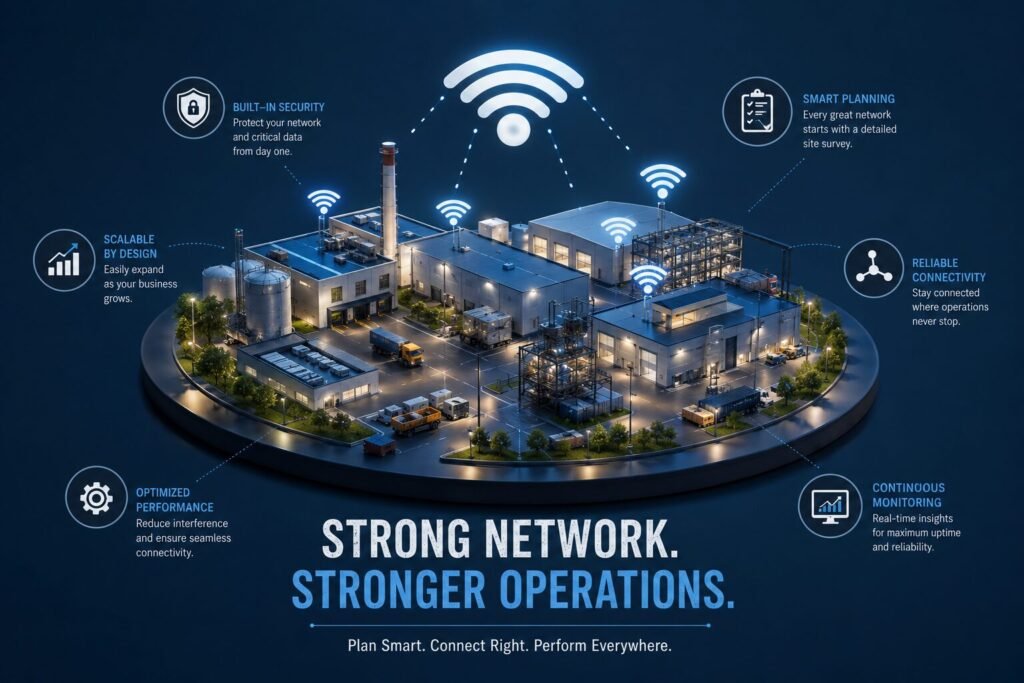
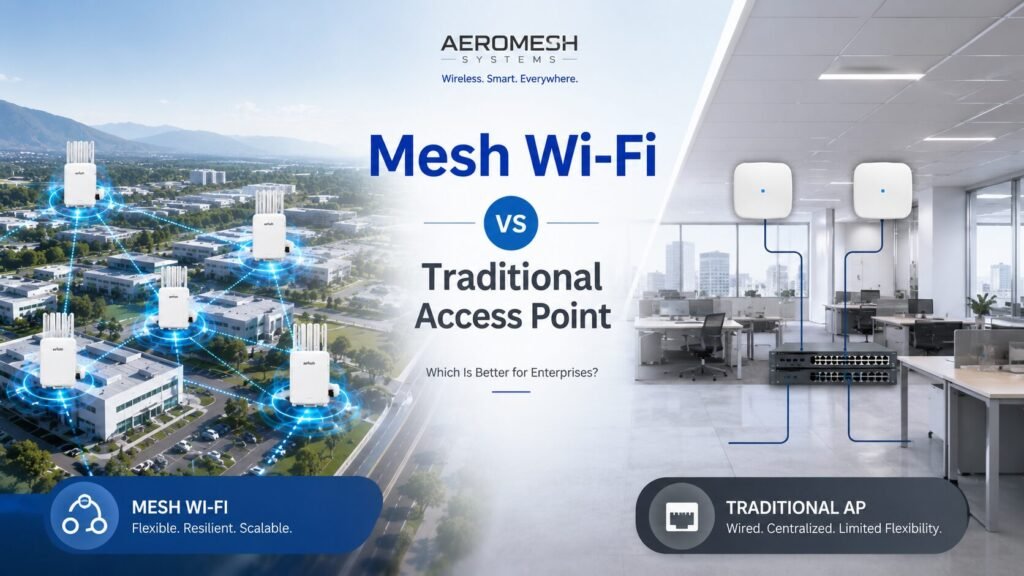
Introduction Enterprise networks are under constant pressure to support more users, connected devices, cloud applications, video surveillance systems, and Industrial IoT deployments. As businesses expand across multiple buildings, campuses, warehouses, and remote locations, their wireless infrastructure must grow accordingly. However, scaling a wireless network is not simply about adding more access points or increasing bandwidth. Poor planning can lead to network congestion, coverage gaps, interference issues, security vulnerabilities, and costly downtime. To ensure business continuity, organizations need a wireless architecture designed for scalability, reliability, and long-term performance. This article explores practical strategies for scaling enterprise wireless networks without compromising uptime or user experience. Start with a Scalable Network Architecture Many wireless performance issues occur because networks were originally designed for current requirements rather than future growth. A scalable wireless architecture should support: Increasing user density Additional facilities and remote sites High-bandwidth applications IoT and automation systems Centralized network management Organizations that adopt a flexible network design from the beginning can expand coverage and capacity without major infrastructure redesigns. Wireless mesh networking is particularly effective because it allows new nodes to be added with minimal disruption while maintaining seamless connectivity. Plan for Future Capacity, Not Current Demand One of the most common mistakes in enterprise networking is sizing infrastructure based only on today’s requirements. Consider how network usage may change over the next three to five years. Factors such as employee growth, connected devices, cloud adoption, and security systems can significantly increase network demand. For example, a warehouse that currently supports handheld scanners may later require autonomous vehicles, smart sensors, and HD video monitoring. Without adequate planning, network performance can quickly deteriorate. Regular capacity assessments help ensure the infrastructure can support future business initiatives without requiring emergency upgrades. Optimize Wireless Coverage and RF Performance As wireless networks grow, radio frequency (RF) interference becomes a major challenge. Simply deploying additional access points can sometimes reduce performance rather than improve it. Effective RF planning includes: Strategic Access Point Placement Access points should be positioned to provide consistent coverage while minimizing interference between neighboring devices. Channel Management Proper channel allocation helps reduce congestion and improves overall network efficiency. Site Surveys Periodic wireless surveys identify coverage gaps, interference sources, and performance bottlenecks before they affect operations. A well-optimized RF environment ensures users experience reliable connectivity even as the network expands. Eliminate Single Points of Failure Downtime is often caused by failures in critical network components. To maintain uninterrupted connectivity, enterprises should build redundancy into their wireless infrastructure. Key measures include: Redundant wireless backhaul links Automatic failover capabilities Backup power systems Multiple communication paths For example, if one wireless link fails, traffic should automatically reroute through an alternative path without impacting users or critical applications. This level of resilience is particularly important in industrial facilities, transportation networks, and smart city deployments where connectivity directly affects operations. Centralize Network Management Managing multiple wireless sites manually becomes increasingly difficult as networks grow. Centralized network management platforms provide: Real-time performance monitoring Remote configuration and troubleshooting Automated alerts Network analytics and reporting Faster issue resolution With centralized visibility, IT teams can identify potential problems before they impact users. This proactive approach reduces downtime and simplifies management across distributed enterprise environments. Prioritize Security as the Network Expands Every new device, access point, or remote location increases the network’s attack surface. Security must scale alongside the infrastructure. Best practices include: Network segmentation Strong authentication protocols End-to-end encryption Continuous monitoring Secure device onboarding Separating operational systems from guest or general user traffic can significantly reduce security risks while improving overall network performance. Real-World Example Consider a manufacturing company expanding from one facility to several production sites. The organization needed to support industrial automation systems, surveillance cameras, and connected equipment across all locations. Rather than deploying separate networks at each site, the company implemented a scalable wireless mesh architecture with centralized management and redundant backhaul connectivity. As new facilities were added, network expansion was completed with minimal disruption. The result was improved operational visibility, reduced downtime, and reliable connectivity across the entire enterprise. How Aeromesh Systems Supports Enterprise Growth Aeromesh Systems specializes in designing and deploying wireless infrastructure for enterprises, industrial facilities, transportation networks, and smart city environments. Our wireless mesh solutions enable organizations to expand coverage, connect distributed operations, and support high-bandwidth applications while maintaining network reliability. By combining scalable architecture, resilient backhaul connectivity, and centralized management capabilities, Aeromesh helps businesses build networks that are ready for future growth. Conclusion Scaling an enterprise wireless network requires more than adding hardware. Organizations must focus on scalable architecture, capacity planning, RF optimization, redundancy, centralized management, and security to maintain performance as demands increase. A well-designed wireless infrastructure can support business expansion, emerging technologies, and mission-critical applications without downtime or performance loss. By investing in the right strategy today, enterprises can build a network foundation capable of supporting tomorrow’s growth. FAQs: How to Scale Enterprise Wireless Networks Without Downtime or Performance Loss 01 What are the biggest challenges when scaling an enterprise wireless network? The most common challenges include network congestion, coverage gaps, RF interference, increased device density, security risks, and maintaining consistent performance across multiple locations. Without proper planning, network expansion can lead to downtime and reduced user experience. 02 How does wireless mesh networking help enterprises scale their networks? Wireless mesh networking allows organizations to expand coverage by adding new nodes without extensive cabling or major infrastructure changes. Mesh networks provide self-healing capabilities, route optimization, and improved reliability, making them ideal for large campuses, industrial sites, and distributed enterprise environments. 03 How can businesses prevent downtime during network expansion? Businesses can minimize downtime by implementing redundant backhaul links, automatic failover mechanisms, centralized network management, and proactive capacity planning. Conducting thorough site surveys and testing before deployment also helps ensure a smooth expansion process. 04 Why is RF planning important for large-scale wireless networks? RF planning helps reduce interference, optimize channel allocation, and ensure consistent coverage across the deployment area. Proper RF design improves network performance, supports seamless roaming, and prevents connectivity issues as the number of users and devices increases. 05 What should enterprises consider when choosing a scalable wireless infrastructure solution? Organizations should evaluate scalability, network reliability, security features, centralized management capabilities, support for high-bandwidth applications, and future technology requirements. A solution that supports seamless expansion and minimizes operational disruption is essential for long-term growth.

Supporting High Bandwidth Applications Like Video Surveillance and Automation Over Wireless
03 June 2026 By Aeromesh Team In General
Introduction Modern enterprises rely heavily on applications that generate and transfer large amounts of real-time data. High-definition video surveillance systems, industrial automation platforms, smart traffic systems, and connected Industrial IoT devices all require stable and high-capacity network infrastructure. In the past, organizations depended mainly on wired connectivity to support these bandwidth-intensive applications. However, expanding operations across factories, warehouses, campuses, transportation systems, and outdoor industrial sites has made wired deployments expensive, time-consuming, and difficult to scale. Enterprise wireless infrastructure is now helping organizations overcome these limitations. With advancements in wireless backhaul, mesh networking, and industrial-grade wireless solutions, businesses can support high-bandwidth applications with reliability, flexibility, and lower deployment complexity. Why High-Bandwidth Applications Require Advanced Wireless Networks Applications like HD video surveillance and industrial automation demand more than basic connectivity. They require networks capable of handling: Continuous real-time data transmission High throughput Low latency Reliable uptime Secure communication Scalability for future growth A standard office Wi-Fi setup is often insufficient for these requirements, especially in industrial or outdoor environments. Common High-Bandwidth Applications Video Surveillance Systems Modern surveillance systems use: HD and 4K IP cameras AI-based video analytics Thermal imaging systems Centralized video monitoring Remote security management A single high-resolution camera can consume significant bandwidth continuously. When deployed across large campuses or smart city projects, network demand increases rapidly. Industrial Automation Automation systems depend on: Machine-to-machine communication PLC connectivity Robotics systems Real-time monitoring Predictive maintenance platforms These applications require stable, low-latency communication to maintain operational efficiency and safety. Smart Infrastructure Smart cities and utilities rely on wireless connectivity for: Traffic monitoring Public safety systems Environmental sensors Transportation networks Remote infrastructure management All these systems generate continuous data that must be transmitted reliably. Challenges of Supporting High-Bandwidth Applications Many organizations face network performance issues when scaling surveillance or automation systems. Limited Network Capacity Traditional networks may struggle to handle multiple simultaneous video streams and connected devices. High Infrastructure Costs Deploying fiber across large industrial sites, campuses, or outdoor environments often involves expensive trenching and lengthy installation timelines. Latency and Reliability Issues Automation systems require real-time communication. Even small delays can impact machine operations and productivity. Difficult Scalability As operations expand, older infrastructure may require significant redesign or upgrades. Harsh Environmental Conditions Industrial and outdoor environments often include: Dust and heat Metal obstructions Long-distance coverage requirements Electromagnetic interference Wireless solutions designed for enterprise and industrial use are built to address these challenges. How Enterprise Wireless Infrastructure Solves These Problems Modern wireless networks provide the performance needed for demanding operational environments. High-Capacity Wireless Backhaul Wireless backhaul technology enables high-speed connectivity between buildings, remote sites, surveillance locations, and operational facilities without extensive cabling. Benefits include: Gigabit-level throughput Faster deployment Lower infrastructure costs Long-distance connectivity Flexible scalability For example, a manufacturing facility can connect multiple production buildings and surveillance systems through a centralized wireless network instead of laying fiber across the entire campus. Supporting Video Surveillance Over Wireless Video surveillance is one of the most bandwidth-intensive applications in enterprise environments. To ensure reliable performance, wireless surveillance networks must support: Continuous HD video streaming Real-time monitoring Remote access Centralized storage systems Multiple simultaneous camera feeds Practical Example Consider a smart transportation project monitoring traffic intersections across a city. Installing fiber at every camera location may be costly and operationally disruptive. Wireless infrastructure allows rapid deployment of surveillance systems while maintaining: Reliable connectivity Centralized monitoring Scalability for future expansion Reduced deployment complexity This approach is especially useful for smart cities, metro systems, industrial zones, and public safety networks. Enabling Industrial Automation Through Wireless Connectivity Industrial automation increasingly depends on wireless communication to support operational flexibility. Wireless infrastructure helps connect: Automated production lines Warehouse automation systems Remote monitoring platforms Autonomous vehicles Industrial sensors and controllers Why Low Latency Matters Automation systems require immediate communication between devices and control systems. Network delays can lead to: Production inefficiencies Operational downtime Delayed decision-making Safety risks Enterprise-grade wireless networks are designed to deliver low latency and stable communication for mission-critical operations. Example: Smart Warehousing Modern warehouses often deploy: Automated guided vehicles (AGVs) Smart inventory systems Surveillance cameras Real-time tracking systems Wireless infrastructure enables seamless communication across large facilities while supporting mobility and operational scalability. Importance of Proper Wireless Network Design High-bandwidth applications require careful network planning. Performance depends not only on the hardware but also on how the network is designed. Key Considerations Capacity Planning Networks should be designed based on: Number of connected devices Video resolution requirements Data transmission volumes Future scalability Spectrum and Interference Management Proper channel planning helps reduce interference and improve network stability. Security Industrial and surveillance networks must include: Encrypted communication Secure authentication Network segmentation Centralized monitoring Redundancy and Reliability Mission-critical applications require backup connectivity and failover mechanisms to maintain uptime. Benefits of Wireless Infrastructure for Enterprises Organizations adopting enterprise wireless networks gain several operational advantages. Faster Deployment Wireless systems can be deployed much faster than traditional wired infrastructure. Lower Operational Costs Reduced cabling and civil work help lower installation expenses. Scalability Organizations can expand surveillance coverage or automation systems without major infrastructure redesign. Operational Flexibility Wireless infrastructure adapts easily to changing layouts, temporary operations, and future expansion. Centralized Management Modern wireless platforms provide centralized monitoring, troubleshooting, and performance management. Conclusion Applications such as video surveillance, industrial automation, and Industrial IoT require networks capable of delivering high bandwidth, low latency, and reliable connectivity. Traditional infrastructure often struggles to support these growing operational demands, especially across large or distributed environments. Enterprise wireless infrastructure offers a flexible and scalable solution that enables organizations to deploy high-performance networks faster and more cost-effectively. With the right wireless design and deployment strategy, businesses can support real-time operations, improve efficiency, enhance security, and prepare for future digital transformation initiatives. As industries continue adopting connected technologies, enterprise wireless networks are becoming a critical foundation for modern operations. FAQs 01 Why are enterprise wireless networks important for video surveillance systems? Enterprise wireless networks provide the bandwidth, reliability, and scalability needed to support HD and 4K video surveillance cameras. They enable real-time monitoring, centralized management, and remote access without the high costs associated with extensive wired infrastructure. 02 Can wireless networks support industrial automation applications? Yes. Modern enterprise-grade wireless networks are designed to support industrial automation by delivering low-latency, reliable communication between machines, sensors, controllers, and monitoring systems, ensuring smooth and efficient operations. 03 What are the benefits of wireless backhaul for high-bandwidth applications? Wireless backhaul offers high-speed connectivity between remote locations without requiring fiber installation. Key benefits include faster deployment, lower infrastructure costs, long-distance coverage, and easier network expansion. 04 How do wireless networks handle multiple high-resolution video streams? Enterprise wireless infrastructure uses advanced network design, capacity planning, and high-throughput technologies to efficiently manage multiple HD and 4K video streams while maintaining consistent performance and minimal latency.

Wireless Backhaul for Multi-Building and Distributed Enterprise Environments
28 May 2026 By Aeromesh Team In General
Introduction: The Connectivity Challenge Across Multiple Locations Modern enterprises no longer operate from a single office or centralized building. Today’s organizations are spread across corporate campuses, warehouses, factories, hospitals, educational institutions, retail chains, smart city zones, and industrial facilities. As operations expand, businesses face a major challenge: how to provide fast, secure, and reliable connectivity between multiple buildings and distributed sites without excessive infrastructure costs or long deployment timelines. Traditional fiber deployment is effective, but it often involves expensive trenching, lengthy approvals, civil construction work, and operational disruptions. In environments such as industrial zones, campuses, logistics hubs, or smart cities, laying fiber between every location can become highly complex and costly. Wireless backhaul provides a practical alternative. It enables organizations to connect buildings and remote infrastructure using high-capacity wireless links instead of relying entirely on physical cabling. This allows enterprises to build scalable and resilient networks faster while reducing deployment challenges. What is Wireless Backhaul? Wireless backhaul refers to the wireless transmission of data between buildings, network nodes, or remote facilities to connect them with the core network or internet gateway. Instead of installing fiber everywhere, organizations use point-to-point (PTP), point-to-multipoint (PTMP), or mesh wireless technologies to transfer data over long distances with high throughput and low latency. Wireless backhaul is commonly used to connect: Corporate office buildings Manufacturing plants Warehouses and logistics hubs University campuses Hospitals and healthcare centers Surveillance systems across large areas Smart city infrastructure Industrial and mining sites These solutions help enterprises extend connectivity quickly while maintaining flexibility for future expansion. Why Distributed Enterprises Need Wireless Backhaul Modern enterprise environments generate massive amounts of data from cloud applications, IoT devices, surveillance systems, ERP platforms, and operational technologies. Without reliable inter-building connectivity, organizations may experience: Network bottlenecks Poor application performance Communication delays Video surveillance interruptions Increased downtime risks High infrastructure costs Difficulties scaling operations Wireless backhaul helps eliminate these issues by creating a flexible communication layer between distributed locations. For example, a manufacturing company may need to connect its production unit, warehouse, and administration office across a large industrial campus. Installing fiber across the facility may require excavation and downtime, while wireless backhaul can establish connectivity within days. Key Benefits of Wireless Backhaul Faster Deployment One of the biggest advantages of wireless backhaul is rapid deployment. Fiber installation can take weeks or months due to excavation approvals, underground utility conflicts, and construction work. Wireless links can often be deployed within days, helping organizations reduce delays and accelerate digital transformation initiatives. Cost-Effective Expansion Wireless backhaul significantly reduces infrastructure expenses by eliminating large-scale trenching and civil engineering work. This is especially valuable in: Industrial facilities Smart city deployments Large campuses Remote operational sites Logistics and warehousing environments Organizations can expand networks incrementally without redesigning the entire infrastructure. Scalability for Growing Networks Enterprise networks continuously evolve with new buildings, departments, IoT devices, and surveillance systems. Wireless backhaul allows businesses to: Add new locations quickly Increase bandwidth capacity Extend coverage areas Support higher device density This flexibility is ideal for rapidly expanding enterprises. Reliable Long-Distance Connectivity Modern wireless backhaul technologies provide: High throughput Low latency Stable long-distance communication Redundant connectivity options Adaptive routing capabilities These features support mission-critical applications such as industrial automation, cloud applications, real-time monitoring, and unified communications. Improved Network Resilience Many wireless backhaul solutions support mesh networking, automatic failover, and self-healing architectures. If one communication path fails, traffic can reroute automatically through another path, minimizing downtime. This level of resilience is critical for industries such as healthcare, manufacturing, mining, and public safety. Types of Wireless Backhaul Technologies Point-to-Point (PTP) Point-to-point wireless links directly connect two locations. These are commonly used for building-to-building communication and long-distance connectivity. Advantages include: Dedicated bandwidth High throughput Low latency Strong security Reliable performance For instance, a warehouse located several kilometers away from a production facility can be connected using a PTP wireless link. Point-to-Multipoint (PTMP) Point-to-multipoint solutions connect one central node to multiple remote sites. These are commonly deployed in: Enterprise campuses Educational institutions Smart city infrastructure Utility networks Surveillance systems PTMP architecture simplifies deployment and lowers infrastructure costs. Wireless Mesh Networking Mesh networking allows multiple nodes to communicate dynamically using multiple connection paths. Data can automatically reroute if one link becomes unavailable. Benefits of mesh networking include: Self-healing capability Better redundancy Wider coverage Improved resilience Mesh networking is highly effective in large industrial environments, mining operations, and outdoor surveillance deployments. Important Deployment Considerations Before implementing wireless backhaul, organizations should evaluate several factors. Bandwidth Requirements Businesses must assess current and future bandwidth needs, especially for applications such as: 4K video surveillance Cloud collaboration Industrial IoT Real-time analytics Automated systems Proper capacity planning helps avoid future performance bottlenecks. Environmental Conditions Outdoor wireless deployments may face challenges such as: Rain and extreme weather Dust and pollution Temperature fluctuations Electromagnetic interference Industrial-grade wireless equipment is often necessary for harsh environments. Line-of-Sight Planning Many high-capacity wireless links perform best with clear line-of-sight conditions. Site surveys are essential to evaluate: Building placement Obstructions and terrain Pole or tower height Future construction risks Security Requirements Enterprise wireless networks must maintain strong security standards through: Encryption protocols Secure authentication VLAN segmentation Access control policies Intrusion monitoring systems Security becomes especially important for organizations handling sensitive operational or customer data. Real-World Enterprise Use Cases Wireless backhaul supports a wide range of industries and enterprise environments. Manufacturing Facilities Factories use wireless backhaul to connect production floors, warehouses, administrative offices, and industrial IoT systems for real-time communication and automation. Educational Campuses Universities and schools rely on wireless backhaul to connect classrooms, libraries, research labs, hostels, and outdoor learning spaces while supporting seamless WiFi access. Healthcare Networks Hospitals depend on reliable inter-building connectivity for electronic medical records, telemedicine, connected medical devices, and emergency communication systems. Warehousing and Logistics Logistics hubs use wireless backhaul for inventory tracking, fleet management, cloud application access, and surveillance systems across large operational areas. Smart Cities Municipal infrastructure projects use wireless backhaul to support smart traffic systems, public WiFi, environmental sensors, utility monitoring, and city-wide surveillance. Conclusion As enterprises continue expanding across multiple buildings, campuses, and distributed operational sites, reliable interconnectivity becomes essential for business continuity and digital transformation. Wireless backhaul provides a scalable, cost-effective, and flexible alternative to traditional wired infrastructure. From manufacturing and logistics to healthcare, education, and smart cities, wireless backhaul enables organizations to deploy high-speed connectivity quickly while reducing infrastructure complexity. With advancements in mesh networking, AI-driven optimization, and private 5G integration, wireless backhaul is becoming a critical foundation for modern enterprise networking. Organizations investing in resilient wireless infrastructure today will be better prepared to support future growth, operational efficiency, and connected innovation. FAQs 01 What is wireless backhaul in enterprise networking? Wireless backhaul is a technology that connects multiple buildings, remote sites, or network nodes using high-speed wireless communication instead of relying completely on physical fiber cables. It helps enterprises create scalable and cost-effective connectivity across distributed environments. 02 Why do businesses use wireless backhaul instead of fiber? Businesses use wireless backhaul because it reduces infrastructure costs, speeds up deployment, and avoids complex trenching or construction work. It is especially useful for campuses, industrial facilities, warehouses, smart cities, and remote operational sites. 03 What industries benefit from wireless backhaul solutions? Industries such as manufacturing, healthcare, education, logistics, mining, retail, and smart city infrastructure benefit from wireless backhaul solutions. These networks support real-time communication, IoT devices, surveillance systems, and cloud-based applications. 04 How does wireless mesh networking improve enterprise connectivity? Wireless mesh networking improves enterprise connectivity by creating multiple communication paths between network nodes. If one connection fails, the network automatically reroutes traffic through another path, ensuring better reliability, coverage, and network resilience.

Integrating IT and OT Networks Using Secure Enterprise Wireless Architecture
25 May 2026 By Aeromesh Team In General
Introduction Industrial organizations are rapidly adopting digital technologies to improve operational efficiency, automation, and decision-making. As businesses implement Industrial IoT, smart manufacturing, predictive maintenance, and remote monitoring systems, the gap between IT (Information Technology) and OT (Operational Technology) networks is shrinking. Traditionally, IT and OT systems operated separately. IT networks handled business applications, cloud platforms, enterprise communication, and data management. OT networks controlled industrial equipment, PLCs, SCADA systems, sensors, and production environments. Today, enterprises need these systems to work together. Management teams want real-time production visibility, maintenance teams require remote diagnostics, and operational data must flow securely between industrial systems and enterprise platforms. This is where secure enterprise wireless architecture plays a critical role. Why IT and OT Integration Matters Integrating IT and OT networks helps organizations improve operational intelligence and business performance. Real-Time Operational Visibility Connected environments allow enterprises to monitor: Production performance Equipment health Asset utilization Energy consumption Operational efficiency This enables faster and more informed decision-making. Predictive Maintenance Industrial IoT devices generate continuous operational data. By integrating OT systems with IT analytics platforms, organizations can identify equipment issues before failures occur. Practical Example A manufacturing plant connected machine sensors through a secure wireless network to a centralized analytics dashboard. Maintenance teams received early alerts about motor vibration abnormalities, helping avoid unexpected downtime. Support for Industry 4.0 Modern technologies such as smart factories, AI-driven automation, robotics, and edge computing require seamless communication between enterprise and operational systems. Role of Secure Enterprise Wireless Architecture Traditional wired infrastructure can be difficult to expand across large industrial facilities, outdoor environments, warehouses, or remote operational sites. Enterprise wireless architecture provides flexible and scalable connectivity for industrial operations. Key Benefits Faster Deployment Wireless infrastructure eliminates many challenges associated with trenching and cable installation. Organizations can quickly connect: Production units Warehouses Remote facilities Surveillance systems Industrial IoT devices Scalability As enterprises grow, wireless networks allow easier expansion without redesigning the entire infrastructure. Mobility Support Wireless connectivity supports: Mobile workforce communication Industrial tablets Automated guided vehicles (AGVs) Connected maintenance systems Real-time inventory tracking Connectivity in Harsh Environments Industrial-grade wireless solutions are designed to operate in: High temperatures Dusty conditions Outdoor environments Metal-heavy industrial zones Security Challenges in IT and OT Convergence While integration improves efficiency, it also introduces cybersecurity risks. Historically, OT systems were isolated from external networks. Connecting them to enterprise systems increases exposure to cyber threats. Common Security Risks Unauthorized access to operational systems Ransomware attacks Legacy OT device vulnerabilities Data interception Operational disruption A successful cyberattack can impact production, safety, and business continuity. Key Components of Secure Wireless Architecture Network Segmentation Separating IT and OT traffic helps limit cyber risks. Technologies such as VLANs, firewalls, and secure gateways help isolate sensitive operational systems. Strong Authentication Organizations should implement: Multi-factor authentication Device authentication Role-based access control This ensures only authorized users and devices can access the network. End-to-End Encryption Encryption protects industrial data from interception and unauthorized monitoring. Continuous Monitoring Modern enterprise wireless networks should include: Real-time monitoring Intrusion detection systems Automated alerts Security analytics Continuous monitoring helps identify suspicious activity early. Redundant Network Design Industrial environments require reliable communication. Wireless architectures should support: Mesh networking Self-healing connectivity Automatic failover Backup communication paths This minimizes operational downtime. Best Practices for Successful Integration To successfully integrate IT and OT networks, organizations should: Conduct a complete network assessment Define clear security policies Use industrial-grade wireless equipment Implement Zero Trust security principles Train IT and OT teams together Continuously monitor network performance Collaboration between IT and OT teams is essential for maintaining both operational reliability and cybersecurity. Conclusion Integrating IT and OT networks is becoming essential for organizations pursuing industrial automation, operational efficiency, and digital transformation. Secure enterprise wireless architecture provides the scalability, flexibility, and resilience needed to support connected industrial environments across manufacturing, logistics, mining, utilities, and smart infrastructure. However, successful integration requires more than connectivity alone. Enterprises must prioritize cybersecurity, network segmentation, monitoring, and resilient infrastructure design to protect critical operational systems. Organizations that invest in secure wireless architecture today will be better prepared for Industry 4.0 innovation and future industrial growth. FAQs 01 What is IT and OT network integration? IT and OT integration connects enterprise business systems with operational technology systems to improve visibility, automation, and operational efficiency. 02 Why is wireless architecture important in industrial environments? Wireless infrastructure provides flexible, scalable, and cost-effective connectivity across large industrial facilities and remote operational areas. 03 What are the major security concerns in IT and OT integration? Common concerns include ransomware attacks, unauthorized access, legacy device vulnerabilities, and operational disruption. 04 How can enterprises secure OT wireless networks? Organizations can improve security using network segmentation, encryption, authentication controls, monitoring systems, and Zero Trust security strategies.


How to Enable Large-Scale Industrial IoT Deployments with Secure Wireless Infrastructure
13 May 2026 By Aeromesh Team In General
Introduction: Industrial IoT Needs More Than Just Connectivity Industrial IoT (IIoT) is transforming industries such as manufacturing, mining, utilities, logistics, and smart infrastructure. However, scaling Industrial IoT deployments requires more than simply connecting devices. Organizations need secure, scalable, and resilient wireless infrastructure capable of supporting mission-critical operations in harsh and demanding environments. Why Large-Scale Industrial IoT Deployments Often Fail Limited network coverage in large industrial environments • Downtime risks caused by single-point failures • Security vulnerabilities and cyber threats • Scalability challenges with traditional infrastructure The Role of Secure Wireless Infrastructure in Industrial IoT A secure wireless infrastructure acts as the backbone of Industrial IoT ecosystems by connecting devices, machines, cameras, gateways, and monitoring platforms into one intelligent network. Key benefits include: • Wide-area wireless coverage • Self-healing network capabilities • Low latency communication • Strong cybersecurity • Easy scalability • Centralized management Key Components of a Secure Industrial Wireless Network Mesh Networking Architecture Wireless mesh networks allow interconnected nodes to communicate dynamically without depending on a single access point. Benefits: • Self-healing connectivity • Rapid scalability • Flexible deployment Industrial-Grade Security Security must be integrated from the beginning. Essential features: • WPA3 encryption • Secure device authentication • Network segmentation • VPN and secure remote access • Continuous monitoring High-Performance Backhaul Connectivity Industrial IoT applications generate large amounts of data requiring reliable high-bandwidth communication. Use Cases Smart Manufacturing Industrial IoT enables predictive maintenance, robotics integration, energy monitoring, and automated quality control. Mining Operations Wireless mesh networks support worker safety communication, environmental monitoring, and emergency response coordination. Smart Utilities and Energy Grids IoT-connected infrastructure enables smart metering, grid automation, and remote diagnostics. Ports and Logistics Hubs Industrial IoT improves fleet tracking, intelligent surveillance, and inventory management. Best Practices for Scaling Industrial IoT Securely Design networks for future scalability • Prioritize redundancy and self-healing capabilities • Conduct proper RF site surveys • Use industrial-grade hardware • Centralize network management Conclusion Secure wireless infrastructure is essential for enabling reliable and scalable Industrial IoT deployments. Wireless mesh networking helps industries overcome traditional connectivity limitations while supporting automation, monitoring, and intelligent decision-making at scale. Aeromesh Systems delivers enterprise-grade wireless mesh networking solutions designed for smart industries, utilities, mining, and future-ready digital infrastructure. FAQs 01 What is Industrial IoT (IIoT)? Industrial IoT (IIoT) refers to the use of connected sensors, devices, machines, and software to improve automation, monitoring, efficiency, and decision-making in industrial environments. 02 Why is secure wireless infrastructure important for Industrial IoT? Secure wireless infrastructure ensures reliable connectivity, protects industrial networks from cyber threats, reduces downtime, and supports large-scale IoT deployments in harsh environments. 03 What are the benefits of wireless mesh networking for IIoT? Wireless mesh networking provides self-healing connectivity, wide-area coverage, scalability, redundancy, and flexible deployment for industrial operations. 04 Which industries benefit from Industrial IoT wireless networks? Industries such as manufacturing, mining, utilities, logistics, transportation, and smart infrastructure benefit from Industrial IoT wireless connectivity solutions. 05 How does wireless mesh networking improve industrial reliability? Mesh networks automatically reroute data if one node fails, helping maintain uninterrupted communication and reducing the risk of network downtime.

Best WiFi Mesh for Large-Scale Industrial IoT Deployments with Secure Wireless Infrastructure
13 March 2026 By Aeromesh Team In General
Introduction Industrial organizations are rapidly adopting Industrial IoT (IIoT) technologies to improve automation, predictive maintenance, and real-time monitoring. However, large-scale deployments often face a major challenge – maintaining stable and secure connectivity across complex environments such as factories, warehouses, and outdoor industrial facilities. Traditional networking infrastructure struggles to provide coverage across large industrial sites filled with machinery, metal structures, and dynamic production layouts. This is where the best WiFi mesh solutions become critical. A wireless mesh architecture enables seamless connectivity, scalable expansion, and reliable communication between thousands of connected devices. In this article, you will learn how a wireless mesh infrastructure supports large-scale IIoT deployments, the challenges industries face with connectivity, and best practices for implementing a high performance wireless mesh network in modern industrial environments. What Is Best WiFi Mesh? The best WiFi mesh architecture refers to a distributed wireless networking system where multiple nodes communicate with each other to create a unified and resilient network. Unlike traditional wireless networks that rely on a single access point, a wireless mesh network uses multiple interconnected nodes to extend coverage and improve reliability. Each node in the network can transmit data to other nodes, creating multiple communication paths. If one path fails, the network automatically reroutes traffic through another available node. This architecture provides several advantages for industrial environments: Extended wireless coverage across large facilities Self-healing network behavior that maintains uptime Reduced dependence on centralized infrastructure Flexible expansion as new IoT devices are added Because of these capabilities, many industrial facilities now rely on a high performance wireless mesh network to support automation systems, sensors, and connected equipment. Key Challenges in Industrial Connectivity Industrial facilities present some of the most demanding networking environments. Maintaining reliable connectivity across production floors and large facilities is significantly more complex than traditional office environments. Interference from Machinery and Metal Structures Factories contain heavy machinery, steel structures, and moving equipment that can interfere with wireless signals. These obstacles often cause signal reflections, attenuation, and unpredictable connectivity issues. Large and Dynamic Industrial Environments Manufacturing plants and logistics facilities are constantly evolving. Production lines are reconfigured, equipment is moved, and new devices are installed. Traditional networking infrastructure cannot adapt easily to these changes without costly rewiring. High Device Density Industrial IoT deployments often involve thousands of sensors, controllers, cameras, and machines. Supporting this density requires a scalable network that can handle large volumes of data without performance degradation. Network Reliability Requirements In industrial operations, even brief network disruptions can stop production lines, affect automation systems, and result in costly downtime. These challenges make it essential to deploy the best WiFi mesh infrastructure designed specifically for industrial environments. How Best WiFi Mesh Solves Industrial Connectivity Problems A wireless mesh network is particularly well suited for industrial IoT deployments because it addresses the limitations of traditional wireless infrastructure. Instead of relying on a single network gateway, mesh nodes collaborate to maintain continuous communication across the entire facility. Self-Healing Network Architecture One of the most important advantages of a high performance wireless mesh network is its self-healing capability. If a node becomes unavailable due to interference or hardware issues, the network automatically reroutes traffic through alternative nodes. This ensures continuous data flow without manual intervention. Scalable Infrastructure Industrial environments continue to add new machines, sensors, and IoT devices. With a mesh architecture, new nodes can simply be added to the network without major infrastructure changes. The network automatically integrates them and extends coverage. Reliable Coverage Across Large Facilities The best WiFi mesh systems are designed to cover large areas such as manufacturing plants, ports, oil and gas facilities, and warehouses. Because each node communicates with neighboring nodes, the network can expand organically across complex environments. Reduced Infrastructure Complexity Traditional networks often require extensive cabling and centralized equipment. Mesh networks reduce this complexity by enabling wireless communication between nodes. This simplifies deployment and significantly lowers installation costs in industrial environments. Benefits for Industrial and Enterprise Environments Deploying the best WiFi mesh solution can transform how organizations manage industrial connectivity. Improved Operational Efficiency Reliable connectivity allows machines, sensors, and control systems to communicate continuously. This enables real-time monitoring, predictive maintenance, and faster decision-making across operations. Greater Network Resilience A wireless mesh network ensures that operations remain connected even when individual nodes fail. This resilience is essential in mission-critical industrial applications. Faster Deployment of IIoT Systems Industrial IoT initiatives often stall due to networking limitations. Mesh infrastructure accelerates deployment by providing immediate connectivity across large areas without extensive wiring. Enhanced Security Capabilities Modern high performance wireless mesh network solutions include advanced encryption, authentication, and network segmentation features that protect industrial data and critical infrastructure. Real-World Use Cases Industrial organizations across multiple sectors are adopting mesh networking to support large-scale IoT deployments. Manufacturing Plants Manufacturers rely on wireless mesh networks to connect sensors, robots, production equipment, and monitoring systems across factory floors. This enables real-time production monitoring and predictive maintenance. Warehouses and Logistics Centers Large warehouses require continuous connectivity for inventory tracking systems, automated guided vehicles, and mobile worker devices. Mesh networks provide reliable coverage across vast indoor spaces. Smart Factories Smart factories depend on real-time data from connected machines, industrial robots, and quality control systems. A high performance wireless mesh network ensures seamless communication between these systems. Outdoor Industrial Sites Industries such as mining, ports, and energy production operate across large outdoor environments where wired infrastructure is impractical. The best WiFi mesh architecture allows wireless connectivity across wide areas while maintaining network reliability. Best Practices for Deployment Successfully deploying a wireless mesh network in industrial environments requires careful planning and implementation. Conduct a Site Survey Understanding the physical layout, interference sources, and coverage requirements of the facility is essential before deployment. A detailed site survey helps determine optimal node placement and network design. Optimize Node Placement Mesh nodes should be strategically placed to ensure strong signal coverage and efficient routing between nodes. Proper placement improves both network reliability and performance. Prioritize Security Industrial networks handle critical operational data. Implement strong encryption, authentication mechanisms, and network segmentation to protect connected systems. Plan for Scalability Industrial IoT deployments continue to grow over time. Select a high performance wireless mesh network that can scale easily as additional devices and nodes are added. Conclusion Industrial IoT deployments require a networking infrastructure that is reliable, scalable, and secure. Traditional wireless networks often struggle to support the complex environments found in manufacturing plants, warehouses, and large industrial facilities. The best WiFi mesh solutions provide the resilience and flexibility needed to support large-scale industrial connectivity. By using a distributed wireless mesh network architecture, organizations can ensure continuous communication between machines, sensors, and control systems. As industries continue to expand their IoT initiatives, deploying a high performance wireless mesh network will become a critical foundation for building smart, connected industrial environments. FAQs 01 What is a wireless mesh network? A wireless mesh network is a decentralized networking architecture where multiple nodes communicate with each other to create multiple data paths. This design improves reliability, expands coverage, and ensures continuous connectivity in large industrial environments. 02 Why is the best WiFi mesh important for industrial IoT? The best WiFi mesh provides reliable connectivity across large facilities where traditional networks struggle. It supports thousands of connected devices, improves network resilience, and ensures stable communication for industrial IoT applications. 03 How does a high performance wireless mesh network improve reliability? A high performance wireless mesh network automatically reroutes data if a node fails or experiences interference. This self-healing capability ensures uninterrupted connectivity and prevents network disruptions in industrial operations. 04 Where are wireless mesh networks used in industry? Wireless mesh networks are widely used in manufacturing plants, warehouses, ports, mining operations, and smart factories. They provide reliable connectivity for machines, sensors, automation systems, and industrial IoT platforms. 05 Is wireless mesh secure for industrial applications? Yes. Modern mesh networks include enterprise-grade security features such as encryption, authentication, and network segmentation. These features help protect sensitive operational data and ensure secure communication between industrial devices.

How the Fastest Mesh WiFi Enables Reliable Outdoor Wireless Connectivity Across Large Campuses
11 March 2026 By Aeromesh Team In General
Introduction Large industrial campuses, logistics yards, and manufacturing facilities increasingly rely on wireless connectivity to support modern operations. From connected machines and IoT sensors to mobile workers and autonomous vehicles, uninterrupted communication has become essential for productivity and safety. However, maintaining reliable connectivity across wide outdoor spaces is a major challenge. Traditional wireless networks often struggle with coverage limitations, signal interference, and mobility issues. This is where fastest mesh WiFi solutions offer a powerful advantage. Wireless mesh networks allow organizations to build scalable, resilient connectivity across large areas without relying on a single access point. When combined with high speed roaming, these networks ensure that devices moving across facilities remain continuously connected. This article explains how mesh networking works and how industrial organizations can deploy reliable outdoor wireless infrastructure. What Is the Fastest Mesh WiFi? The fastest mesh WiFi refers to high-performance wireless mesh networking systems designed to deliver stable and high-speed connectivity across large environments. Unlike traditional WiFi networks that rely on a central router, mesh networks use multiple interconnected nodes that distribute wireless coverage across the entire area. Each node communicates with nearby nodes and creates multiple data paths. If one connection becomes weak or unavailable, the system automatically reroutes traffic through another node. This dynamic architecture improves both reliability and network coverage. Mesh networks also enable seamless high speed roaming, which allows devices to move from one node to another without losing connectivity. For industrial environments where workers, vehicles, and machines constantly move across large sites, this capability is critical. Because of this decentralized design, mesh networks are particularly well suited for large campuses, outdoor industrial yards, ports, and logistics facilities. Challenges in Industrial Outdoor Connectivity Industrial environments introduce several connectivity challenges that traditional wireless networks often fail to address effectively. One of the biggest challenges is the scale of industrial facilities. Manufacturing campuses and logistics yards can cover vast areas, making it difficult for traditional WiFi systems to provide consistent coverage. Network dead zones often appear in remote corners of the facility. Another major issue is the presence of physical obstacles. Industrial sites contain metal machinery, storage racks, containers, vehicles, and buildings that interfere with wireless signals. These obstacles can weaken signals or cause reflections that disrupt connectivity. Mobility also plays a major role. Workers frequently move across facilities with handheld devices, while autonomous vehicles and forklifts travel throughout warehouses and outdoor yards. These devices require seamless high speed roaming to maintain continuous communication with operational systems. Environmental conditions further complicate deployment. Outdoor industrial networks must withstand rain, dust, extreme temperatures, and electromagnetic interference from heavy equipment. Without properly designed infrastructure, network performance can quickly degrade. These challenges make it clear that industrial environments require more resilient wireless networking solutions than conventional office WiFi. How Wireless Mesh Networks Solve Connectivity Problems Wireless mesh networks address industrial connectivity challenges by distributing network intelligence across multiple nodes instead of relying on a single centralized access point. In a mesh architecture, nodes are strategically placed throughout the facility to create overlapping coverage zones. Each node connects with nearby nodes, forming a network of wireless links that extend coverage across large areas. One of the most important advantages of mesh networking is its self-healing capability. If a node fails or becomes obstructed by equipment or environmental changes, the network automatically redirects traffic through alternate routes. This ensures continuous connectivity without requiring manual intervention. Another important capability is seamless high speed roaming. When mobile devices move across a campus, they automatically connect to the nearest node without experiencing interruptions. This allows industrial applications such as mobile workforce tools, automated vehicles, and real-time monitoring systems to operate smoothly. Mesh networks also reduce infrastructure complexity. Instead of running cables across large outdoor spaces, organizations can expand coverage simply by installing additional wireless nodes. This makes mesh networking a cost-effective and scalable option for industrial facilities. Key Benefits for Industrial and Enterprise Facilities Deploying the fastest mesh WiFi provides several advantages for industrial operations that depend on reliable connectivity. First, mesh networks significantly improve wireless coverage across large areas. Because nodes extend coverage collaboratively, organizations can eliminate connectivity gaps that often occur in traditional wireless deployments. Second, mesh networking supports a wide range of industrial IoT applications. Sensors, monitoring systems, and smart equipment rely on stable connectivity to transmit operational data. A resilient wireless infrastructure ensures that these systems function reliably. Another major advantage is improved worker mobility. Employees using tablets, handheld scanners, or communication devices can move freely across the facility without losing network access. Seamless high speed roaming allows real-time communication with enterprise systems regardless of location. Mesh networks also provide strong scalability. As industrial operations expand, additional nodes can be installed to extend coverage without redesigning the entire network architecture. Finally, reliable connectivity improves operational visibility. Real-time data from machines, sensors, and mobile devices allows organizations to monitor operations, detect issues early, and make faster decisions. Real-World Use Cases and Applications Wireless mesh networks are widely used in industries that require connectivity across large outdoor environments. Manufacturing campuses use mesh networks to connect automated guided vehicles, mobile inspection systems, and industrial sensors across production areas. Continuous connectivity ensures that data flows smoothly between machines and control systems. Logistics and distribution centers rely on wireless connectivity for yard management, inventory tracking, and automated material handling. Mesh networking allows forklifts, barcode scanners, and mobile devices to stay connected throughout the facility. Ports and container terminals operate across massive outdoor areas filled with metal containers and heavy machinery. Mesh networks provide the reliable coverage required for crane monitoring, container tracking, and security surveillance. Energy and utility facilities also benefit from mesh networking. Power plants, substations, and pipeline systems use wireless connectivity to monitor remote assets and maintain operational visibility. Best Practices for Deploying Industrial Mesh Networks Organizations should follow a structured approach when deploying the fastest mesh WiFi to ensure optimal performance. Conduct a comprehensive wireless site survey to understand signal interference, coverage requirements, and infrastructure limitations. Use industrial-grade networking hardware designed for outdoor environments and extreme conditions. Place nodes strategically to maintain strong signal paths and minimize obstacles. Configure the network to support seamless high speed roaming for mobile devices and automated systems. Continuously monitor network performance to detect issues and optimize connectivity. Following these best practices ensures that mesh networks deliver reliable performance across complex industrial environments. Conclusion Reliable wireless connectivity is a critical requirement for modern industrial operations. As organizations adopt automation, IoT systems, and mobile technologies, traditional wireless infrastructure often struggles to meet the demands of large outdoor environments. The fastest mesh WiFi provides a scalable and resilient solution by distributing connectivity across multiple intelligent nodes. With self-healing architecture and seamless high speed roaming, mesh networks ensure uninterrupted communication across campuses, industrial yards, and large facilities. By implementing well-designed mesh networking strategies, industrial organizations can build robust wireless infrastructure that supports operational efficiency, automation, and future digital transformation. FAQs 01 What is the fastest mesh WiFi? The fastest mesh WiFi refers to high-performance wireless mesh networking systems that use multiple interconnected nodes to deliver reliable coverage across large environments. These systems automatically reroute data if a connection fails, ensuring stable connectivity in industrial campuses and outdoor facilities. 02 Why is high speed roaming important in industrial networks? High speed roaming allows devices such as mobile scanners, AGVs, and worker tablets to move across a facility without losing connectivity. In industrial environments, seamless roaming ensures that automation systems and real-time applications continue to operate without interruptions. 03 Where are wireless mesh networks commonly used? Wireless mesh networks are widely used in manufacturing plants, logistics yards, ports, mining sites, and energy facilities. These environments require reliable wireless connectivity across large outdoor areas where traditional WiFi networks may struggle. 04 How does mesh networking improve reliability? Mesh networks improve reliability by creating multiple communication paths between nodes. If one node fails or becomes obstructed, the network automatically redirects traffic through another route, ensuring continuous connectivity. 05 What should organizations consider before deploying mesh WiFi? Before deployment, organizations should conduct a site survey, evaluate coverage requirements, select industrial-grade hardware, and plan node placement carefully. Proper planning ensures optimal network performance and seamless high speed roaming.

Industrial WiFi Solutions for Manufacturing Plants: Architecture, Challenges and Best Practices
09 March 2026 By Aeromesh Team In General
Introduction Modern manufacturing plants rely on connected machines, automation systems, and real-time data to maintain operational efficiency. However, providing consistent wireless connectivity across factory floors, warehouses, and outdoor production areas is often difficult due to interference, heavy machinery, and large industrial structures. This is where industrial wifi solutions for manufacturing plants become essential. Unlike traditional office WiFi networks, industrial wireless systems must deliver stable performance in harsh environments while supporting mobile devices, IoT sensors, and automation technologies. In this article, we explore how industrial WiFi architectures work, the major connectivity challenges manufacturers face, and how technologies such as multi hop wireless mesh networks enable reliable wireless connectivity across complex industrial environments. What Are Industrial WiFi Solutions for Manufacturing Plants? Industrial wifi solutions for manufacturing plants are specialized wireless networking systems designed to provide stable and secure connectivity across factory environments. These networks are built to support industrial operations where reliability and continuous communication are critical. Unlike traditional enterprise WiFi, industrial wireless infrastructure is designed to operate in environments with heavy equipment, signal interference, and large physical barriers. These networks typically connect a wide range of industrial devices, including: Industrial automation systems IoT sensors and monitoring devices Autonomous guided vehicles (AGVs) Mobile worker devices Industrial control systems To improve network resilience, many manufacturing facilities deploy multi hop wireless mesh networks. In this architecture, multiple wireless nodes communicate with each other to create multiple data paths, ensuring continuous connectivity even if one connection fails. Challenges in Industrial Connectivity Manufacturing environments create several unique networking challenges that traditional wireless systems cannot easily overcome. One of the most common issues is signal obstruction. Large machinery, steel structures, storage racks, and thick concrete walls can block or reflect wireless signals. These obstacles reduce coverage and cause network dead zones within production areas. Another major challenge is electromagnetic interference. Industrial facilities often contain equipment that generates electrical noise, which can disrupt wireless communication. Common sources of interference include: Motors and generators Welding machines High-voltage electrical systems Manufacturing plants also tend to be very large, sometimes covering multiple buildings or outdoor areas. Maintaining reliable wireless connectivity across such expansive facilities requires a carefully designed network architecture. In addition, many industrial environments rely on mobile equipment such as automated vehicles, forklifts, and handheld devices. These systems must remain connected while moving throughout the facility, which increases the complexity of wireless network design. How Wireless Mesh Networks Solve Connectivity Problems A key technology used in industrial wifi solutions for manufacturing plants is the multi hop wireless mesh network architecture. In a wireless mesh network, each node communicates with nearby nodes and forwards data through the most efficient route until it reaches its destination. Instead of relying on a single access point, the network operates as a distributed system. This architecture offers several important advantages: Self-healing network design that automatically reroutes traffic Extended coverage across large industrial facilities Reduced need for extensive cabling infrastructure Flexible installation on walls, ceilings, towers, or equipment Because data can travel through multiple nodes, mesh networks can maintain reliable wireless connectivity even if one node experiences interference or temporary failure. This makes them particularly suitable for industrial environments where network downtime can disrupt production operations. Key Benefits for Industrial and Enterprise Facilities Deploying industrial wifi solutions for manufacturing plants provides several operational advantages for manufacturers and industrial operators. One major benefit is real-time operational visibility. Wireless connectivity allows companies to monitor equipment performance, track inventory movement, and analyze production data instantly. This enables faster decision-making and improved operational efficiency. Industrial WiFi also plays a critical role in supporting automation technologies. Connected robotics, industrial IoT sensors, and predictive maintenance systems depend on continuous data communication. Without reliable connectivity, these systems cannot function effectively. Another important advantage is improved worker productivity. Mobile devices such as tablets, handheld scanners, and communication tools allow employees to access information and coordinate tasks from anywhere within the facility. Finally, wireless infrastructure is easier to scale compared to traditional wired networks. As manufacturing facilities expand or modify production lines, additional wireless nodes can be deployed quickly without major infrastructure changes. Real-World Use Cases in Manufacturing Industrial wireless networks support a wide variety of manufacturing applications. For example, autonomous guided vehicles (AGVs) depend on continuous connectivity to navigate warehouse environments and transport materials across production areas. Industrial WiFi ensures these vehicles remain connected as they move across different sections of the facility. Another common use case is industrial IoT monitoring. Manufacturing plants deploy large numbers of sensors to monitor temperature, vibration, machine performance, and energy consumption. These sensors transmit real-time data to central analytics platforms that help engineers detect issues early and improve operational efficiency. Industrial WiFi also supports warehouse automation systems, including inventory tracking platforms, RFID scanners, and automated storage solutions. Reliable wireless networks ensure these systems operate without delays or connectivity disruptions. In addition, connected communication tools such as push-to-talk devices, tablets, and video monitoring systems help improve safety and coordination between workers on the production floor. Best Practices for Deploying Industrial WiFi Deploying effective industrial wifi solutions for manufacturing plants requires careful planning and technical expertise. The first step is conducting a professional wireless site survey. This helps engineers identify coverage gaps, interference sources, and optimal locations for network nodes. A strong industrial network should also be designed with redundancy. Using mesh-based architectures and multiple communication paths ensures the network can continue operating even if one link fails. It is equally important to choose industrial-grade networking equipment. Hardware used in manufacturing environments must withstand extreme temperatures, dust, vibration, and moisture. Finally, organizations should design their wireless networks with scalability in mind. Manufacturing facilities frequently expand or change layouts, and a flexible wireless architecture ensures the network can adapt to future operational needs. Conclusion Reliable connectivity has become a critical component of modern manufacturing operations. From automation systems to industrial IoT devices, many production processes now depend on stable and continuous wireless communication. Implementing industrial wifi solutions for manufacturing plants enables organizations to achieve reliable wireless connectivity across complex environments while supporting mobility, automation, and real-time monitoring. Technologies such as multi hop wireless mesh networks provide scalable and resilient network architectures that overcome many of the connectivity challenges found in industrial facilities. With the right design and deployment strategy, manufacturers can build wireless infrastructures that support the future of smart manufacturing. FAQs 01 What are industrial wifi solutions for manufacturing plants? Industrial wifi solutions for manufacturing plants are specialized wireless networks designed to provide reliable connectivity in factory environments. These systems support industrial equipment, automation platforms, and IoT devices while maintaining stable performance despite interference and physical obstacles. 02 Why is reliable wireless connectivity important in manufacturing? Reliable wireless connectivity enables real-time monitoring, automation, and communication across manufacturing operations. It allows machines, sensors, and workers to stay connected, improving productivity, operational efficiency, and safety across the entire facility. 03 What is a multi hop wireless mesh network? A multi hop wireless mesh network is a network architecture where wireless nodes communicate with each other and pass data across multiple hops until it reaches its destination. This approach improves coverage, reliability, and resilience in large industrial environments. 04 How does industrial WiFi support smart factories? Industrial WiFi supports smart factories by connecting sensors, machines, automation systems, and analytics platforms. This connectivity enables real-time data collection, predictive maintenance, and automated production processes that improve efficiency and reduce downtime. 05 What factors should be considered when deploying industrial WiFi? Key factors include conducting wireless site surveys, selecting industrial-grade hardware, minimizing interference, ensuring network redundancy, and designing scalable infrastructure that can grow with manufacturing operations.

Complete Guide to Designing Enterprise Wireless Networks for Large Industrial and Commercial Facilities
06 March 2026 By Aeromesh Team In General
Introduction Modern industrial and commercial facilities depend heavily on reliable connectivity for automation, monitoring, and data-driven decision-making. However, designing a stable wireless network in large facilities such as manufacturing plants, warehouses, ports, and commercial campuses can be challenging due to interference, physical barriers, and large coverage areas. This is where industrial wireless network design guidelines become critical. A well-planned network architecture ensures seamless connectivity for machines, sensors, mobile workers, and enterprise systems. By following proven industrial wireless network design guidelines, organizations can build scalable and resilient infrastructures using technologies such as wireless mesh network and wifi mesh systems. In this guide, we will explore best practices for designing enterprise-grade wireless networks, the challenges industrial environments present, and how modern mesh networking technologies help overcome these challenges. Understanding Industrial Wireless Network Design Guidelines Industrial wireless networks differ significantly from traditional office Wi-Fi deployments. They must support mission-critical operations, harsh environments, and real-time communication between machines and systems. Effective industrial wireless network design guidelines focus on several key elements: Coverage planning across large facilities Network redundancy and reliability Low latency communication Scalability for future expansion Resistance to interference and obstacles Industrial facilities often contain metal structures, machinery, and moving equipment that can block or reflect signals. Therefore, designing a network without considering these factors can result in connectivity gaps and unreliable performance. Following structured industrial wireless network design guidelines helps ensure consistent performance, operational efficiency, and minimal downtime. Challenges in Industrial Connectivity Large industrial and commercial environments introduce several challenges that traditional wireless deployments struggle to address. 1. Physical Obstructions Manufacturing plants often contain: Heavy machinery Metal racks and storage systems Thick concrete walls Moving vehicles and equipment These elements disrupt signal propagation and create dead zones. 2. Large Coverage Areas Facilities such as factories, ports, and logistics hubs can span hundreds of thousands of square meters. Covering these areas using traditional Wi-Fi access points often requires complex infrastructure. 3. Electromagnetic Interference Industrial machines and electrical systems generate interference that can degrade wireless performance. 4. Mobility Requirements Many industrial environments require connectivity for: Autonomous mobile robots (AMRs) Automated guided vehicles (AGVs) Handheld industrial devices IoT sensors and cameras Reliable roaming and seamless connectivity are essential. These challenges highlight why organizations must follow structured industrial wireless network design guidelines when planning their network infrastructure. How Wireless Mesh Networks Solve These Problems A wireless mesh network is one of the most effective architectures for industrial environments. Instead of relying on a single centralized access point, mesh networks allow multiple nodes to connect and communicate with each other dynamically. In a wifi mesh architecture, each node acts as both a transmitter and receiver, forwarding data across the network. Key characteristics of mesh networks include: Self-healing capability – if one node fails, traffic automatically reroutes through other nodes Extended coverage – nodes can be added to expand the network Reduced cabling requirements Improved network resilience For large industrial environments, a wireless mesh network provides flexible and scalable connectivity while aligning with recommended industrial wireless network design guidelines. This architecture is especially useful in locations where installing cables is difficult or expensive. Key Benefits for Industrial Environments When implemented correctly, mesh-based wireless systems deliver several benefits for enterprise and industrial operations. 1. High Reliability Industrial operations cannot afford connectivity failures. Mesh networks provide redundancy through multiple communication paths, improving uptime. 2. Scalability As facilities expand, new nodes can be added easily without redesigning the entire infrastructure. 3. Reduced Infrastructure Costs Compared to traditional wired deployments, mesh networking reduces the need for extensive cabling and trenching. 4. Seamless Mobility Devices such as mobile robots, tablets, and industrial handhelds can roam across the facility without losing connectivity. 5. Rapid Deployment A wifi mesh network can be deployed quickly, making it ideal for temporary sites, warehouses, and construction environments. These advantages make mesh networking a preferred solution when implementing modern industrial wireless network design guidelines. Real-World Applications Industrial wireless networks support a wide range of real-world use cases across industries. Manufacturing Plants Wireless connectivity enables: Real-time machine monitoring Industrial IoT sensor networks Predictive maintenance systems Warehousing and Logistics Warehouses rely on wireless networks for: Inventory tracking systems Barcode scanners and handheld devices Autonomous robots and AGVs Ports and Container Terminals Ports require wide-area wireless coverage for: Container tracking Crane monitoring systems Mobile workforce connectivity Smart Campuses and Commercial Facilities Large campuses use wifi mesh systems for: Security camera networks Smart building management systems Enterprise connectivity across buildings Following strong industrial wireless network design guidelines ensures these applications operate reliably even in demanding environments. Choosing the Right Solution Selecting the right architecture and equipment is essential for long-term performance. Organizations should consider the following factors when designing their networks. Conduct a Detailed Site Survey Before deployment, analyze: Building layouts Materials and obstacles Interference sources Plan for Redundancy Network designs should include multiple communication paths to prevent downtime. Prioritize Scalability Choose technologies such as wireless mesh network systems that allow easy expansion. Ensure Industrial-Grade Hardware Industrial environments require rugged devices capable of operating in extreme temperatures, dust, and vibration. Integrate with Existing Infrastructure The wireless system should integrate smoothly with existing IT and OT networks. By following these industrial wireless network design guidelines, organizations can deploy reliable wireless infrastructures that support both current operations and future digital transformation initiatives. Conclusion Reliable connectivity is essential for modern industrial and commercial operations. From manufacturing automation to logistics tracking, wireless networks enable real-time communication between machines, devices, and enterprise systems. By following proven industrial wireless network design guidelines, organizations can overcome common challenges such as signal interference, large coverage areas, and mobility requirements. Technologies like wireless mesh network and wifi mesh systems provide the flexibility, resilience, and scalability needed for demanding environments. A well-designed industrial wireless network not only improves operational efficiency but also lays the foundation for Industry 4.0 innovations, including IoT, automation, and smart infrastructure. Frequently Asked Questions (FAQs) 01 What are industrial wireless network design guidelines? Industrial wireless network design guidelines are best practices used to plan reliable wireless connectivity in industrial environments. They focus on coverage planning, redundancy, interference management, and scalability to ensure stable communication for machines, sensors, and mobile devices. 02 Why are wireless mesh networks used in industrial environments? A wireless mesh network provides multiple communication paths between nodes, improving reliability and coverage. This architecture is ideal for large facilities where traditional Wi-Fi networks struggle with interference, obstacles, and long distances. 03 What is the difference between WiFi mesh and traditional WiFi? Traditional Wi-Fi relies on centralized access points, while wifi mesh networks use interconnected nodes that communicate with each other. This allows mesh networks to expand coverage easily and maintain connectivity even if one node fails. 04 How do industrial wireless networks support Industry 4.0? Industrial wireless networks enable real-time data collection, IoT connectivity, machine monitoring, and automation systems. Following proper industrial wireless network design guidelines ensures these technologies operate reliably across large industrial environments. 05 What industries benefit most from wireless mesh networks? Industries such as manufacturing, logistics, mining, oil and gas, ports, and large commercial campuses benefit greatly from wireless mesh network solutions due to their ability to provide wide coverage, high reliability, and scalability.

MWS-100: Compact Mobile Mesh Networking for On-the-Move Connectivity
03 March 2026 By Aeromesh Team In General
Introduction: Solving Connectivity Gaps with Wireless Mesh Network Technology In today’s dynamic enterprise environments – from sprawling industrial sites to smart city corridors – consistent, robust connectivity is no longer a luxury, but a fundamental operational necessity. Traditional point-to-point wireless systems often struggle with coverage gaps, especially where mobility and changing topology come into play. This is where a wireless mesh network becomes transformative, providing self-organizing and resilient connectivity across a distributed footprint. Compact mobile units like the MWS-100 extend this capability further, enabling resilient, on-the-move connectivity without sacrificing performance or reliability. What Is a Wireless Mesh Network and Why Does It Matter? A wireless mesh network is a decentralized network architecture composed of multiple interconnected nodes that communicate with each other to route data intelligently. Each node forwards data for the network, which enhances coverage, resilience, and flexibility compared to traditional wireless setups. Unlike single-point Wi-Fi or cellular hotspots, mesh systems adaptively reroute traffic when nodes change position or experience interference, making them ideal for industrial and enterprise scenarios. In practical terms, this means a mobile mesh unit can sustain communication even when individual devices move across zones – a crucial benefit for industries with vehicular fleets, dynamic equipment, or field teams. MWS-100 Architecture: Compact Yet Capable Mesh Networking At its core, the MWS-100 is designed as a compact mesh wifi router-class device optimized for mobile deployments. In mesh terminology, it acts as both a client access node and a routing point, supporting multi-hop connectivity back to gateways or core networks. Key Technical Elements in Simple Terms Mesh Nodes: Each MWS-100 participates in the mesh as a peer – relaying data to nearby nodes and extending the network organically across the coverage area. Multi-Hop Routing: Data can traverse several nodes before reaching a wired backhaul or central gateway, significantly increasing coverage without additional wired infrastructure. Self-Healing Topology: If a node fails or moves, neighboring nodes reconfigure routes automatically, retaining network integrity. Adaptive Channel Selection: Intelligent radio management minimizes RF interference and dynamically selects optimal channels for communication. This architectural combination provides a redundant, resilient, and scalable mesh infrastructure suitable for diverse industrial environments. Where MWS-100 Excels: Industrial Use Cases Below are some real-world scenarios where compact mobile mesh networking delivers clear value: Industrial Logistics and Yard Operations In large logistics yards or warehouses, vehicles and automated guided vehicles (AGVs) often move far from fixed AP coverage. Traditional Wi-Fi can fail as machines move out of range. With an MWS-100 mesh node onboard each vehicle or crane, the network footprint moves with assets. Wireless mesh ensures: Continuous telemetry and control data flow Real-time tracking and route updates Unbroken connectivity without manual handoffs Coverage footprints expand organically as more mobile nodes participate. Railway Corridors and Transit Routes Rail networks demand robust communications for both safety systems and passenger experience: On-the-move data flows: Monitoring systems aboard trains can transmit telemetry back to control centers as trains traverse large distances. Mesh coverage across remote tracks: MWS-100 units installed on maintenance vehicles or trackside equipment create overlapping coverage zones, eliminating the need for constant wired infrastructure. In regions where wired fiber is expensive or impractical, mobile mesh bridges operational gaps reliably. Smart Construction Sites Construction environments are highly dynamic – equipment shifts location, terrain changes, and cabling is impractical. Deploying compact mesh units around the site: Keeps machine telemetry and safety sensors connected Enables real-time logging of project metrics Provides reliable voice, data, and video connectivity across shifting zones This is especially relevant in India’s fast-growing infrastructure projects. Performance Considerations: Latency, Redundancy, and Scalability When evaluating mobile mesh mesh wifi router deployments, consider these critical aspects: Latency and Real-Time Data Latency refers to the time it takes for data to travel from source to destination. In multi-hop mesh scenarios, each additional hop can introduce delay. Compact mobile nodes like the MWS-100 manage this by: Using higher processing power for routing decisions Optimizing radio channel usage Prioritizing real-time traffic through QoS mechanisms Lower latency improves performance for applications such as surveillance video feeds, telemetry control loops, and voice-enabled communications. Redundancy and Reliability Mesh networks inherently provide redundancy, meaning if one path fails, another automatically takes over. This is crucial in industrial environments where RF obstacles, interference, or physical disruptions can occur. In addition, adaptive self-healing topology ensures the broader wireless mesh network remains operational even when individual nodes are offline. Scalability for Growing Networks Scaling traditional wireless architectures often means adding more wired connections or redesigning the network. In contrast, mesh architectures scale more fluidly: Adding more mesh units expands coverage without cabinet rewiring Mobile nodes extend the network footprint as needed Mesh technology supports thousands of nodes, suitable for sprawling sites and urban deployments This makes mesh a future-ready backbone for IoT, automation, and digital twin initiatives. Technical Integration: Interfaces and Management While specifics vary by implementation, compact mesh routers like the MWS-100 typically include: Standard Wi-Fi interfaces for client access Ethernet or cellular backhaul options SNMP, CLI, and HTTP/S API interfaces for centralized management and monitoring Remote firmware updates for lifecycle support These features unify distributed deployments under a cohesive network management strategy. Practical Deployment Tips When planning a mobile mesh deployment: Survey RF conditions: Identify high-interference zones to adjust node placement or frequency usage. Segment traffic: Separate control telemetry from bulk data streams for better performance. Manage hops: Keep average hops low (e.g., under 5) for latency-sensitive applications while still leveraging mesh reach. These planning steps ensure the wireless mesh network performs at peak efficiency. Conclusion: Enabling Resilient Connectivity with Mobile Mesh In environments where traditional connectivity falters, a wireless mesh network like that enabled by compact mobile solutions such as the MWS-100 provides a resilient, scalable, and intelligent alternative. It combines self-organizing architecture, redundancy, and expanded reach without the complexity of extensive wired infrastructures. For enterprises and industrial operators seeking dependable, on-the-move connectivity – whether across logistics yards, transit corridors, or construction sites – mobile mesh networking offers a future-ready foundation for operational excellence. FAQ 01 What is the primary purpose of a wireless mesh network? A wireless mesh network connects multiple devices in a decentralized topology to improve coverage, resilience, and redundancy without relying solely on wired infrastructure. 02 How does a mesh wifi router differ from a traditional wireless AP? Mesh routers both serve clients and forward traffic across nodes, whereas traditional APs typically depend on a central controller or wired backhaul. 03 Can mobile mesh networking handle real-time data like video and control signals? Yes - with optimized routing, QoS mechanisms, and latency-aware design, compact mobile mesh units can support real-time applications effectively. 04 Is mesh networking suitable for large industrial sites in India? Absolutely - mesh scales organically, minimizes wiring costs, and adapts to varied terrain, making it ideal for India’s diverse industrial landscapes. 05 How is redundancy managed in mesh networks? Mesh networks use self-healing algorithms that reroute traffic automatically if a node fails or moves, ensuring continuity of connectivity.