General

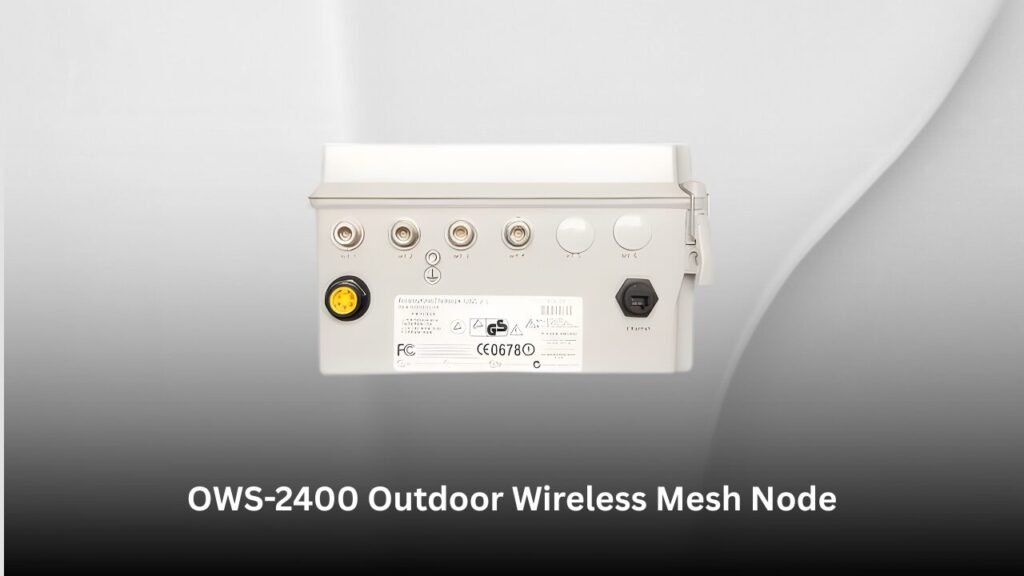
OWS-2400 Outdoor Wireless Mesh Node: Industrial-Grade Mesh Wi-Fi Router for Seamless Connectivity
27 February 2026 By Aeromesh Team In General
In large outdoor environments, whether sprawling campuses, industrial parks, or remote infrastructure sites, connectivity gaps and network failures can disrupt operations, data flows, and mission-critical systems. Traditional point-to-point links and standalone access points often struggle with coverage and failover resilience. Here’s where a robust mesh wifi router architecture becomes indispensable: devices like the OWS-2400 Outdoor Wireless Mesh Node deliver scalable, self-healing connectivity that keeps distributed systems aligned and online even under harsh environmental conditions. What Is a Mesh Wi-Fi Router and Why OWS-2400 Matters A mesh wifi router is a networking device that participates in a mesh network: a decentralized architecture where each node exchanges data with multiple neighboring nodes, creating redundant paths and eliminating single points of failure. In industrial wireless deployments, this architecture enables wide area coverage with high reliability, low latency, and resilience against node outages. The OWS-2400 Outdoor Wireless Mesh Node fits into this landscape as a rugged, outdoor-rated mesh router designed for demanding enterprise and industrial environments. It supports dual-band operation – typically 2.4/5GHz – and may include additional spectrum such as 4.9GHz for licensed or public safety use. How Mesh Networks Work: The Basics Explained At its core, a mesh network is about connectivity diversity, not a single broadcast point. Each node: Communicates with several neighbors, creating multiple paths for data to travel. Self-heals by rerouting traffic when a device drops or interference occurs. Scales easily: adding nodes increases coverage without redesigning the network topology. This decentralized routing is crucial for industrial scenarios from mining sites spanning kilometres, to smart city infrastructure covering city blocks where continuous connectivity is more important than a centralized Wi-Fi star topology. What Makes OWS-2400 Suitable for Outdoor Industrial Environments? Ruggedized Design for Harsh Conditions Outdoor wireless installations face dust, heat, rain, and wind. Unlike indoor consumer mesh devices, the OWS-2400 is engineered to endure: Weatherproof housings Wide operating temperature ranges High mechanical tolerance for vibration and shock These elements allow it to be deployed across plant yards, campuses, utility corridors, and remote facilities with minimal maintenance and maximum uptime. Dual-Band and Multi-Spectrum Support By supporting both 2.4GHz and 5GHz Wi-Fi bands – and in some implementations even dedicated bands like 4.9GHz for public safety or licensed backhaul – the OWS-2400 facilitates: Optimized throughput across different frequencies Reduced interference in congested spectrum environments Better coexistence with other wireless systems, including industrial IoT radios and critical communication systems. Architecture Deep Dive: Redundancy, Latency, and Scalability Industrial wireless mesh networking isn’t just about coverage – it’s about predictable performance. Redundancy for Continuous Operations In mesh architecture, each node maintains connections with its neighbours. If one node fails or degrades due to interference, traffic automatically reroutes through alternate paths. This self-healing behaviour ensures network continuity – especially important for real-time systems like automated control or surveillance. Low Latency for Time-Sensitive Applications Latency – the time it takes for data to travel from source to destination – is often a bottleneck in multi-node wireless networks. Optimized mesh routers such as OWS-2400 implement intelligent wireless routing so that: Data takes the shortest effective path Congestion is monitored and mitigated Real-time applications (SCADA, VoIP, video analytics) function without lag These capabilities ensure that latency remains within acceptable thresholds even as the number of hops increases – a critical factor for industrial automation and monitoring systems. Scalability Across Large Footprints Adding nodes in a mesh doesn’t require redesigning the underlying network. New OWS-2400 units can be placed where needed – along perimeters, between buildings, in open yards – and they will self-integrate into the existing mesh. This is essential when operations expand or when coverage must evolve with deployments. Practical Use Cases: India and Global Infrastructure Smart Cities and Municipal Networks Cities deploying public Wi-Fi and IoT infrastructure can leverage OWS-2400 mesh routers to: Provide blanket outdoor coverage in town centres Support surveillance and traffic systems Integrate public safety communications with enterprise networks Industrial Parks and Manufacturing Campuses In factories and industrial parks, this node supports: Wireless connectivity to PLCs and sensors across production lines Real-time monitoring of assets and processes Secure communication for operational data flow without hard-wired links Remote Sites and Utility Networks Utility providers and remote infrastructures – like pipelines or grid stations – benefit from mesh networking by eliminating long cabling runs and enabling adaptive routing in challenging terrains. Across India’s diverse environments and global remote operations alike, mesh solutions built around nodes like the OWS-2400 help deliver high availability, low maintenance, and scalable coverage. Performance Considerations: What to Evaluate When designing a mesh network with outdoor nodes like the OWS-2400, consider the following: Latency and Throughput Always balance the number of hops and anticipated traffic loads. Mesh routers must maintain throughput while avoiding latency spikes, especially when supporting video and real-time control streams. Network Redundancy Strategies Deploy nodes with overlapping coverage footprints to ensure multiple routing paths and fault tolerance, especially where network uptime is critical. Spectrum and Interference Management Outdoor environments are RF-noisy. Select devices capable of dynamic channel selection and interference mitigation to maintain link stability. Scalability Planning Plan for future expansion by checking node capacity (number of connected clients, throughput per radio, etc.) and ensuring mesh controllers can handle incremental node additions without manual reconfiguration. Conclusion The OWS-2400 outdoor wireless mesh node exemplifies what robust, industrial-grade mesh wifi routers can deliver: resilient connectivity, scalable architecture, and reliable performance across harsh outdoor environments. By leveraging decentralized routing, multi-band support, and self-healing mesh intelligence, it meets the demands of expansive enterprise networks – from industrial automation to large campus deployments – without the fragility of traditional point-to-point systems. FAQ 01 What exactly is a mesh Wi-Fi router? A mesh Wi-Fi router is a network device that connects in a decentralized mesh topology, allowing multiple nodes to communicate directly and route traffic redundantly. It eliminates single failures and expands coverage dynamically. 02 Can outdoor mesh routers handle industrial environments? Yes. Outdoor mesh nodes are engineered with rugged housings and wide thermal tolerance, making them suited for harsh industrial conditions and wide outdoor deployments. 03 How does a mesh network improve reliability? Mesh networks automatically reroute traffic through alternate nodes if one node fails, offering continuous connectivity and self-healing paths. 04 Is low latency achievable with mesh architectures? Yes. High-performance mesh routers optimize routes and minimize hops, maintaining low latency suitable for time-critical applications like SCADA and video. 05 What deployment scenarios benefit most from outdoor mesh networks? Large campuses, industrial parks, smart cities, utility networks, and sprawling outdoor sites benefit from mesh networks due to their scalable and redundant nature.

Reliable Wireless Networks for Surveillance and Video Monitoring Systems
25 February 2026 By Aeromesh Team In General
Industrial surveillance systems are no longer optional. From mining corridors in India to global logistics hubs, enterprises depend on uninterrupted video visibility for safety, compliance, and operational intelligence. Yet traditional Wi-Fi often fails in large, rugged, or mobile environments. That is why many IT and OT leaders are evaluating the best mesh wifi architecture for mission-critical video monitoring. A well-designed wireless mesh network delivers resilience, scalability, and predictable performance – even in harsh industrial conditions. Why Surveillance Networks Fail in Industrial Environments Video monitoring systems generate continuous, high-bandwidth traffic. A single HD camera can consume 4-8 Mbps. Multiply that across hundreds of cameras, and the network becomes a critical bottleneck. Common failure points include: Single-point-of-failure access points Congested radio channels High latency during roaming Poor coverage across wide or obstructed areas Limited backhaul capacity In environments such as open-pit mines in India, oil and gas facilities in the Middle East, or container terminals in Southeast Asia, network interruptions directly impact safety and compliance. 0A resilient architecture must address redundancy, mobility, and sustained throughput simultaneously. What Is a Wireless Mesh Network? A wireless mesh network is a decentralized network architecture where multiple nodes connect to each other dynamically instead of relying on a single central controller. Each node acts as both: An access point for client devices like IP cameras A relay point forwarding traffic to other nodes This multi-hop design ensures that if one link fails, traffic automatically reroutes through another path. In simple terms, it creates multiple pathways for data, improving reliability and fault tolerance. How Does the Best Mesh Wifi Architecture Support Video Surveillance? 1. Multi-Path Redundancy Unlike traditional star networks, mesh topology provides alternative data routes. If a node goes offline due to power or interference issues, traffic reroutes instantly. This is critical for: Perimeter security cameras Remote substation monitoring Highway or railway surveillance systems For example, Indian metro rail projects deploy distributed surveillance across long corridors where centralized Wi-Fi would create coverage gaps. 2.Dedicated Backhaul for High-Performance Traffic A High performance wireless mesh network separates client access traffic from backhaul traffic. Backhaul refers to the internal communication between mesh nodes. When dedicated radios handle backhaul: Camera streams do not compete with control traffic Throughput remains consistent Packet loss reduces significantly This separation ensures smoother 4K video transmission in environments like smart city deployments or large manufacturing plants. What Performance Metrics Matter for Video Monitoring? For surveillance systems, performance is not just about speed. CTOs and network architects must evaluate: Latency Latency is the time taken for data to travel from camera to monitoring center. Low latency ensures: Real-time monitoring Faster incident response Accurate PTZ camera control In most industrial surveillance networks, sub-20 ms latency is considered acceptable for live feeds. Throughput Throughput measures how much data the network can carry. High-definition and AI-enabled cameras require significant bandwidth. A scalable mesh must support: 100+ concurrent streams Future upgrades to 4K or AI-based video analytics Redundancy Redundancy prevents downtime. Industrial networks should provide: Automatic failover Self-healing topology Multiple routing paths This is particularly relevant in ports like Mumbai or Rotterdam where downtime can halt logistics operations. Scalability Surveillance systems grow over time. A wireless mesh network allows new nodes to be added without reconfiguring the entire architecture. This supports: Smart factory expansions New warehouse zones Additional perimeter coverage Architecture Considerations for Surveillance Mesh Networks Distributed Topology In distributed mesh architecture: No single controller becomes a bottleneck Nodes dynamically calculate optimal routes Load balancing occurs automatically This approach ensures consistent performance even as camera density increases. Quality of Service – QoS QoS prioritizes critical video packets over less important traffic. For example: Emergency alerts get higher priority Routine background uploads are deprioritized This maintains clarity during peak usage. Spectrum Planning Industrial sites often have RF interference from machinery. Proper spectrum planning includes: Channel optimization Dual or tri-radio configurations Dynamic frequency selection A High performance wireless mesh network must adapt to interference without manual intervention. Industrial Use Cases – India and Global Context Open-Pit Mining in India Mining operations in states like Odisha and Jharkhand require long-range surveillance across uneven terrain. Mesh nodes placed across haul roads and excavation zones: Ensure continuous camera coverage Support vehicle tracking Provide rapid failover during equipment movement Smart Cities and Traffic Monitoring Urban centers deploy surveillance for traffic enforcement and public safety. Mesh networks support: Pole-mounted cameras Edge analytics Integration with command centers This reduces fiber dependency in dense areas. Oil and Gas Refineries Refineries require explosion-safe and redundant connectivity. A wireless mesh network: Minimizes wired infrastructure Provides mobility for inspection units Maintains uninterrupted monitoring in hazardous zones Large Manufacturing Plants Factories integrating Industry 4.0 systems rely on integrated video and sensor monitoring. Mesh architecture: Connects robotic lines Supports AI-powered defect detection Enables flexible plant reconfiguration Why Not Traditional Wi-Fi for Surveillance? Traditional Wi-Fi depends heavily on centralized controllers and single-hop communication. Challenges include: Coverage limitations High roaming delays Complex reconfiguration during expansion Limited resilience during outages In contrast, the best mesh wifi systems are designed for: Wide geographic coverage Continuous uptime High client density Predictable performance For surveillance, predictability matters more than peak theoretical speed. Security Considerations in Surveillance Mesh Networks Video surveillance carries sensitive data. A robust mesh solution should include: End-to-end encryption Secure authentication Network segmentation between camera and enterprise traffic Secure remote management Industrial IoT deployments must also comply with regional data protection requirements, especially in smart city projects. Future-Proofing Surveillance Networks As AI-driven video analytics expands, networks must handle: Edge computing integration Real-time object detection Higher resolution streams Increased camera density A scalable wireless mesh network supports gradual upgrades without forklift replacements. This flexibility makes mesh architecture suitable for long-term infrastructure investments. Conclusion Reliable video monitoring depends on more than camera quality. It requires a resilient, scalable, and intelligently designed network foundation. The best mesh wifi architecture delivers multi-path redundancy, low latency, dedicated backhaul, and seamless scalability – all essential for industrial surveillance environments. For CTOs, network architects, and infrastructure leaders, investing in a High performance wireless mesh network is not about faster internet. It is about uninterrupted visibility, operational continuity, and future-ready infrastructure. FAQs 01 What makes mesh wifi better for surveillance systems? Mesh architecture provides multiple data paths and automatic failover, ensuring continuous video streaming even if one node fails. 02 How much bandwidth does a surveillance camera require? An HD camera typically uses 4-8 Mbps. 4K cameras may require 15-25 Mbps depending on compression. 03 Can a wireless mesh network handle 100+ cameras? Yes, if designed with proper backhaul capacity, QoS, and scalable node placement. 04 Is mesh suitable for outdoor industrial environments? Yes. Industrial-grade mesh nodes are built for harsh conditions and support long-range outdoor deployment. 05 Does mesh reduce latency for live video monitoring? A properly engineered High performance wireless mesh network can maintain low latency suitable for real-time monitoring and PTZ control.

Choosing Between Point-to-Point and Mesh Networks for Outdoor Connectivity
23 February 2026 By Aeromesh Team In General
Outdoor connectivity has become mission-critical for industrial operations, smart infrastructure, and distributed enterprises. Whether you are connecting remote substations, mining fleets, logistics yards, or campus-wide surveillance, the decision often comes down to point-to-point links or the best mesh WiFi system for large-scale deployments. For CTOs and network architects, the real challenge is not just connectivity – it is resilience, scalability, latency control, and long-term operational efficiency. This article explains how point-to-point and wireless mesh network architectures differ, and how to evaluate them for outdoor industrial environments. Why Outdoor Connectivity Design Matters in Industrial Environments Unlike indoor enterprise Wi-Fi, outdoor networks face: Long distances Harsh weather conditions Moving assets and vehicles Interference from metal structures and machinery Limited fiber availability In India and across global industrial markets, sectors such as mining, oil and gas, ports, power utilities, smart cities, and large campuses require high uptime and predictable performance. A poor architectural choice can result in frequent outages, expensive redesigns, and operational disruption. What Is a Point-to-Point Network? A point-to-point (PtP) network connects two fixed locations directly using a dedicated wireless link. How It Works Two radio devices are aligned with clear line-of-sight. Data travels directly between them without intermediate nodes. Think of it as a wireless bridge replacing fiber between: Two factory buildings A plant and a warehouse A control room and a remote substation Key Characteristics High throughput over a single link Low latency Requires clear line-of-sight No automatic rerouting Where Point-to-Point Works Well Short-to-medium distance building connectivity Stable environments with minimal topology changes Dedicated backhaul links For example, a manufacturing facility in Gujarat connecting an administrative block to a production unit 800 meters away may find PtP sufficient. However, scaling beyond two or three links quickly increases complexity. What Is a Wireless Mesh Network? A wireless mesh network consists of multiple interconnected nodes that communicate with each other dynamically. Each node can send, receive, and relay data. If one link fails, traffic automatically reroutes through another path. Simple Definition A mesh network is a self-healing, multi-path wireless architecture designed for resilience and expansion. How It Works Instead of relying on a single direct link, each node connects to multiple neighboring nodes. The network continuously selects the best path based on link quality. This architecture is the foundation of many industrial deployments that require the best mesh WiFi system for outdoor connectivity. Architectural Differences: Linear vs Multi-Path Design Point-to-Point Architecture Linear topology One link per connection Manual expansion Limited redundancy If a radio fails, the connection drops until repaired. Mesh Architecture Multi-path topology Automatic rerouting Scales horizontally Built-in redundancy If one node fails, traffic flows through alternate routes. For large outdoor campuses or industrial zones, this distinction becomes operationally critical. Performance Considerations for CTOs and Network Architects Latency Point-to-point links typically offer predictable low latency because traffic follows a direct path. Mesh networks introduce additional hops. However, modern industrial-grade wireless mesh network solutions optimize routing to maintain low latency even across multiple nodes. In real-time applications such as: SCADA systems Automated guided vehicles (AGVs) Video surveillance analytics Latency planning is essential. Redundancy and High Availability Point-to-point links require separate redundant links for failover. This increases hardware cost and complexity. Mesh networks are inherently redundant. Multiple paths exist between nodes, making them ideal for: Mining operations in Rajasthan Oil and gas pipelines Smart city surveillance grids For mission-critical environments, redundancy is often more valuable than raw throughput. Scalability Point-to-point networks scale poorly in large environments. Adding new locations requires new dedicated links. In contrast, a wireless mesh network scales incrementally: Add a node It automatically integrates Routes update dynamically For infrastructure heads managing a 200-acre industrial park, scalability significantly impacts long-term cost and operational effort. Coverage Flexibility PtP requires clear line-of-sight between endpoints. Outdoor industrial sites often have: Heavy equipment Stockpiles Buildings Terrain variations Mesh networks can route around obstructions through intermediate nodes. This makes the best mesh WiFi system particularly useful in dynamic or obstacle-rich environments. When Should You Choose Point-to-Point? Point-to-point is suitable when: Only two fixed sites need connectivity Line-of-sight is guaranteed Traffic patterns are stable No need for expansion Example: A power utility connecting a remote solar inverter station to a control building 2 km away may prefer PtP for a dedicated high-capacity backhaul. If redundancy is not mission-critical, PtP remains cost-effective. When Is a Mesh Network the Better Choice? A mesh network becomes advantageous when: Multiple outdoor nodes must connect Assets are mobile Uptime requirements exceed 99.9% Expansion is planned Fiber is unavailable Industrial Use Cases in India and Globally Open-pit mining operations Vehicles, IoT sensors, and surveillance cameras move constantly. Mesh allows seamless roaming and redundancy. Smart ports Cranes, containers, and yard management systems require continuous connectivity across large areas. Oil refineries and petrochemical plants Complex layouts benefit from multi-path routing and automatic failover. Large university or corporate campuses Outdoor Wi-Fi for surveillance, access control, and digital services. In these scenarios, selecting the best mesh WiFi system ensures both coverage and resilience. Cost Considerations: CAPEX vs OPEX Point-to-point may appear cheaper initially for small deployments. However, as sites grow: Additional links increase hardware cost Manual reconfiguration increases operational overhead Redundancy doubles infrastructure Mesh networks may involve higher initial planning but reduce long-term redesign costs and downtime. For industrial IoT decision-makers, total cost of ownership often favors mesh in large environments. Security Implications Outdoor networks must handle: Device authentication Encrypted communication Network segmentation Modern wireless mesh network platforms support: WPA3 or enterprise-grade encryption VLAN segmentation Centralized management Security design should align with IT and OT convergence policies. How to Make the Right Decision? CTOs and infrastructure heads should evaluate: Number of sites to connect Geographic spread Redundancy requirements Expected future expansion Mobility requirements Environmental challenges If the requirement is simple and static, point-to-point is sufficient. If the requirement is distributed, dynamic, and mission-critical, the best mesh WiFi system is typically the more future-ready architecture. Conclusion Choosing between point-to-point and mesh networks for outdoor connectivity is not about which technology is better in general. It is about which architecture aligns with operational realities. Point-to-point works well for simple, fixed, two-location links with predictable traffic. It offers direct connectivity and low latency. However, for large-scale industrial deployments, dynamic environments, and high-availability requirements, a wireless mesh network provides resilience, scalability, and long-term efficiency. For organizations seeking the best mesh WiFi system for outdoor connectivity, mesh architecture often delivers superior adaptability and uptime in complex industrial environments. FAQs 01 What is the main difference between point-to-point and mesh networks? Point-to-point connects two locations directly with a single link. A mesh network connects multiple nodes with multiple paths and automatic rerouting. 02 Is a mesh network slower than point-to-point? Not necessarily. While mesh involves multiple hops, modern routing protocols optimize paths to maintain low latency for industrial applications. 03 Which network is better for mining or large industrial sites? A wireless mesh network is typically better because it provides redundancy, mobility support, and scalable coverage across large outdoor areas. 04 Can point-to-point networks scale easily? Scaling point-to-point requires adding new dedicated links. This increases complexity compared to mesh networks that integrate new nodes dynamically. 05 What should CTOs consider before choosing a network architecture? They should evaluate site size, redundancy needs, future expansion, latency requirements, and environmental challenges before selecting the best mesh WiFi system.

Scaling Enterprise Networks with Mesh Wi-Fi: A Practical Deployment Guide
19 February 2026 By Aeromesh Team In General
In today’s digital-intensive world, enterprises are under constant pressure to deliver seamless connectivity – not just in headquarters but across sprawling campuses, remote branch offices, and hybrid work environments. Traditional Wi-Fi approaches often struggle under this demand, exhibiting coverage gaps, inconsistent performance, and complex infrastructure costs. Mesh Wi-Fi has emerged as a powerful solution capable of scaling wireless networks in a way that is resilient, adaptable, and easier to manage. But theory alone won’t help a network engineer or IT leader make informed decisions. This guide moves past abstract promises. It offers concrete deployment steps, real-world use cases, statistics where relevant, and expert insights you can apply immediately. Whether you’re preparing for a phased rollout or evaluating alternatives like traditional access point (AP) architectures, by the end of this article you’ll have a clear roadmap for scaling enterprise networks with mesh Wi-Fi. Why Mesh Wi-Fi Matters for Enterprise Scaling Traditional enterprise Wi-Fi typically relies on a controller-based architecture with a central controller managing distributed access points. While this works well in stable, predictable environments, it reveals limitations as scale and complexity grow. Mesh Wi-Fi offers a different paradigm: every node can serve clients and relay traffic dynamically. This creates a self-healing network that adapts to changes in traffic patterns and physical disruptions. For enterprises with large buildings, multi-floor campuses, or outdoor spaces, mesh Wi-Fi isn’t just a convenience – it’s a strategic foundation. Before we dig into deployment, let’s look at some compelling reasons enterprises are adopting mesh: Improved coverage without trenching cables: In environments where Ethernet runs are expensive or impractical, mesh nodes extend wireless reach through wireless backhaul. Simplified expansion: New nodes can be added with minimal configuration, automatically integrating into the mesh. Resilience and redundancy: If a node or wired link fails, mesh routing dynamically redirects traffic through alternate paths. Centralized management: Modern mesh solutions include cloud-based dashboards, analytics, and AI-driven optimization. Planning Your Enterprise Mesh Deployment Deploying mesh Wi-Fi isn’t plug-and-play. Proper planning ensures you avoid common pitfalls like over-saturation, interference, or poor client experience. Assess Coverage Requirements Begin with a detailed site survey. This can be physical or using predictive design tools. Key steps include: Mapping high-density zones (e.g., conference rooms, lobbies, manufacturing floors) Identifying potential interference sources (e.g., microwave ovens, heavy machinery) Understanding building materials – concrete, metal, and glass often attenuate signals Aim to identify coverage and capacity goals before choosing hardware. Select the Right Mesh Hardware Not all mesh systems are equal. In an enterprise context, focus on: Tri-band radios: These improve backhaul performance by dedicating one band to node-to-node communication. PoE support: Power over Ethernet simplifies deployment and ensures reliable power delivery. Enterprise-grade chipsets: Higher throughput and better client handling improve long-term performance. Practical example: A university campus might choose tri-band mesh nodes with dedicated 5 GHz backhaul to support high student density, while a warehouse might prioritize ruggedized outdoor mesh units. Plan Backhaul Strategies Backhaul – the link between mesh nodes – can be wired, wireless, or a mix of both. Wired backhaul is ideal where Ethernet is available; it offloads mesh traffic and preserves wireless spectrum. Wireless backhaul is necessary in locations without cable access but requires careful channel planning to avoid interference. A common hybrid strategy is to wire key nodes and allow wireless backhaul for peripheral or hard-to-reach locations. This balances performance and deployment cost. Step-by-Step Deployment Process Below is a practical deployment flow you can adapt to your enterprise environment. 1. Define Zones and Priorities Segment your network into logical zones. For example: High-priority zones where performance must be optimized (e.g., boardrooms). General coverage zones for standard use (e.g., hallways). Temporary or flexible spaces (e.g., events or pop-ups). This helps guide where to place high-density nodes versus standard ones. 2. Physical Installation and Node Placement Follow these best practices: Mount nodes at ceiling height for optimal coverage. Avoid placing nodes near heavy machinery, thick walls, or large metal objects. Ensure a clear line of sight between nodes where possible. You want mesh nodes to “see” each other without significant blockage. 3. Configure Mesh Parameters Within your management dashboard: Assign SSIDs and security policies. Enable mesh features like automatic routing and self-healing. Configure QoS for VoIP or critical applications. Set up VLANs and segmentation for security. Remember: consistency matters. Utilize templates or profiles to standardize settings across nodes. 4. Validate and Optimize After installation: Perform walk-tests with tools like Ekahau or AirMagnet. Check throughput and latency in key zones. Adjust node placement or power levels based on results. This phase often reveals small tweaks that significantly improve performance. Real-World Use Cases Campus and Large Facilities Universities, hospitals, and corporate campuses benefit from mesh Wi-Fi’s scalability. Instead of running Ethernet everywhere, institutions can deploy nodes in outdoor quads, multi-story buildings, and annexes with minimal infrastructure changes. Example: A university with 30 buildings rolled out a tri-band mesh network that reduced dead spots by 92% and cut annual support tickets by half. Multi-Store Retail Chains Retailers often struggle with consistent connectivity across stores. Mesh Wi-Fi helps centralize configuration while enabling each location to adjust based on size and layout. In one case, a 50-store retail chain deployed mesh across all locations and saw a 40% improvement in checkout performance due to better wireless reliability. Warehouses and Industrial Sites Traditional Wi-Fi can fail in warehouses due to reflective surfaces and moving stock. Mesh networks with dedicated backhaul links stabilize connectivity, enabling better support for IoT sensors and handheld scanners. Studies suggest mesh deployments in industrial environments can boost uptime of connected devices by more than 30% compared to legacy Wi-Fi. Common Challenges and How to Overcome Them Mesh is powerful, but it’s not a silver bullet. Here are common issues and expert tips: Interference: Use site surveys and spectrum analysis to identify noise sources. Selecting the right channels reduces performance degradation. Overcrowded Channels: In dense environments, avoid auto channel selection alone. Manually plan channels where necessary. Security Concerns: Always segment guest and internal traffic. Use WPA3 and regular key rotation. Internal Linking Suggestions To strengthen SEO and nurture readers through your ecosystem of content, consider linking to: A deep-dive on Wi-Fi security best practices (link here) A guide on enterprise network monitoring tools (link here) A case study on successful campus network deployments (link here) These links provide additional value while keeping readers engaged longer. Conclusion Mesh Wi-Fi can be transformative for enterprise scale – but only when planned and deployed thoughtfully. The key steps are clear: assess your environment, choose the right hardware, plan your backhaul strategy, configure systematically, and validate performance. A well-executed mesh deployment delivers stronger coverage, improved redundancy, and lower operational complexity. As demands for connectivity continue to grow, enterprises that embrace mesh architectures position themselves for future-proof networking success. Interested in elevating your enterprise wireless strategy? Let’s talk about how to design and deploy a mesh network tailored to your environment. FAQs 01 Is mesh Wi-Fi suitable for high-density environments like stadiums? Yes. Mesh Wi-Fi excels in high-density scenarios when paired with proper capacity planning and tri-band nodes that dedicate backhaul traffic to reduce contention. 02 How does a mesh network handle node failures? Mesh networks use dynamic routing protocols. If a node fails, traffic is automatically rerouted through neighboring nodes, maintaining connectivity with minimal impact. 03 What’s the difference between wireless mesh backhaul and wired backhaul? Wireless backhaul uses radio links between nodes, ideal where wired connections are impractical. Wired backhaul - Ethernet or fiber - offers more predictable performance but requires cable infrastructure.

Industrial Wireless Security: Protecting Data Across Distributed Mesh Networks
16 February 2026 By Aeromesh Team In General
Industrial environments are no longer just operational spaces. They are data ecosystems. Every crane movement in a port, every robotic arm on a factory floor, every roadside camera along a transportation corridor depends on uninterrupted wireless connectivity. A wireless mesh network makes this possible. It eliminates the dependency on fiber in large distributed environments and ensures coverage across wide industrial areas. But with this flexibility comes exposure. More nodes mean more entry points. More distributed traffic means more interception risk. If connectivity is the nervous system of industrial infrastructure, security is its immune system. Without it, even the best mesh WiFi deployment becomes a liability. This article explores how to secure distributed mesh networks in industrial settings using architectural discipline, strong encryption, segmentation, and continuous oversight. The Unique Risk Profile of Industrial Mesh Networks Unlike office WiFi, an industrial wireless mesh network operates across open yards, highways, plants, and terminals. Nodes are often installed outdoors and connected across multiple hops before traffic reaches a core system. This multi-hop, distributed nature creates two realities: The attack surface is geographically spread out Data flows through intermediate nodes before reaching its destination In a port or logistics hub, for example, surveillance feeds may travel across several mesh nodes before reaching a monitoring center. If backhaul links are not encrypted, interception becomes possible. Security therefore must be embedded into the network design, not added later as a configuration tweak. Designing Secure Mesh Architecture from Day One Security begins at architecture level. The structure of the network determines how resilient it will be against threats. Industrial-grade mesh systems typically use multi-radio architecture. One radio handles client access. Another manages backhaul communication between nodes. In advanced deployments, a third radio may support management traffic. Separating traffic in this way reduces congestion and limits exposure. Backhaul traffic should never compete with client devices on the same channel. Isolation improves both performance and security. Encryption must be enforced consistently. WPA3 Enterprise with AES-256 encryption is the current standard for secure wireless access. Backhaul links should also be encrypted independently so that every hop in the mesh remains protected. Certificate-based authentication further strengthens access control. Instead of shared passwords, devices authenticate using unique credentials issued by a centralized authority. This prevents unauthorized nodes from joining the network. Physical security also matters. Outdoor mesh nodes in industrial environments should use tamper-resistant enclosures and secure mounting positions. A physically compromised device can quickly become a digital vulnerability. Securing the Backhaul Layer The backhaul is the backbone of any wireless mesh network. It carries aggregated data from multiple nodes toward the central infrastructure. If the backhaul is exposed, the entire network is at risk. Industrial deployments must ensure that: Backhaul traffic is encrypted end-to-end Routing updates are authenticated Rogue nodes are detected and isolated In a container terminal, for instance, distributed mesh nodes may relay real-time video from dozens of cameras. Encrypted backhaul ensures that sensitive footage cannot be intercepted as it moves across the yard. Secure routing protocols are equally important. Since mesh networks dynamically calculate optimal paths, routing tables must be protected from manipulation. Attackers should not be able to inject malicious route updates. Network Segmentation: Limiting the Blast Radius One of the most effective security controls in industrial wireless environments is segmentation. Many organizations still operate flat networks where surveillance systems, operational control devices, employee laptops, and contractor devices share the same network space. This creates unnecessary risk. Segmentation ensures isolation between operational domains. A practical model often includes: A dedicated segment for surveillance systems A separate segment for operational control systems An isolated network for employee access A restricted network for guest or contractor devices In manufacturing facilities, isolating robotic control systems from general connectivity prevents lateral movement if a non-critical device is compromised. Segmentation does not eliminate breaches. It limits their impact. Continuous Monitoring Is Non-Negotiable Security in industrial wireless environments is not a one-time configuration task. It is an ongoing operational responsibility. Real-time monitoring allows teams to detect unusual behavior before it escalates. Sudden spikes in traffic from normally low-bandwidth devices may indicate compromise. Unauthorized login attempts should trigger alerts. Centralized management dashboards provide visibility into node health, encryption status, and performance metrics. Integration with SIEM systems enhances correlation across IT and operational environments. Organizations expanding connectivity in ports or transportation corridors should also align mesh monitoring with their broader infrastructure security framework. Internal linking to related articles on resilient wireless infrastructure can help create a cohesive knowledge base for stakeholders. Hardening Edge Devices In distributed mesh deployments, edge devices are often the weakest link. Cameras, sensors, vehicle tracking modules, and IoT controllers must be secured individually. Secure boot processes ensure that devices only run trusted firmware. Unused ports should be disabled to reduce exposure. Firmware updates must be applied regularly and verified through digital signatures. Device identity is critical. Every device connecting to the best mesh WiFi infrastructure should authenticate uniquely. Shared credentials dramatically increase vulnerability. Quarterly audits should review device inventories, firmware versions, and encryption settings. Small oversights accumulate over time and eventually create risk gaps. Real-World Industrial Applications In seaport environments, mesh networks support crane operations, access control systems, container tracking, and surveillance. Distributed secure backhaul ensures that operations continue without exposing sensitive data. In manufacturing plants, automated guided vehicles rely on stable wireless connections. Secure mesh infrastructure protects production continuity and prevents unauthorized interference. In smart transportation corridors, roadside cameras and environmental sensors connect across kilometers where fiber is impractical. A hardened wireless mesh network provides both redundancy and protected data transmission. In each case, security is not separate from performance. It enables performance. Conclusion: Build Security Into the Mesh, Not Around It Industrial wireless security is about protecting operations as much as protecting data. Downtime, data manipulation, or unauthorized access can disrupt logistics, production, and safety. A well-designed wireless mesh network with distributed backhaul radios and multi-radio structure offers resilience by design. When paired with strong encryption, certificate-based authentication, segmentation, and continuous monitoring, it becomes a secure foundation for industrial growth. If your organization is scaling connectivity across ports, factories, or transportation systems, conduct a structured security assessment before expansion. Review your architecture. Validate encryption standards. Isolate traffic. Audit edge devices. Secure connectivity is not optional in distributed industrial environments. It is the foundation of reliable operations. FAQs 01 Is a wireless mesh network suitable for mission-critical industrial environments? Yes, provided it uses enterprise-grade encryption, secure routing, segmentation, and continuous monitoring. Consumer-grade mesh systems are not designed for industrial risk profiles. 02 How does industrial mesh differ from typical best mesh WiFi systems? Industrial mesh networks use multi-radio architecture, encrypted backhaul, hardened outdoor hardware, and advanced routing validation. Office mesh systems prioritize convenience and coverage rather than operational security. 03 How frequently should industrial wireless security be reviewed? A formal review every quarter is recommended. This should include firmware validation, encryption checks, segmentation audits, and monitoring rule updates to address evolving threats.

Wireless Backhaul Solutions: Connecting Remote Sites Without Fiber
13 February 2026 By Aeromesh Team In General
Remote sites rarely wait for perfect infrastructure. Mining zones expand. Highways stretch beyond city limits. Renewable plants are built where land is available, not where fiber exists. Yet every one of these environments depends on reliable, high-capacity connectivity. The challenge is simple – how do you connect remote sites without fiber? The answer, increasingly, is a properly designed wireless mesh network built specifically for backhaul performance. Modern wireless backhaul is not a temporary workaround. When implemented correctly with distributed backhaul radios and multi-radio architecture, it becomes a resilient, scalable alternative to fiber. This article focuses on how wireless mesh backhaul actually works in the field and how to implement it correctly. Why Traditional Backhaul Models Fail in Remote Environments Point-to-point radio links have been used for years to connect remote locations. While effective in simple deployments, they introduce structural limitations: Single path dependency Limited redundancy Complex expansion Vulnerability to link obstruction In dynamic industrial or transportation environments, these limitations quickly surface. One broken link can isolate an entire segment. This is where a wireless mesh network fundamentally changes the architecture. The Real Strength of a Wireless Mesh Network A wireless mesh network is not just multiple radios connected together. Its strength lies in distributed intelligence and multi-path routing. In a true mesh backhaul design: Each node communicates with multiple neighboring nodes Traffic dynamically reroutes around failures No single node acts as a permanent bottleneck Expansion does not require redesigning the core The key differentiator in modern systems is the distributed backhaul radio architecture. Distributed Backhaul Radio Architecture Explained Traditional systems often use a single radio for both client access and backhaul. This creates congestion and performance degradation. Modern industrial-grade mesh systems use: Multi-Radio Structure Each node typically includes: Dedicated backhaul radios Separate client access radios Independent frequency management This separation ensures that backhaul traffic does not compete with access traffic. It improves throughput stability and reduces latency spikes. Distributed Backhaul Intelligence Instead of relying on a central controller to make routing decisions, distributed backhaul nodes make real-time decisions based on: Link quality Signal strength Congestion levels Interference If one path degrades, traffic automatically shifts to the next optimal route without human intervention. This is critical in remote environments where on-site IT teams may not be available. How Multi-Radio Mesh Improves Performance Let us break this down practically. In a single-radio chain topology: Node A connects to B B connects to C C connects to D If B fails, everything downstream collapses. In a multi-radio wireless mesh network: Node A connects to B and C Node B connects to A, C, and D Node C connects to A, B, and D Each node uses dedicated radios for backhaul, enabling simultaneous links. This architecture provides: Higher aggregate throughput Reduced latency variation Automatic failover Smoother video transmission Better QoS handling For high-bandwidth applications like surveillance and industrial monitoring, this makes a measurable difference. Implementation Strategy for Wireless Mesh Backhaul Designing a wireless mesh network for remote backhaul requires structured planning. Here is a practical implementation approach. Site and Terrain Analysis Before selecting equipment, evaluate: Elevation differences Obstructions Interference sources Weather patterns Power availability Use RF planning tools to simulate link quality and redundancy. Skipping this step often results in unstable performance later. Define Backhaul Capacity Requirements Calculate: Number of cameras and resolution IoT sensor density Control system data Future scalability For example, 20 HD cameras at 6 Mbps each already require 120 Mbps sustained backhaul, excluding overhead. Overdesign slightly to avoid saturation during peak usage. Design for Redundancy, Not Just Coverage Coverage alone is not enough. The real advantage of a wireless mesh network comes from path diversity. Best practice: Ensure each node connects to at least two neighbors Avoid linear daisy-chain layouts Use height strategically for clear line-of-sight This creates a self-healing topology rather than a fragile chain. Separate Backhaul and Access Traffic If your mesh nodes also provide Wi-Fi access, use a multi-radio structure: Dedicated 5 GHz or licensed band for backhaul Separate radio for client devices Independent channel planning This is where many deployments fail. Mixing access and backhaul traffic on a single radio reduces performance dramatically. When evaluating the best mesh wifi solutions for industrial backhaul, prioritize systems that clearly separate these functions. Consumer mesh products are not designed for distributed backhaul in harsh environments. Industrial mesh platforms are purpose-built for long-range stability and traffic segregation. Integrate with Hybrid Architecture When Needed In many cases, the optimal design combines: Fiber at core aggregation points Wireless mesh for remote segments This reduces trenching while maintaining high-speed uplink performance. If you already have content on hybrid network architectures, this is a strong place for internal linking within your website. Real-World Use Cases Mining and Construction Sites These sites change constantly. Equipment relocates. Boundaries expand. Wireless mesh allows: Rapid deployment Scalable expansion Reliable CCTV streaming Worker communication systemsNodes can be mounted on portable masts and repositioned as operations evolve. Renewable Energy Farms Solar and wind installations cover large areas. Wireless mesh backhaul connects: Inverter stations Weather sensors SCADA systems Security infrastructure If one node fails, monitoring continues through alternate routes. Transportation Corridors Highways require continuous connectivity for: Traffic cameras Smart signage Incident detection systems Connected vehicle communication Deploying fiber along hundreds of kilometers is expensive. A distributed wireless mesh network offers resilience with faster rollout. This is also a relevant point for internal linking to your transportation infrastructure content. Public Safety Networks Remote surveillance networks depend on uptime. Multi-radio mesh ensures: Stable video feeds Reduced packet loss Automatic failover during link degradation Continued operation during partial outages In disaster scenarios where fiber is damaged, wireless mesh continues operating if designed with sufficient redundancy. Cost and Deployment Advantages Wireless backhaul typically offers: Lower initial infrastructure cost Faster deployment timelines Minimal civil construction Easier expansion Organizations frequently reduce rollout time from months to weeks. However, cost savings should not come at the expense of architecture quality. Poorly designed mesh networks create bottlenecks that are expensive to fix later. Conclusion Wireless backhaul is no longer a secondary option. With a properly implemented wireless mesh network using distributed backhaul radios and multi-radio structure, remote sites can achieve reliable, scalable connectivity without fiber. The real performance advantage comes from: Path redundancy Traffic separation Distributed routing intelligence Scalable node expansion If you are planning remote connectivity for industrial, transportation, or energy infrastructure, focus on architecture first. Equipment selection should support distributed backhaul, not just basic Wi-Fi coverage. A well-designed mesh backhaul network is not simply wireless connectivity. It is resilient infrastructure built for long-term performance. For deeper technical planning frameworks and deployment strategies, explore our related resources on industrial mesh design and hybrid network architectures. FAQs 01 Is a wireless mesh network suitable for mission-critical backhaul? Yes, when implemented with multi-radio architecture and redundant node placement. Distributed backhaul ensures automatic failover and stable performance. 02 What is the main advantage of distributed backhaul radios? They separate backhaul traffic from client access traffic, preventing congestion and improving throughput consistency. 03 How is industrial mesh different from the best mesh wifi used in homes? Industrial mesh systems are designed for long-range outdoor performance, harsh environments, and dedicated backhaul capacity. Home mesh Wi-Fi systems are optimized for indoor coverage and light client traffic.

Building Resilient Wireless Infrastructure for Smart Transportation Systems
12 February 2026 By Aeromesh Team In General
Smart transportation systems are no longer experimental projects. They are operational frameworks that cities and transit authorities depend on every day. Traffic signals communicate in real time. Buses transmit diagnostics continuously. Surveillance systems stream high-definition video. Highway infrastructure interacts with connected vehicles. Passenger WiFi operates alongside safety systems. All of it runs on wireless infrastructure. The challenge is not deploying connectivity. The challenge is making it resilient. When connectivity drops inside a commercial office, productivity slows. When connectivity drops in a transportation system, safety, coordination, and response time are affected. That difference changes how networks must be designed. Resilience is not a feature. It is the foundation. Why Smart Transportation Demands a Different Network Architecture Transportation environments are unpredictable by nature. Infrastructure stretches across open highways, dense city corridors, underground tunnels, bridges, depots, and transit hubs. Devices are constantly moving. Environmental interference shifts throughout the day. Usage spikes are dramatic and often sudden. Traditional centralized wireless models struggle in these conditions. They depend heavily on fixed access points and defined coverage zones. When one segment fails, performance degrades quickly. A transportation wireless mesh architecture distributes connectivity instead of concentrating it. That difference is what enables continuity. How a Wireless Mesh Network Builds Resilience A wireless mesh network connects nodes in a way that allows each one to relay data for others. Instead of relying on a single path back to a central controller, traffic can move across multiple routes.If one node fails, data automatically reroutes. If interference blocks a path, the system adapts. If a segment becomes overloaded, traffic redistributes. This self-healing behavior is essential in transportation systems where uptime directly affects operations.Resilience in this context means: No single point of failure Automatic path optimization Seamless mobility support Distributed intelligence It is infrastructure that anticipates disruption instead of reacting to it. Real-World Applications in Smart Transportation Intelligent Traffic Signal Networks Modern traffic systems rely on synchronized signals, vehicle detection sensors, and real-time analytics. These systems continuously exchange data to optimize flow and reduce congestion. A resilient mesh network ensures intersections remain connected even if a roadside unit fails or a fiber link is disrupted. Signal timing adjustments continue without interruption. Cities implementing adaptive traffic control systems have reported measurable congestion reductions, often between 10 and 25 percent, when consistent connectivity supports real-time decision making. Connected Public Transit Public transit fleets generate constant streams of operational data: GPS tracking Engine diagnostics Onboard security video Passenger counting metrics When buses or trains move across corridors, they transition between network nodes. A robust wireless mesh network maintains active sessions without drops, allowing control centers to retain visibility at all times. This continuity improves fleet efficiency and supports predictive maintenance strategies that reduce service disruptions. Highway and Corridor Infrastructure Highways introduce distance and environmental challenges. Deploying fiber across long corridors is expensive and time consuming. Cellular coverage can fluctuate in remote zones. Mesh nodes mounted on lighting poles or roadside structures create a connected corridor that supports: Dynamic message signs Incident detection cameras Emergency call systems Vehicle-to-infrastructure communication Because nodes relay traffic between each other, coverage extends beyond line-of-sight limitations common in traditional systems. High-Density Transit Hubs Airports and train stations operate as complex digital ecosystems. Surveillance systems, digital signage, ticketing kiosks, IoT sensors, and passenger connectivity all share the same environment. The best mesh WiFi system in these scenarios separates operational traffic from public access while maintaining consistent throughput under heavy demand. Distributed routing prevents congestion at a single access point, improving both performance and reliability. Designing for Mobility and Continuity Transportation networks differ from static enterprise environments in one critical way: movement is constant. Vehicles travel at speed. Devices connect and disconnect dynamically. Network paths shift in real time. A well-architected transportation wireless mesh supports: Seamless Roaming Devices transition between nodes without renegotiating connections. This prevents session drops during vehicle movement. Low-Latency Communication Safety applications, including collision warnings and adaptive signaling, depend on rapid data exchange. Dynamic path selection keeps latency low even when network conditions change. Edge-Level Processing Modern mesh nodes increasingly include local computing capabilities. This allows certain decisions, such as traffic signal adjustments or anomaly detection, to occur locally instead of relying entirely on centralized systems. Reducing dependency on a distant core improves responsiveness and resilience simultaneously. Managing Scale Without Increasing Fragility Smart transportation deployments rarely remain small. Pilot projects often expand citywide once value is demonstrated. A properly implemented mesh architecture scales horizontally. Adding nodes strengthens the network instead of burdening it. Each new node increases redundancy and coverage, improving overall resilience. This scalability is one of the defining advantages of a wireless mesh network compared to rigid hierarchical designs. Security Within Distributed Infrastructure Public infrastructure demands strict security controls. Wireless systems must protect operational data while remaining flexible. Resilient deployments typically incorporate: Encrypted node-to-node communication Network segmentation between operational systems and passenger access Secure remote management Continuous firmware update mechanisms Because intelligence is distributed, compromise of a single node does not collapse the entire network. Resilience includes cybersecurity resilience. The Strategic Impact of Resilient Connectivity Smart transportation systems are evolving rapidly. Connected vehicles, AI-driven traffic modeling, electrified fleets, and real-time environmental monitoring are expanding the scope of digital infrastructure. Without resilient wireless foundations, these innovations remain limited. A well-designed transportation wireless mesh network enables: Continuous operational awareness Faster incident response Reduced congestion Improved passenger experience Greater long-term infrastructure flexibility Connectivity is no longer a support layer. It is a core component of transportation performance. Conclusion Smart transportation systems depend on uninterrupted communication between infrastructure, vehicles, sensors, and control platforms. In environments defined by movement, interference, and scale, centralized wireless models struggle to maintain reliability. A resilient wireless mesh network distributes connectivity, eliminates single points of failure, and adapts automatically to changing conditions. Whether deployed across urban corridors, transit hubs, or highway networks, mesh architecture provides the durability modern transportation demands. As cities continue investing in connected mobility, the strength of their wireless foundation will determine how effectively those systems perform under real-world conditions. If you are planning to upgrade or expand your smart transportation infrastructure, start by evaluating the resilience of your current network architecture. The right best mesh WiFi system will not only extend coverage but also ensure continuity when it matters most. FAQs 01 What is transportation wireless mesh? Transportation wireless mesh refers to a mesh-based communication architecture designed specifically for transit corridors, highways, intersections, and mobility infrastructure, ensuring resilient and distributed connectivity. 02 How does a wireless mesh network improve reliability? It creates multiple communication paths between nodes. If one path fails, traffic automatically reroutes, maintaining continuous connectivity. 03 Can mesh networks support moving vehicles? Yes. Properly designed mesh systems allow seamless roaming, maintaining active sessions as vehicles move across coverage zones. 04 What makes the best mesh WiFi system for transportation? Strong mobility handling, self-healing routing, scalable architecture, secure communication, and centralized visibility are key characteristics. 05 Is wireless mesh suitable for large highway deployments? Yes. Mesh architecture is particularly effective for long corridors because nodes can relay traffic across extended distances without requiring continuous fiber connections.

How Mesh Wi-Fi Improves Reliability in High-Interference Industrial Zones
06 February 2026 By Aeromesh Team In General
Introduction: Connectivity Challenges in Industrial Environments Industrial zones are some of the most challenging places for wireless connectivity. Heavy machinery, metal infrastructure, electromagnetic interference, moving equipment, and large open spaces can severely disrupt traditional Wi-Fi networks. In such environments, connectivity is not just about speed – it is about reliability, consistency, and uptime. This is where a wireless mesh network becomes a practical solution. Unlike conventional Wi-Fi architectures, mesh Wi-Fi is designed to adapt, self-heal, and maintain performance even in high-interference industrial environments. This blog explores how mesh Wi-Fi improves reliability and why it is increasingly considered the best mesh Wi-Fi system approach for industrial deployments. Understanding High-Interference Industrial Zones What Causes Interference in Industrial Facilities? Industrial interference is caused by a combination of physical and electromagnetic factors, including: Heavy electrical equipment such as motors, generators, and welding machines Dense metal structures that reflect or block signals Radio frequency noise from industrial sensors and control systems Large-scale layouts with warehouses, yards, and production lines These conditions can overwhelm traditional access point-based Wi-Fi networks, leading to dead zones, frequent disconnects, and unstable connections. Why Traditional Wi-Fi Struggles Conventional Wi-Fi relies on a centralized architecture. If an access point fails or experiences interference, devices connected to it lose connectivity. In industrial settings, this single-point dependency becomes a major risk to operations. What Is a Wireless Mesh Network? A wireless mesh network consists of multiple interconnected nodes that communicate with each other dynamically. Instead of relying on a single access point, each node relays data across the network, creating multiple possible paths for communication. Key Characteristics of Mesh Wi-Fi Decentralized architecture Multiple redundant communication paths Dynamic routing of data Self-healing capabilities These features make mesh Wi-Fi particularly effective in environments where interference and physical obstacles are unavoidable. How Mesh Wi-Fi Improves Reliability in High-Interference Industrial Zones Self-Healing Network Architecture One of the biggest advantages of mesh Wi-Fi is its ability to self-heal. If one node experiences interference or fails, the network automatically reroutes traffic through another available node. This ensures uninterrupted connectivity for critical industrial applications such as automation systems, safety monitoring, and asset tracking. Multiple Data Paths Reduce Signal Loss In high-interference environments, relying on a single communication path is risky. Mesh Wi-Fi creates multiple pathways for data transmission, significantly reducing packet loss and latency caused by interference. This redundancy is a core reason why mesh deployments are often considered the best mesh Wi-Fi system for industrial reliability. Better Coverage Across Large and Complex Areas Industrial zones are rarely uniform. They include indoor facilities, outdoor yards, storage areas, and moving equipment. Mesh nodes can be placed strategically across these areas to maintain consistent coverage without requiring extensive cabling. The network adapts in real time, maintaining signal strength even when environmental conditions change. Mesh Wi-Fi vs Traditional Industrial Wi-Fi Reliability Under Interference Traditional Wi-Fi performance drops sharply when interference increases. Mesh Wi-Fi, on the other hand, is designed to operate in noisy environments by dynamically selecting the best available route for data. Scalability Without Performance Loss As industrial operations grow, adding more devices can overload traditional networks. Mesh Wi-Fi allows easy expansion by adding nodes, without redesigning the entire network or degrading performance. Reduced Downtime and Maintenance Because mesh networks are self-healing and decentralized, they require less manual intervention. This reduces downtime and lowers the operational burden on IT teams. Industrial Use Cases Where Mesh Wi-Fi Excels Manufacturing Plants Mesh Wi-Fi ensures reliable connectivity for sensors, control systems, and production monitoring tools operating in electrically noisy environments. Warehouses and Logistics Centers Large spaces with moving inventory and equipment benefit from consistent coverage and seamless roaming provided by a wireless mesh network. Oil, Gas, and Energy Facilities Outdoor industrial sites with harsh conditions require resilient connectivity. Mesh Wi-Fi maintains communication across wide areas without relying on vulnerable wired infrastructure. Key Factors to Consider When Choosing the Best Mesh Wi-Fi System Interference Management Capabilities Look for systems that support dynamic channel selection and adaptive routing to handle fluctuating interference levels. Industrial-Grade Hardware Industrial environments demand rugged devices designed to withstand dust, temperature variations, and vibration. Network Visibility and Control Advanced monitoring and analytics help identify interference sources and optimize performance over time. Choosing the best mesh Wi-Fi system is not about maximum speed on paper – it is about consistent, reliable performance in real-world industrial conditions. Conclusion: Why Mesh Wi-Fi Is Built for Industrial Reliability High-interference industrial zones require more than traditional Wi-Fi can deliver. A wireless mesh network offers resilience, adaptability, and reliability where connectivity cannot afford to fail. By leveraging self-healing architecture, multiple communication paths, and scalable deployment, mesh Wi-Fi ensures continuous operations even in the most challenging environments. For industries prioritizing uptime and performance, mesh Wi-Fi is no longer optional – it is essential. FAQs 01 What makes mesh Wi-Fi suitable for high-interference industrial environments? Mesh Wi-Fi uses multiple interconnected nodes and dynamic routing, allowing the network to bypass interference and maintain stable connectivity. 02 Is a wireless mesh network better than traditional Wi-Fi for industrial use? Yes. A wireless mesh network offers higher reliability, redundancy, and scalability compared to traditional centralized Wi-Fi architectures. 03 Can mesh Wi-Fi handle large industrial areas? Mesh Wi-Fi is highly scalable and ideal for large, complex industrial zones including indoor and outdoor environments. 04 Does interference affect mesh Wi-Fi performance? Interference can still exist, but mesh Wi-Fi minimizes its impact by automatically selecting alternative communication paths. 05 How do I choose the best mesh Wi-Fi system for industrial deployment? Focus on reliability, interference management, scalability, and industrial-grade hardware rather than just speed specifications.

Outdoor Wireless Networking Explained: Choosing the Right Solution for Large Campuses
04 February 2026 By Aeromesh Team In General
Introduction Reliable connectivity is no longer optional for large campuses. Whether it is an industrial facility, university, port, airport, smart city, or enterprise park, outdoor wireless networking plays a critical role in keeping operations connected, secure, and efficient. Unlike indoor networks, outdoor environments bring unique challenges such as long distances, harsh weather, moving obstacles, and the need to connect multiple buildings or open areas seamlessly. This is where technologies like the wireless mesh network and the best mesh Wi-Fi system come into play. In this blog, we explain outdoor wireless networking, explore available solutions, and help you choose the right setup for large campuses and enterprise environments. What Is Outdoor Wireless Networking? Outdoor wireless networking refers to wireless communication systems designed to operate in open and semi-open environments. These networks connect devices across wide areas without relying heavily on physical cabling. Common use cases include: University and corporate campuses Industrial plants and warehouses Ports, airports, and logistics hubs Smart cities and public infrastructure Surveillance and IoT deployments The goal is consistent coverage, high reliability, and scalability across large geographic areas. Key Challenges of Large Campus Connectivity Wide Coverage Requirements Large campuses often span several kilometers. Traditional Wi-Fi access points struggle to maintain stable connections over such distances. Reliability and Redundancy Outdoor networks must remain operational even if one node fails. Downtime can impact safety, security, and business continuity. Environmental Conditions Outdoor wireless networking solutions must withstand rain, dust, heat, and strong winds without performance degradation. Scalability As campuses grow, the network must expand easily without redesigning the entire infrastructure. Popular Outdoor Wireless Networking Solutions Point-to-Point and Point-to-Multipoint Networks These solutions use directional antennas to connect two or more fixed locations. They work well for linking specific buildings but lack flexibility when scaling across large campuses. Traditional Outdoor Wi-Fi Standard outdoor Wi-Fi access points can cover limited areas but often require extensive cabling and additional infrastructure to scale. Wireless Mesh Network A wireless mesh network is one of the most effective outdoor wireless networking solutions for large campuses. In this architecture, each node connects to multiple nearby nodes, creating a self-healing and redundant network. If one node goes offline, data automatically reroutes through another path, ensuring uninterrupted connectivity. Why Wireless Mesh Network Is Ideal for Large Campuses Seamless Coverage Across Vast Areas Wireless mesh networks provide blanket coverage across open spaces, roads, yards, and multiple buildings without dead zones. Self-Healing and High Reliability Mesh networks automatically adapt to failures, making them ideal for mission-critical environments like surveillance and industrial operations. Easy Expansion Adding new nodes does not require complex reconfiguration. This makes wireless mesh networks highly scalable for growing campuses. Support for Multiple Applications From CCTV cameras and access control to IoT sensors and workforce connectivity, mesh networks handle diverse traffic efficiently. Choosing the Best Mesh Wi-Fi System for Outdoor Use Not all mesh systems are designed for outdoor environments. Choosing the best mesh Wi-Fi system for large campuses requires careful evaluation. Outdoor-Rated Hardware Ensure devices are weatherproof and designed specifically for outdoor deployment. Long-Range Performance The best mesh Wi-Fi system should support long-distance links while maintaining high throughput and low latency. Centralized Management Look for solutions that offer centralized monitoring, configuration, and analytics for easier network management. Security Features Enterprise-grade encryption, authentication, and access control are essential, especially for critical infrastructure. Integration Capabilities The system should integrate seamlessly with existing enterprise networks, cameras, and IoT platforms. Wireless Mesh Network vs Traditional Wi-Fi When comparing traditional Wi-Fi with a wireless mesh network for large outdoor campuses, the differences become clear very quickly. Traditional Wi-Fi networks are designed around a central access point model. Coverage is usually limited to a specific radius, which makes it difficult to serve large outdoor areas without deploying a large number of access points and extensive cabling. If a central access point fails, connected devices may lose connectivity entirely, creating a single point of failure. A wireless mesh network, on the other hand, is built for wide-area coverage. Each mesh node communicates with multiple nearby nodes, allowing data to travel through the most efficient available path. This self-healing design ensures that if one node goes down, the network automatically reroutes traffic through other nodes, maintaining uninterrupted connectivity. Scalability is another key difference. Expanding a traditional Wi-Fi network often requires network redesign, additional cabling, and careful planning. Wireless mesh networks allow new nodes to be added easily without disrupting existing infrastructure, making them ideal for growing campuses. Outdoor suitability also favors mesh networking. While traditional Wi-Fi can work outdoors with specialized equipment, it is generally less resilient to environmental challenges. Wireless mesh networks are specifically engineered for outdoor use, offering higher reliability in harsh weather and open environments. For large campuses, enterprises, and industrial environments, a wireless mesh network consistently delivers better coverage, higher reliability, and greater flexibility than traditional Wi-Fi solutions. Industries Benefiting from Outdoor Wireless Networking Enterprises and Corporate Campuses – seamless employee and asset connectivity Industrial Facilities – machine monitoring and automation Ports and Airports – surveillance, logistics, and safety systems Education Campuses – student, staff, and smart campus applications Smart Cities – public Wi-Fi, traffic systems, and sensors Conclusion Outdoor wireless networking is the backbone of modern large campuses. Choosing the right solution can significantly impact performance, security, and long-term scalability. For enterprises and large outdoor environments, a wireless mesh network stands out as the most reliable and flexible option. When paired with the best mesh Wi-Fi system designed for outdoor use, organizations can achieve seamless connectivity, high availability, and future-ready infrastructure. If your campus demands reliable outdoor coverage with minimal downtime and maximum scalability, wireless mesh networking is the solution worth investing in. FAQs 01 What is the best outdoor wireless networking solution for large campuses? A wireless mesh network is widely considered the best solution due to its scalability, reliability, and self-healing capabilities. 02 How is a wireless mesh network different from traditional Wi-Fi? Traditional Wi-Fi relies on a central access point, while a wireless mesh network allows nodes to connect with each other, eliminating single points of failure. 03 Can mesh Wi-Fi be used outdoors? Yes, when using outdoor-rated hardware. The best mesh Wi-Fi system is specifically designed to withstand environmental conditions and cover large areas. 04 Is wireless mesh networking secure? Modern wireless mesh networks include enterprise-grade security features such as encryption, authentication, and access control. 05 How scalable is a wireless mesh network? Wireless mesh networks are highly scalable. New nodes can be added easily without redesigning the entire network.

Why Wireless Mesh Networks Are Ideal for Mission-Critical Industrial Connectivity
02 February 2026 By Aeromesh Team In General
Introduction Industrial operations today depend heavily on continuous, reliable connectivity. Manufacturing plants, ports, utilities, and logistics hubs run complex systems that cannot afford network downtime. From automated machinery to real-time monitoring and safety systems, connectivity failures can lead to production losses, safety risks, and operational delays. This is where a wireless mesh network becomes essential. Unlike traditional network architectures, wireless mesh networks are designed for resilience, flexibility, and uninterrupted communication. For organizations evaluating industrial WiFi solutions for manufacturing plants, mesh networking has emerged as the most dependable option for mission-critical environments. What Is a Wireless Mesh Network? A wireless mesh network consists of multiple interconnected nodes that communicate with each other rather than relying on a single access point. Each node acts as both a transmitter and a receiver, creating multiple paths for data to travel across the network. Key Characteristics of Wireless Mesh Networks Self-healing and self-routing capabilities Multiple redundant communication paths Decentralized architecture Scalable coverage without network redesign These characteristics make mesh networks uniquely suited for industrial environments where reliability is non-negotiable. Why Mission-Critical Industrial Connectivity Demands More Downtime Is Not an Option In industrial settings, even a few seconds of network disruption can halt production lines, interrupt automation, or disconnect safety systems. Traditional star or point-to-point networks often fail when a single access point goes down. Harsh and Dynamic Environments Manufacturing plants and industrial sites face challenges such as: Metal obstructions and interference Moving machinery and vehicles Extreme temperatures and dust Constant layout changes Standard WiFi solutions struggle under these conditions, while mesh networks are built to adapt. How Wireless Mesh Networks Support Mission-Critical Operations Self-Healing for Continuous Connectivity One of the biggest advantages of a wireless mesh network is its self-healing ability. If one node fails or a connection is disrupted, traffic is automatically rerouted through another available path. This ensures uninterrupted communication for critical systems like: Industrial automation Safety monitoring Asset tracking Control systems Reliable Coverage Across Large Industrial Sites Industrial facilities often span large areas with indoor and outdoor zones. Wireless mesh networks provide seamless coverage without dead zones. For organizations seeking industrial WiFi solutions for manufacturing plants, mesh networks eliminate coverage gaps and maintain consistent performance across production floors, warehouses, and yards. Scalability Without Network Complexity As operations expand, networks must scale without downtime or redesign. Mesh networks allow new nodes to be added easily, automatically integrating into the existing network. This scalability makes mesh architectures comparable to the best mesh Wi-Fi system standards, but optimized specifically for industrial reliability and performance. Wireless Mesh vs Traditional Industrial WiFi Limitations of Traditional WiFi Networks Single points of failure Limited range per access point Complex reconfiguration during expansion Poor performance in high-interference zones Advantages of Wireless Mesh Networks No single point of failure Adaptive routing for reliability Simplified deployment and expansion Consistent performance in harsh environments This is why mesh networking is rapidly becoming the preferred model for mission-critical industrial connectivity. Use Cases of Wireless Mesh Networks in Industry Manufacturing Plants Wireless mesh networks support automation, robotics, and real-time monitoring without interruptions. They provide stable connectivity even in metal-dense environments, making them ideal industrial WiFi solutions for manufacturing plants. Ports and Logistics Hubs Mesh networks ensure continuous communication for cranes, vehicles, tracking systems, and control centers across wide areas. Utilities and Energy Facilities Power plants, substations, and renewable energy sites rely on mesh networks for resilient, long-distance connectivity and remote monitoring. Security and Control in Wireless Mesh Networks Built for Industrial-Grade Security Modern wireless mesh networks incorporate strong security features such as: Encrypted communication Secure authentication Network segmentation Centralized monitoring These features protect mission-critical data while maintaining operational visibility and control. Choosing the Best Mesh Wi-Fi System for Industrial Use Not all mesh systems are designed for industrial environments. Consumer-grade solutions may work for homes and offices but fail under industrial demands. When evaluating the best mesh Wi-Fi system for industrial use, organizations should look for: Industrial-grade hardware Proven performance in harsh environments Centralized management and monitoring Long-term reliability and vendor support Future-Proofing Industrial Connectivity As industries move toward Industry 4.0, IIoT, and autonomous systems, connectivity demands will only increase. Wireless mesh networks provide the flexibility and resilience required to support future technologies without frequent infrastructure changes. Conclusion Mission-critical industrial operations require networks that are reliable, resilient, and adaptable. A wireless mesh network meets these demands by eliminating single points of failure, ensuring seamless coverage, and supporting continuous operations in challenging environments. For organizations searching for dependable industrial WiFi solutions for manufacturing plants, mesh networking stands out as the most practical and future-ready approach. With proven performance and scalability, it represents the best mesh Wi-Fi system architecture for uninterrupted industrial connectivity. FAQs 01 What makes wireless mesh networks ideal for mission-critical environments? Wireless mesh networks provide self-healing connectivity, redundancy, and reliable performance, ensuring operations continue even during node or link failures. 02 Are wireless mesh networks suitable for manufacturing plants? Yes. They are among the most effective industrial WiFi solutions for manufacturing plants, offering stable connectivity in metal-heavy and high-interference environments. 03 How is a wireless mesh network different from traditional WiFi? Traditional WiFi relies on centralized access points, while mesh networks use decentralized nodes with multiple communication paths for higher reliability. 04 Can wireless mesh networks scale easily? Yes. New nodes can be added without disrupting operations, making mesh networks highly scalable. 05 Is a wireless mesh network secure for industrial use? Industrial-grade mesh networks include encryption, authentication, and centralized management to protect mission-critical data.