General

Wireless Mesh Network Market Growth: Driving the Future of Industrial Connectivity
13 October 2025 By Aeromesh Team In General
The world is becoming increasingly connected — not just people, but machines, vehicles, and entire infrastructures. As industries embrace automation, IoT, and real-time communication, one technology has emerged as a silent backbone of this revolution: the wireless mesh network (WMN). Over the past few years, the global wireless mesh network market has experienced tremendous growth, driven by rising demands for seamless connectivity, reliability, and scalability across diverse sectors. From smart cities to mining operations, wireless mesh technology is rapidly redefining how we think about communication networks. Understanding the Wireless Mesh Network Market A wireless mesh network is a decentralized communication system made up of multiple connected nodes that can send, receive, and relay data to each other. Unlike traditional networks that depend on a single access point, a mesh network is self-healing — if one node fails, data automatically finds another path. This unique architecture makes mesh networks ideal for large-scale, dynamic environments — such as industrial sites, public safety systems, and smart infrastructure — where traditional networks often struggle to maintain stable coverage. According to recent market studies, the wireless mesh network industry is projected to grow at a CAGR (Compound Annual Growth Rate) of over 10% between 2024 and 2030. This surge is fueled by rapid IoT adoption, digital transformation in industries, and the increasing need for real-time, high-speed communication in mission-critical applications. Key Drivers Behind the Market Growth 1. Expanding Industrial IoT Ecosystems As industries integrate more IoT devices for automation and monitoring, the demand for resilient communication grows. Mesh networks provide a reliable backbone for these devices — ensuring uninterrupted data flow between machines, sensors, and control systems. 2. Rising Need for Smart Infrastructure Smart cities, intelligent transportation systems, and digital utilities depend heavily on stable, low-latency networks. Wireless mesh systems are being adopted to power connected streetlights, surveillance systems, and traffic management — all requiring constant, real-time connectivity. 3. Public Safety and Emergency Response In public safety applications, communication failures are not an option. Wireless mesh networks enable secure, mobile communication for police, fire, and rescue teams, ensuring that every vehicle and officer stays connected, even during critical operations. 4. Cost-Effective and Scalable Deployment One of the biggest advantages driving adoption is scalability. Unlike fiber or cellular infrastructure, mesh networks don’t require expensive wiring or major construction. Adding new nodes is quick and cost-effective, making expansion simple and efficient. Industrial Applications Driving Market Expansion Mining and Energy Harsh terrains and moving fleets in mining and energy operations benefit from mesh connectivity, which offers real-time equipment tracking, communication, and automation support — even in remote areas. Transportation and Logistics Mesh networks are key to enabling connected vehicles, real-time monitoring of fleets, and intelligent traffic systems in urban and industrial zones. Manufacturing and Automation Factories use wireless mesh networks to connect machines, sensors, and control systems, ensuring efficient operations and predictive maintenance. Defense and Government Secure, mobile, and high-capacity mesh systems support military bases, field communications, and surveillance — areas where traditional networks fall short. Future Outlook: What’s Next for the Wireless Mesh Market? As connectivity becomes the foundation of digital transformation, wireless mesh networks are evolving to support even greater speed, mobility, and intelligence. Integration with 5G: Hybrid mesh-5G systems are being developed to deliver ultra-low latency for critical industrial and public safety applications. AI-Powered Network Optimization: Machine learning will enable real-time routing decisions, optimizing bandwidth and performance automatically. Edge Computing and IoT Expansion: As more devices generate massive data volumes, mesh networks will bring computation closer to the source — improving response time and efficiency. With such innovation on the horizon, the wireless mesh network market is set for exponential growth in the next decade — transforming how industries, cities, and societies stay connected. In summary: The wireless mesh network market is not just growing — it’s reshaping the future of communication. With its self-healing, scalable, and flexible design, mesh networking has become the backbone of smart industries, connected cities, and mission-critical systems around the globe. FAQs 01 What industries are driving the growth of the wireless mesh network market? Industries such as manufacturing, mining, public safety, transportation, and smart cities are the key drivers. These sectors rely heavily on real-time data and resilient communication — areas where mesh networks excel. 02 Can wireless mesh solutions handle high data loads in industrial operations? Yes. Modern mesh systems are built for heavy data exchange, supporting live video feeds, IoT sensor data, and machine control systems — all with low latency and high throughput. 03 What factors will shape the future of the wireless mesh market? Key factors include IoT expansion, AI integration, 5G adoption, and increasing investments in smart infrastructure. These technologies will enhance performance, scalability, and automation across all connected environments.

Industrial Wireless Mesh Solutions: The Backbone of Modern Connectivity
10 October 2025 By Aeromesh Team In General
In the age of Industry 4.0, connectivity is no longer optional — it’s the foundation of every smart operation. From factories and warehouses to mining sites and ports, industries depend on real-time communication to manage equipment, monitor safety, and automate processes. But traditional wired and cellular networks often fall short in large, dynamic, or harsh industrial environments. That’s where industrial wireless mesh solutions come in — offering a new era of reliable, self-healing, and flexible connectivity designed specifically for complex industrial operations. What Are Industrial Wireless Mesh Solutions? An industrial wireless mesh network is a system of interconnected wireless nodes that communicate with each other directly — without relying on a central access point. Each node acts as both a transmitter and receiver, allowing data to “hop” between nodes to find the fastest, most efficient path to its destination. This decentralized structure makes mesh networks exceptionally resilient. If one node goes offline or a path is blocked, the system automatically reroutes the data through alternate routes — ensuring constant uptime and seamless communication. In industrial environments — where equipment, vehicles, and sensors are constantly moving or facing interference — this flexibility is a game-changer. Why Industries Are Switching to Wireless Mesh Networks 1. Resilient and Self-Healing Communication Unlike traditional networks that can fail due to a single point of breakdown, mesh systems keep data flowing no matter what. This self-healing feature ensures uninterrupted connectivity — critical for real-time monitoring, safety systems, and automation. 2. Simplified Deployment and Scalability Industrial sites often span large, unpredictable areas. Deploying wired networks in such spaces is costly and time-consuming. Wireless mesh solutions, however, can easily scale by simply adding more nodes — no complex wiring needed. 3. High Mobility Support From moving forklifts and cranes to autonomous mining trucks, industrial operations involve constant movement. Mesh networks handle this mobility seamlessly, keeping every device connected to the network at all times. 4. Real-Time Data for Smarter Decisions Modern industries rely heavily on analytics and automation. With industrial wireless mesh solutions, real-time data is continuously collected and transmitted, enabling faster and smarter decision-making for maintenance, logistics, and safety management. Applications of Industrial Wireless Mesh Networks Manufacturing Plants Mesh networks support wireless sensors, IoT devices, and production line automation, ensuring smooth coordination across all systems. Mining and Energy Operations In underground or remote locations where cellular coverage is weak, mesh connectivity ensures stable communication for vehicles, personnel, and monitoring systems. Smart Ports and Logistics Wireless mesh systems connect cranes, cargo vehicles, and surveillance equipment — providing a unified communication network for large-scale operations. Utilities and Infrastructure Management From power grids to water management systems, mesh connectivity ensures data continuity, even across vast geographical areas. The Future of Industrial Connectivity As industries adopt automation, IoT, and AI, the need for robust and flexible communication infrastructure is becoming more critical than ever. Industrial wireless mesh networks provide the ideal foundation for this transformation — combining speed, resilience, and scalability to meet modern demands. Solutions like high-performance mesh systems (for example, industrial-grade wireless mesh platforms) are designed to operate in rugged, high-mobility environments, delivering reliable communication where other networks fail. By integrating mesh connectivity, industries are not only improving efficiency but also building the infrastructure for the future — one where automation and intelligence drive every operation. FAQs 01 What makes industrial wireless mesh networks different from standard Wi-Fi? Standard Wi-Fi relies on a single router or access point, which can cause signal drops in large areas. Industrial mesh networks, on the other hand, use multiple interconnected nodes that ensure seamless coverage, reliability, and self-healing communication. 02 Can wireless mesh solutions handle high data loads in industrial operations? Yes. Modern mesh systems are built for heavy data exchange, supporting live video feeds, IoT sensor data, and machine control systems — all with low latency and high throughput. 03 Are industrial mesh systems suitable for outdoor or rugged environments? Absolutely. Industrial-grade mesh equipment is designed to perform in extreme conditions — including dust, vibration, heat, and moisture — making it perfect for mining, energy, and logistics applications.

Keeping Fleets Connected: How Wireless Mesh Networks Power Real-Time Mobile Communication
09 October 2025 By Aeromesh Team In General
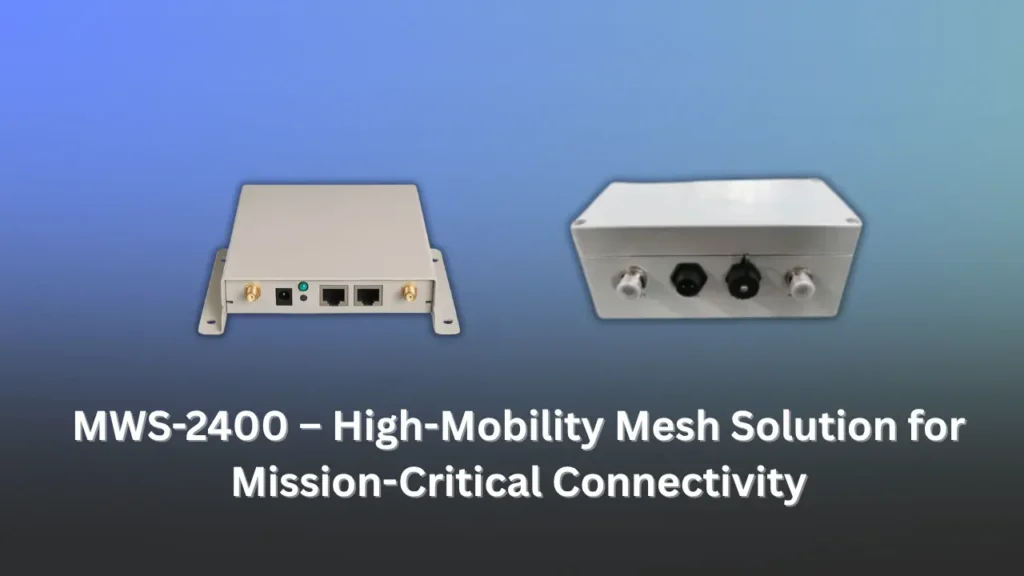
In today’s connected world, mobility is everything. Whether it’s a mining truck deep underground, an emergency response vehicle rushing through city streets, or a logistics fleet spread across hundreds of kilometers — real-time communication is essential. The challenge? Traditional wireless systems often fail when vehicles move across wide or rugged areas, leading to connectivity drops, data delays, and safety risks. That’s where wireless mesh networks are changing the game. Built for mobility, flexibility, and resilience, they provide the high-speed, always-on communication that modern fleet operations demand. The Connectivity Challenge for Mobile Fleets Most fleet-based industries rely on continuous data — GPS tracking, live video feeds, and sensor updates. However, cellular networks or point-to-point radio links are not designed for the constant movement of vehicles across variable terrain. When a truck or vehicle moves beyond the coverage zone of a cell tower or a single radio node, communication can break down instantly. In mining sites, ports, and large industrial zones, this means lost productivity, delayed decision-making, and increased operational risks. What’s needed is a network that moves with the fleet, maintaining consistent performance no matter where each vehicle travels. Wireless Mesh Networks: Designed for Mobility Unlike traditional systems that rely on a central hub, a wireless mesh network forms a web of interconnected nodes. Each node communicates with others, dynamically routing data through the most efficient path. This architecture provides three major advantages for mobile fleets: Self-Healing Connectivity – If one node goes offline, the system automatically reroutes data through alternate nodes, preventing downtime. High-Speed Roaming – Vehicles equipped with wireless mesh network systems can move freely across large areas while maintaining strong, low-latency connections. Scalable Deployment – Adding new vehicles or expanding coverage areas requires minimal setup. Each new node simply becomes part of the existing network. This flexibility makes wireless mesh networks a preferred choice for industrial fleets, mining operations, smart cities, and public safety agencies. Real-Time Data Means Smarter Decisions For industries that depend on mobility, real-time visibility is power. Mesh networks enable continuous streams of data — from vehicle diagnostics to live video monitoring — all without delay. Fleet managers can: Track vehicle location and performance in real time. Receive instant alerts during equipment failures or emergencies. Monitor fuel usage, route efficiency, and operational safety. By keeping vehicles and control centers connected at all times, wireless mesh networks enhance productivity and enable smarter, faster decision-making. Built to Withstand Harsh Environments Industrial and field fleets don’t operate in ideal conditions. They face dust, vibrations, moisture, and extreme temperatures. That’s why robust connectivity equipment is critical. Modern solutions like the MWS-2400 high-performance mesh system are designed to perform reliably in rugged terrains and moving environments. With multi-radio configurations and low-latency data handling, they ensure smooth communication even in challenging conditions. Whether it’s mining operations, large industrial plants, or mobile command vehicles, mesh technology ensures dependable connectivity — where failure is not an option. The Future of Fleet Communication Wireless mesh networks are not just a replacement for old systems — they represent the future of industrial communication. As fleets become more automated and data-driven, the need for seamless, mobile, and high-speed networks will only grow. From self-driving mining trucks to real-time logistics tracking, mesh connectivity is paving the way for the next generation of intelligent, connected operations. With improved range, capacity, and adaptability, these networks are redefining what’s possible in industrial mobility — keeping teams connected, informed, and in control. FAQs 01 What makes wireless mesh networks ideal for mobile fleet communication? Wireless mesh networks provide decentralized connectivity, allowing vehicles to maintain strong communication links even while moving. They automatically reroute data between nodes, ensuring zero downtime and high reliability in dynamic environments 02 Can wireless mesh systems work in harsh industrial conditions? Yes. Industrial-grade mesh products are built to withstand heat, dust, vibration, and other extreme conditions. They’re perfect for applications in mining, manufacturing, and logistics where stable connectivity is crucial. 03 How do mesh networks improve safety and efficiency for fleets? By enabling real-time monitoring, two-way communication, and instant alerts, mesh networks help fleet managers respond quickly to any issue. This boosts operational safety, reduces downtime, and improves decision-making efficiency.

Deploying Wireless Mesh Networks in School Campuses: Key Considerations and Best Practices
08 October 2025 By Aeromesh Team In General
In today’s digital era, education depends more on connectivity than ever before. From virtual classrooms and online assessments to campus-wide surveillance and smart learning systems, reliable internet access is no longer optional — it’s essential. However, traditional Wi-Fi networks often struggle to provide seamless coverage in large educational environments. That’s where Wireless Mesh network solutions for education are reshaping how schools, colleges, and universities stay connected. Designed for flexibility, scalability, and reliability, these networks create an intelligent web of communication across sprawling campuses — without the limitations of conventional wired infrastructure. Why Schools Need Smarter Network Infrastructure Modern campuses are bustling digital ecosystems. Students use laptops, tablets, and mobile devices simultaneously, while teachers depend on video conferencing, learning platforms, and cloud-based tools. The challenge? Handling hundreds (or even thousands) of connections at once without dropouts or lag. Traditional Wi-Fi networks rely on a central router or access point — once that fails or becomes overloaded, the entire network suffers. In contrast, wireless mesh networks allow every node to communicate with others, creating a self-healing and distributed system that automatically reroutes data if one path is blocked. To explore how this technology supports smart campuses, you can read more about Aeromesh’s Healthcare & Education connectivity solutions. Best Practices for Deploying Mesh Networks in Schools 1. Plan for Coverage and Scalability Before deployment, schools should assess the size of their campus, building materials, and areas with high user density. Wireless Mesh network solutions for education can easily scale — simply add new nodes as the campus grows or as device usage increases. 2. Prioritize Security and Access Control Education networks host sensitive data and must protect student information. Implement encryption, role-based access, and regular security audits to ensure a safe online environment. 3. Optimize Bandwidth for Learning Tools Video conferencing, online exams, and interactive learning platforms consume significant bandwidth. A well-designed mesh network intelligently distributes traffic, ensuring smooth performance for all connected users. 4. Enable Remote and Hybrid Learning Mesh connectivity ensures students can join virtual classes from anywhere on campus — classrooms, dorms, or outdoor areas — without signal drops. This flexibility supports hybrid learning models and outdoor study zones. 5. Simplify Maintenance and Monitoring Modern mesh networks are centrally managed, allowing IT staff to monitor usage, identify issues, and perform updates remotely. This reduces maintenance time and ensures consistent uptime. Aeromesh’s Wireless Mesh solutions for education are designed with these best practices in mind, helping institutions build smarter, more connected learning environments. Benefits of Wireless Mesh in Education Uninterrupted Connectivity: Always-on access to digital resources for students and faculty. Cost Efficiency: No extensive cabling or infrastructure overhauls required. Scalable Growth: Easily expands to new buildings or outdoor areas. Improved Collaboration: Supports multimedia learning, group projects, and cloud integration. Enhanced Campus Safety: Integrates security cameras and emergency communication systems on the same network. The Future of Connected Learning Education is evolving fast — and connectivity must keep up. As institutions embrace smart classrooms, AI-assisted learning, and IoT-enabled environments, Wireless Mesh network solutions for education will play a vital role in ensuring secure, high-speed, and reliable communication across campuses. From digital learning to smart campus management, the future of education is wireless — and it starts with mesh technology. FAQs 01 What makes Wireless Mesh network solutions for education different from traditional Wi-Fi? Unlike standard Wi-Fi, mesh networks use multiple interconnected nodes that communicate with each other. This creates seamless coverage, even across large campuses, and ensures there’s no single point of failure. 02 How can schools ensure network security with mesh systems? By using encrypted connections, user authentication, and centralized management tools, schools can protect data privacy and prevent unauthorized access to their mesh network. 03 Are mesh networks cost-effective for educational institutions? Yes. They reduce cabling costs, simplify maintenance, and can easily expand as the campus grows — making them a future-proof and budget-friendly networking solution.

How Wireless Mesh Network Products Improve Telemedicine in Healthcare Facilities
07 October 2025 By Aeromesh Team In General
Healthcare has entered a new era where technology connects doctors, patients, and medical devices like never before. From virtual consultations to real-time patient monitoring, telemedicine has become an essential part of modern healthcare delivery. But behind this innovation lies a critical foundation — reliable and uninterrupted connectivity. That’s where Wireless Mesh network products for healthcare are making a major difference. These networks ensure hospitals and clinics can deliver high-quality telemedicine services without delays, dropouts, or disconnections. Why Connectivity Is the Heart of Telemedicine Telemedicine depends heavily on live video consultations, remote diagnostics, and real-time data sharing between patients and healthcare providers. Even a few seconds of lag or downtime can impact patient safety and care outcomes. Traditional Wi-Fi networks often struggle in hospital environments because of thick walls, medical equipment interference, and large, multi-building campuses. Wireless mesh networks overcome these challenges by creating a self-healing web of connectivity, where each node communicates with others to ensure seamless coverage. To learn how Aeromesh’s technology supports this, visit their detailed page on Healthcare & Education solutions. How Wireless Mesh Networks Strengthen Telemedicine Seamless Video ConsultationsWith multiple connection paths, mesh networks ensure that video consultations between doctors and patients run smoothly, even during peak hours. Reliable Remote MonitoringHospitals can deploy IoT sensors and monitoring devices that transmit patient data continuously. Mesh networks maintain constant communication between these devices and the central monitoring system. Scalability for Growing FacilitiesAs hospitals expand or add new wings, new nodes can easily be added to the network without complex cabling or major downtime. Enhanced MobilityWireless Mesh network products for healthcare allow medical teams to move between wards or even buildings without losing connectivity — essential for mobile workstations, digital tablets, or handheld diagnostic devices. Improved Security and ComplianceHealthcare networks handle sensitive patient data. Advanced mesh solutions use encryption, secure routing, and access control to maintain data integrity and meet healthcare compliance standards. Real-World Benefits A well-deployed wireless mesh network translates into measurable improvements: Reduced waiting times and faster remote consultations. Lower IT maintenance costs. Better communication between departments. Greater patient satisfaction with uninterrupted care delivery. By implementing Aeromesh’s Wireless Mesh Network Solutions for Healthcare, hospitals can future-proof their operations, expand telemedicine capabilities, and focus more on patient care than network issues. The Future of Connected Healthcare The future of healthcare is wireless, intelligent, and data-driven. From AI-assisted diagnostics to wearable health devices, every innovation depends on fast, resilient, and secure connectivity. Wireless Mesh network products for healthcare are the invisible backbone of this digital transformation — ensuring that critical care is never out of reach. Healthcare has entered a new era where technology connects doctors, patients, and medical devices like never before. From virtual consultations to real-time patient monitoring, telemedicine has become an essential part of modern healthcare delivery. But behind this innovation lies a critical foundation — reliable and uninterrupted connectivity. That’s where Wireless Mesh network products for healthcare are making a major difference. These networks ensure hospitals and clinics can deliver high-quality telemedicine services without delays, dropouts, or disconnections. Why Connectivity Is the Heart of Telemedicine Telemedicine depends heavily on live video consultations, remote diagnostics, and real-time data sharing between patients and healthcare providers. Even a few seconds of lag or downtime can impact patient safety and care outcomes. Traditional Wi-Fi networks often struggle in hospital environments because of thick walls, medical equipment interference, and large, multi-building campuses. Wireless mesh networks overcome these challenges by creating a self-healing web of connectivity, where each node communicates with others to ensure seamless coverage. To learn how Aeromesh’s technology supports this, visit their detailed page on Healthcare & Education solutions. How Wireless Mesh Networks Strengthen Telemedicine Seamless Video ConsultationsWith multiple connection paths, mesh networks ensure that video consultations between doctors and patients run smoothly, even during peak hours. Reliable Remote MonitoringHospitals can deploy IoT sensors and monitoring devices that transmit patient data continuously. Mesh networks maintain constant communication between these devices and the central monitoring system. Scalability for Growing FacilitiesAs hospitals expand or add new wings, new nodes can easily be added to the network without complex cabling or major downtime. Enhanced MobilityWireless Mesh network products for healthcare allow medical teams to move between wards or even buildings without losing connectivity — essential for mobile workstations, digital tablets, or handheld diagnostic devices. Improved Security and ComplianceHealthcare networks handle sensitive patient data. Advanced mesh solutions use encryption, secure routing, and access control to maintain data integrity and meet healthcare compliance standards. Real-World Benefits A well-deployed wireless mesh network translates into measurable improvements: Reduced waiting times and faster remote consultations. Lower IT maintenance costs. Better communication between departments. Greater patient satisfaction with uninterrupted care delivery. By implementing Aeromesh’s Wireless Mesh Network Solutions for Healthcare, hospitals can future-proof their operations, expand telemedicine capabilities, and focus more on patient care than network issues. The Future of Connected Healthcare The future of healthcare is wireless, intelligent, and data-driven. From AI-assisted diagnostics to wearable health devices, every innovation depends on fast, resilient, and secure connectivity. Wireless Mesh network products for healthcare are the invisible backbone of this digital transformation — ensuring that critical care is never out of reach. FAQs 01 What are Wireless Mesh network products for healthcare? These are networking solutions designed to provide seamless, self-healing connectivity across hospitals and clinics. They enable real-time communication for telemedicine, patient monitoring, and digital record systems. 02 How do mesh networks improve telemedicine services? Mesh networks offer stable video and data connections even in large hospital environments. They prevent dropouts and ensure doctors can consult, diagnose, and monitor patients remotely without interruption. 03 Are Wireless Mesh networks secure enough for medical data? Yes. Modern mesh solutions use encryption, authentication, and network segmentation to meet healthcare data protection standards, ensuring all patient information remains private and secure.

Video Surveillance Over Mesh: Use Cases and Challenges in Urban Areas
03 October 2025 By Aeromesh Team In General
In today’s rapidly growing cities, public safety is a top priority. From monitoring crowded intersections to protecting critical infrastructure, video surveillance systems play a crucial role in preventing and responding to emergencies. But traditional wired networks or single-point wireless solutions often struggle to provide the coverage, flexibility, and reliability that modern surveillance demands. This is where wireless mesh networks come in. By connecting cameras, sensors, and monitoring hubs across multiple nodes, mesh technology ensures continuous coverage—even in challenging urban landscapes. Why Mesh Networks Are Ideal for Video Surveillance Urban areas pose unique challenges for surveillance systems. Buildings, traffic, and unpredictable environments often disrupt connectivity. Mesh networks overcome these obstacles by: Providing Reliable Coverage: Each node communicates with the others, ensuring redundancy if one link fails. Supporting High-Bandwidth Needs: Streaming HD video from multiple cameras requires strong throughput—something mesh systems handle well. Scalability and Flexibility: As cities expand or new hotspots emerge, mesh nodes can be added without major infrastructure changes. For municipalities and public safety agencies, adopting a public safety mesh network is not just about better connectivity; it’s about enabling faster response times and safer communities. Key Use Cases in Urban Environments Traffic ManagementMesh-connected cameras at intersections can monitor congestion, accidents, or violations, helping city authorities respond quickly. Event MonitoringDuring concerts, festivals, or political gatherings, mobile mesh units can provide temporary surveillance coverage for large crowds. Critical Infrastructure ProtectionBridges, water plants, and power stations can be monitored through IP cameras integrated into the mesh network. Law Enforcement and First RespondersReal-time video feeds allow police, fire, and EMS teams to coordinate more effectively during emergencies. For more insights on how wireless mesh powers citywide safety initiatives, explore our Public Safety solutions. Challenges to Consider While the benefits are significant, deploying video surveillance over mesh does come with challenges: Bandwidth Management: High-definition video consumes a lot of bandwidth; proper planning is essential. Security Concerns: Public safety data must be encrypted and protected from cyber threats. Interference Issues: Dense urban environments can cause RF interference, requiring intelligent channel planning. With the right design and technology, these challenges can be mitigated, making mesh an essential backbone for modern surveillance. Looking Ahead As cities become smarter, integrating AI-powered analytics and IoT devices with mesh-based video surveillance will unlock even greater potential. From predictive policing to environmental monitoring, mesh networks are at the heart of safer, smarter urban living. To see how this technology is transforming communities, check out our Public Safety page. FAQs 01 Why are mesh networks better than traditional wireless for surveillance? Mesh networks provide redundancy, self-healing capabilities, and high throughput, ensuring surveillance systems stay online even if one node fails. 02 Can mesh support high-definition video from multiple cameras? Yes. With proper bandwidth planning, mesh networks can handle HD and even 4K video streams across multiple nodes. 03 Is mesh surveillance only for large cities? Not at all. Municipalities, campuses, and even industrial sites use mesh networks for scalable and reliable surveillance solutions.

Smart Ports and Asset Tracking: The Role of Wireless Mesh Network Products for Industrial Applications
01 October 2025 By Aeromesh Team In General
Introduction The shipping and logistics industry is the backbone of global trade, and ports are at the heart of this ecosystem. Every day, thousands of containers, vehicles, and cargo units move in and out of modern ports, creating a highly complex operational environment. Managing such vast operations requires real-time connectivity, reliable surveillance, and seamless asset tracking systems. This is where Wireless Mesh network products for Industrial Applications are transforming port operations. Challenges in Port Operations Ports face unique challenges when it comes to connectivity: High mobility: Trucks, cranes, and ships are constantly on the move. Large area coverage: Ports often stretch across hundreds of acres. Harsh environments: Extreme weather, saltwater exposure, and interference from heavy machinery make networking difficult. Security needs: Monitoring sensitive cargo and preventing theft or smuggling requires robust video surveillance and data communication. Traditional wired or point-to-point networks often struggle to provide flexible, scalable solutions in such environments. How Wireless Mesh Networks Solve the Problem Wireless mesh technology provides an adaptive and scalable networking solution for ports. Unlike traditional networks that rely on centralized hubs, mesh networks distribute connectivity across multiple nodes. This ensures: Always-on connectivity: If one node fails, data automatically reroutes through another. Seamless mobility: Vehicles and equipment remain connected as they move across large areas. High-bandwidth communication: Supports video surveillance, asset tracking, and IoT devices simultaneously. Easy scalability: New nodes can be added as port operations expand. For example, mesh-enabled surveillance cameras can be deployed across terminals, container yards, and entry points to monitor operations 24/7 without the need for complex cabling. Asset Tracking and Operational Efficiency One of the biggest advantages of deploying Wireless Mesh network products for Industrial Applications in ports is improved asset tracking. Containers fitted with RFID or IoT sensors can communicate seamlessly with mesh nodes, providing real-time location data. This allows port authorities to: Prevent misplaced or stolen cargo Optimize container movement and storage Reduce downtime and manual tracking errors Improve safety and operational efficiency The result is faster turnaround times for ships, better coordination among port staff, and increased profitability. Future-Ready Smart Ports As ports move toward becoming “smart ports,” mesh networks will play a critical role in supporting automation, AI-driven logistics, and real-time analytics. From autonomous cranes to AI-powered surveillance, wireless mesh connectivity ensures that all systems remain connected, secure, and efficient. By investing in Wireless Mesh network products for Industrial Applications, ports are not only solving today’s connectivity challenges but also preparing for future demands in global trade and logistics. Conclusion Ports worldwide are embracing digital transformation, and wireless mesh technology is leading the way. With reliable, scalable, and cost-effective networking, ports can improve asset tracking, enhance security, and streamline operations. As industries push toward automation and smarter infrastructure, wireless mesh solutions will remain a vital enabler of efficiency and growth. FAQ’s 01 What are Wireless Mesh network products for Industrial Applications? Wireless Mesh network products for Industrial Applications are advanced connectivity solutions designed to provide reliable, high-speed communication across large and complex environments such as ports, factories, and oil & gas facilities. They enable real-time data transfer, video surveillance, and asset tracking with minimal downtime. 02 Why are mesh networks better than traditional wired solutions in ports? Unlike traditional wired networks, mesh networks don’t rely on a single point of failure. They offer self-healing capabilities, mobility support for moving vehicles and equipment, and easy scalability, making them ideal for challenging port environments. 03 How do Wireless Mesh network products for Industrial Applications improve asset tracking? By integrating IoT sensors and RFID tags with mesh nodes, ports can monitor container movement in real time. This reduces delays, prevents losses, and ensures better security, ultimately improving operational efficiency and profitability.

What Makes a “Hot Zone” Solution Ideal for Large Enterprises
30 September 2025 By Aeromesh Team In General
Introduction In today’s digitally connected world, large enterprises face ever-increasing demands for bandwidth, reliability, and scalability. Whether it’s supporting thousands of users, handling video surveillance, or enabling mission-critical data transfers, a standard WiFi deployment often falls short. This is where a Hot Zone solution truly shines. In this post, we’ll explore the key attributes that set Hot Zone systems apart, and why they’re especially well suited for large enterprise environments. 1. Scalability & Modular Growth One of the biggest challenges in an enterprise deployment is scaling as needs grow — whether that means covering new zones, handling more users, or increasing throughput. A good Hot Zone solution is designed to scale modularly, allowing new nodes or “packs” to be added without disrupting the existing network. For instance, Aeromesh provides Base Packages (BP) and Expansion Packages (EP) that can be added as you grow, making expansion smooth and cost-effective. 2. High Throughput, Low Latency & Multi-application Support Enterprises need to support many simultaneous applications — from voice, video, and data analytics to SCADA, POS systems, IoT sensors, and more. A Hot Zone built for large enterprises offers: High throughput capacity Low latency for real-time applications The ability to carry multiple types of traffic concurrently The Access/One product line from Aeromesh, as part of their Hot Zone & Large Enterprise offering, is designed to support “voice, data, video — all applications … simultaneously with no additional configuration. 3. Self-configuration, Self-tuning & Simplified Management Managing a vast network of APs, radios, and backhaul nodes can be tedious. Hot Zone solutions need to minimize ongoing manual intervention. Look for features like: Self-configuring mesh behavior Self-tuning radio parameters Centralized, browser-based management With these, administrators don’t need to micromanage every node. On its Hot Zone page, Aeromesh emphasizes that their systems “scale to the largest hot-zones, city and country-wide implementations” via intuitive management tools. 4. Integrated Backbone + User Access in One System Many networks have a separate backbone (for transport) and access (client connectivity). A differentiator of strong Hot Zone solutions is that they blend both into a cohesive system. This means: Easier deployment Fewer integration headaches Consistent performance across the network Aeromesh describes their solution as “a fully integrated solution providing a wireless network backbone and user access from a single system.” Aeromesh Systems. 5. Robust Security and Traffic Segmentation In large enterprises, security is paramount. Key considerations include: Isolation of guest vs internal traffic Secure node-to-node communication Authentication gateways or captive portals Ability to enforce access policies A well-designed Hot Zone will let you enforce these security policies at scale without adding latency or complexity. 6. Reliability, Redundancy & Fault Tolerance Enterprises can’t afford downtime. A Hot Zone for a large deployment must include redundancy, fallback paths, and robust failover mechanisms. Mesh topologies and multiple routes help ensure that even if one node or link fails, traffic finds alternate paths — preserving service continuity. 7. Turn-key & Deployment Readiness For enterprises that want to reduce operational risk and speed time to value, turn-key solutions are very attractive. Hot Zone systems that come packaged with tested Base Packages and optional expansion kits reduce design, testing, and commissioning burdens. Aeromesh markets their “Hot Zone Maxpack™” as ready-to-deploy integrated solutions that are cost-effective and reliable for large deployments. Aeromesh Systems 8. Cost Efficiency & Total Cost of Ownership (TCO) While the upfront cost may seem higher compared to patching together disparate WiFi systems, a Hot Zone solution built for scale often leads to lower operational costs, fewer site visits, streamlined maintenance, and more predictable upgrades. When evaluating whether a Hot Zone is right for your enterprise, it helps to look not just at purchase cost, but the long-term ROI in terms of uptime, reduced management, and scalability. FAQ’s 01 Isn’t a Hot Zone just another mesh WiFi system? A: They are related, but not all mesh systems are built for enterprise-scale Hot Zone use. Enterprise Hot Zones incorporate high throughput, low latency, built-in redundancy, advanced management, and modular expansion, designed specifically for large zones or dense deployments. 02 How does a Hot Zone handle network outages or node failures? A: A well-designed Hot Zone uses mesh topology and multiple routing paths so that if one node or link fails, traffic automatically reroutes through other nodes. This redundancy ensures high availability and minimal disruption. 03 Can an enterprise Hot Zone support guest access and internal staff networks simultaneously? A: Yes. Good Hot Zone designs allow for traffic segmentation, so guest and internal networks can coexist securely, each with its own access rules and policies, without compromising performance.

Building Reliable Municipal Wireless Broadband Infrastructure with Mesh Networks
26 September 2025 By Aeromesh Team In General
Introduction As cities grow and evolve, the demand for faster, more reliable, and more accessible connectivity becomes critical. Modern municipalities are no longer just responsible for delivering water and electricity—they must also provide seamless digital access to empower communities, drive innovation, and support smart city initiatives. One of the most effective ways to achieve this is by investing in municipal wireless broadband infrastructure powered by advanced mesh networks. Why Municipalities Need Wireless Broadband Digital services are now essential for education, healthcare, governance, and economic development. Residents expect easy access to high-speed internet in schools, public spaces, and homes. Meanwhile, municipalities are under pressure to support automated meter reading (AMR), smart grid systems, and IoT-enabled city services. Traditional wired networks are costly and complex to scale, making them less practical for large urban or rural deployments. Wireless mesh networks provide a flexible, cost-efficient alternative, enabling cities to roll out resilient broadband infrastructure quickly and effectively. < Key Benefits of Mesh Networks for Municipal Infrastructure 1. City-Wide Coverage Mesh networks connect multiple nodes across the city, creating overlapping zones that ensure reliable coverage for residents, businesses, and municipal operations. Unlike conventional networks, they can scale easily to cover neighborhoods, towns, or even entire cities. 2. High Reliability and Resilience Mesh networks are self-healing. If one node fails, traffic is automatically rerouted through others, ensuring uninterrupted connectivity for critical services like public safety, smart traffic systems, and utility monitoring. 3. Support for Smart City Applications From smart lighting to AMR and IoT devices, municipal services rely on consistent connectivity. Mesh solutions provide the bandwidth and scalability required to handle diverse applications simultaneously. 4. Cost Efficiency By reducing the need for extensive cabling or trenching, mesh networks significantly cut deployment and maintenance costs. This makes it easier for municipalities to deliver affordable or even free internet services to their communities. Real-World Applications Public WiFi Initiatives: Offering free or low-cost broadband in public spaces. Smart Utilities: Supporting AMR for accurate billing and reduced manual effort. Disaster Management: Maintaining communication systems during emergencies. Aeromesh Systems: Enabling Smarter Cities At Aeromesh Systems Municipal Utilities & AMR Solutions, we provide multi-band, self-healing mesh networks that make municipal deployments easier and more reliable. Our technology enables seamless integration of smart meters, IoT devices, and city-wide broadband to create resilient infrastructure. For ISPs and municipalities working together, our Service Provider Solutions ensure scalable and cost-effective deployments that benefit both residents and local governments. Final Thoughts As cities transform into smart hubs of connectivity, municipal wireless broadband infrastructure will be the foundation for growth, innovation, and efficiency. By leveraging mesh networks, municipalities can deliver reliable connectivity to every corner of the community while supporting a future-ready digital ecosystem. Investing in municipal wireless broadband infrastructure is not just about technology—it’s about empowering citizens and shaping the smart cities of tomorrow. FAQ’s 01 What is municipal wireless broadband infrastructure? Municipal wireless broadband infrastructure refers to citywide or community-wide internet networks deployed by municipalities. These networks often use mesh technology to provide reliable, scalable, and affordable connectivity for residents, businesses, and smart city applications. 02 What are the benefits of municipal broadband for residents and governments? For residents, it provides affordable internet access and better connectivity in public spaces. For governments, it supports smart utilities, automated meter reading (AMR), IoT services, and emergency response systems, making city operations more efficient and reliable.

How ISPs Can Serve Unserved & Underserved Areas Using Mesh Wireless Solutions
25 September 2025 By Aeromesh Team In General
Across the globe, millions of people still lack access to reliable internet. Rural villages, remote communities, and underserved regions often remain disconnected due to the high cost of building traditional wired infrastructure. For Internet Service Providers (ISPs), this presents both a challenge and an opportunity: how to extend services profitably while fulfilling the growing demand for universal connectivity. One of the most effective answers lies in wireless mesh networks. By eliminating the dependency on expensive fiber or cable in hard-to-reach areas, mesh technology empowers ISPs to serve unserved and underserved populations efficiently and affordably. The Connectivity Gap in Remote Areas Building traditional networks in rural or low-density regions often involves: High costs of trenching and laying fiber Geographical barriers such as mountains, forests, or water bodies Low return on investment due to small subscriber bases Because of these barriers, ISPs sometimes hesitate to invest, leaving communities without modern connectivity. Wireless mesh technology directly addresses these pain points. Why Mesh is Ideal for ISPs Expanding Coverage 1. Flexible Deployment Unlike traditional networks, mesh nodes can be placed on rooftops, poles, or existing towers, drastically reducing the cost and time needed to bring communities online. 2. Scalability ISPs can start with a small deployment and expand gradually by adding more nodes as demand grows. This “pay-as-you-scale” model makes it financially sustainable. 3. Resilience in Remote Conditions Mesh networks are self-healing, meaning if one node goes down, traffic reroutes automatically through other nodes. This ensures higher uptime and reliability, even in challenging environments. 4. Multiple Service Opportunities By leveraging mesh, ISPs can not only provide internet access but also enable additional services such as VoIP, online education, telemedicine, and smart agriculture solutions. Real-World Applications Rural Broadband Projects: Governments often collaborate with ISPs to bridge the digital divide in underserved communities. Community Wi-Fi: Villages and townships can share reliable, affordable internet without the need for expensive infrastructure. Emergency Connectivity: During natural disasters or crises, mesh networks provide quick-to-deploy communication systems. Aeromesh Systems: Empowering ISPs At Aeromesh Systems, we design solutions that support ISPs in delivering connectivity where it’s needed most. Our multi-radio, multi-channel architecture ensures high performance and scalability while minimizing costs. By adopting wireless mesh for ISP, providers can extend coverage, improve service reliability, and tap into new markets without overextending their budgets. Final Thoughts Expanding into unserved and underserved areas isn’t just about business growth for ISPs—it’s about closing the digital gap and enabling social progress. With wireless mesh solutions, ISPs can overcome traditional limitations and bring meaningful connectivity to the people who need it most.