General

Smart Hospitality Networks: Best WiFi Solutions for Hotels, Resorts, and Hostels in 2025
19 December 2025 By Aeromesh Team In General
Introduction Guest expectations in 2025 have evolved beyond clean rooms and good service – fast, reliable WiFi is now a core hospitality amenity. Whether it is business travelers joining video calls, families streaming content, or digital nomads working remotely, connectivity directly impacts guest satisfaction, online reviews, and brand loyalty. Traditional WiFi architectures often struggle in hospitality environments due to high user density, complex layouts, and roaming guests. This is why smart hospitality networks powered by wireless mesh technology are becoming the preferred choice. In this blog, we explore the best WiFi solutions for hotels, resorts, and hostels in 2025, and why mesh-based designs are shaping the future of hospitality connectivity. The Connectivity Challenges in Hotels, Resorts, and Hostels Hospitality environments present unique networking challenges that differ from offices or homes. High number of simultaneous users per access point Guests constantly roaming between rooms, lobbies, pools, and outdoor areas Thick walls, elevators, and architectural obstructions Seasonal traffic spikes and large group events Need for secure guest access alongside internal operations Without the right architecture, these factors result in slow speeds, dropped connections, and inconsistent coverage, which directly affect guest experience. Why Wireless Mesh Network Is Ideal for Hospitality WiFi A wireless mesh network is designed to overcome the limitations of traditional centralized WiFi systems. Key Benefits of Wireless Mesh for Hospitality Self-healing connectivity – if one node fails, traffic automatically reroutes Seamless roaming across rooms, floors, and outdoor areas Flexible expansion without expensive rewiring Uniform performance even in large or complex properties Unlike conventional access points that rely heavily on wired backhaul, mesh nodes communicate intelligently with each other, making them ideal for hotels and resorts with sprawling layouts. Best Mesh WiFi System – The Backbone of Smart Hospitality Networks Choosing the best mesh WiFi system is critical for delivering consistent guest internet access. What Defines the Best Mesh WiFi System for Hotels? Enterprise-grade performance for high-density usage Intelligent load balancing across hundreds of devices Centralized cloud or controller-based management Strong security protocols for guest and staff networks Support for indoor and outdoor coverage In 2025, the best mesh WiFi systems are not just about coverage – they are smart, adaptive, and analytics-driven, allowing hotel IT teams to monitor performance and user behavior in real time. Smart WiFi Features Modern Guests Expect in 2025 A modern hospitality WiFi solution goes beyond basic connectivity. Must-Have Features in Smart Hospitality Networks Seamless captive portals with branding and guest authentication Bandwidth management to prevent network abuse Role-based access for guests, staff, and IoT devices Analytics and insights for usage patterns and troubleshooting High availability for uninterrupted service Hotels using advanced wireless mesh networks can easily integrate WiFi with smart room controls, digital signage, and guest engagement platforms. Hospitality WiFi Providers for Hotels 2025 – What to Look For Not all networking vendors understand hospitality requirements. When evaluating hospitality WiFi providers for hotels 2025, decision-makers should focus on long-term reliability and scalability. Key Evaluation Criteria Proven expertise in hospitality environments Mesh-first or mesh-optimized architecture Support for large-scale deployments Strong post-deployment support and monitoring Ability to customize solutions based on property size Leading hospitality WiFi providers are moving toward wireless mesh-driven architectures because they reduce downtime, simplify expansion, and improve guest satisfaction. Why Resorts and Hostels Also Benefit from Mesh-Based WiFi Resorts Resorts often include villas, outdoor pools, beaches, and event spaces. A wireless mesh network allows seamless connectivity across wide outdoor areas without excessive cabling. Hostels Hostels experience dense user loads with budget constraints. The best mesh WiFi system offers cost-effective scalability while maintaining reliable performance for shared accommodations. Future of Smart Hospitality Networks As hospitality continues to adopt automation and IoT, WiFi networks will become even more critical. Mesh-based networks are future-ready, supporting: Smart locks and room automation AI-driven guest personalization Real-time operations monitoring High-bandwidth applications like AR and virtual concierge services Investing in the right network architecture today ensures readiness for tomorrow’s digital hospitality demands. Conclusion – Building Guest-First Connectivity with Smart Hospitality Networks In 2025, hospitality brands cannot afford unreliable connectivity. Smart hospitality networks built on wireless mesh technology provide the scalability, resilience, and performance needed to meet modern guest expectations. By deploying the best mesh WiFi system and partnering with trusted hospitality WiFi providers for hotels 2025, hotels, resorts, and hostels can deliver seamless digital experiences that enhance satisfaction, boost reviews, and support operational excellence. Reliable WiFi is no longer an add-on – it is a strategic investment in guest experience and brand reputation. FAQ’s 01 Why is a wireless mesh network better for hotels? A wireless mesh network ensures seamless roaming, self-healing connectivity, and consistent performance across large hospitality properties. 02 What is the best mesh WiFi system for hotels in 2025? The best mesh WiFi system is one that offers enterprise-grade performance, centralized management, strong security, and high-density support. 03 Can mesh WiFi handle hundreds of guests simultaneously? Yes, modern mesh systems are designed to handle high user density with intelligent load balancing and traffic optimization. 04 Are mesh networks suitable for outdoor resort areas? Absolutely. Wireless mesh networks are ideal for outdoor spaces like pools, gardens, and beachfronts where cabling is difficult.

High-Density WiFi for Lecture Halls: Ensuring Seamless Connectivity in Modern University Campuses
17 December 2025 By Aeromesh Team In General
Introduction: Why High-Density WiFi Matters for Universities Modern university campuses are more connected than ever. From digital classrooms and hybrid learning models to online assessments and real-time collaboration tools, reliable WiFi is now a core academic utility – not a luxury. Lecture halls, in particular, present one of the toughest connectivity challenges due to the sheer number of devices trying to connect simultaneously. A single lecture hall may host hundreds of students, each carrying multiple devices such as laptops, smartphones, and tablets. Traditional WiFi architectures struggle under this load, resulting in slow speeds, dropped connections, and frustrated users. This is where high-density WiFi for universities becomes essential. By leveraging a wireless mesh network and the best mesh WiFi system, universities can ensure seamless, scalable, and resilient connectivity across lecture halls and entire campuses. What Is High-Density WiFi in Lecture Halls? High-density WiFi refers to a wireless network designed to support a large number of concurrent users and devices within a limited physical space – without compromising performance. In lecture halls, high-density WiFi must handle: Hundreds of simultaneous connections High-bandwidth applications like video streaming and virtual labs Continuous mobility as students enter and exit Interference from neighboring access points and devices Standard WiFi deployments often rely on centralized controllers or isolated access points, which can become bottlenecks. In contrast, enterprise WiFi solutions for universities increasingly use mesh-based architectures to distribute traffic intelligently and maintain consistent performance. The Role of Wireless Mesh Networks in Campus WiFi A wireless mesh network consists of multiple interconnected nodes that communicate with each other dynamically. Instead of relying on a single access point or wired backbone, each node acts as both a transmitter and a relay. Key Advantages of Wireless Mesh Networks for Universities Self-healing connectivity – If one node fails, traffic is automatically rerouted Scalability – Easily add new nodes as campus needs grow Reduced cabling – Ideal for old buildings and large campuses Uniform coverage – Eliminates dead zones in lecture halls For universities, this architecture is particularly effective in high-density environments where reliability and flexibility are critical. Why Lecture Halls Are High-Risk Zones for WiFi Failure Lecture halls combine several factors that strain traditional networks: High user density in a confined space Peak usage during fixed time slots Simultaneous access to cloud platforms, LMS systems, and streaming services Physical interference from concrete walls, metal seating, and electronic equipment Without the best mesh WiFi system, universities often face: Network congestion High latency Inconsistent user experiences Increased IT support tickets A well-designed mesh-based deployment distributes load evenly and maintains performance even during peak usage. Best Mesh WiFi System for High-Density University Environments Choosing the best mesh WiFi system for lecture halls involves more than just hardware. It requires an architecture purpose-built for enterprise-scale environments. Features to Look For High client capacity per node Intelligent traffic routing Low-latency communication between nodes Support for roaming and mobility Centralized monitoring with decentralized operation Unlike consumer-grade mesh systems, enterprise-grade solutions are designed to handle thousands of devices across multiple buildings while maintaining security and performance. Enterprise WiFi Solutions for Universities: Beyond Connectivity Modern enterprise WiFi solutions for universities go beyond basic internet access. They enable digital transformation across campus operations. Key Use Cases Enabled by High-Density WiFi Smart classrooms and hybrid learning Online examinations and assessments Campus-wide learning management systems AR and VR-based education tools Real-time collaboration and research platforms A robust wireless mesh network ensures these applications run smoothly, even in crowded lecture halls. Design Best Practices for High-Density Lecture Hall WiFi Successful deployment requires careful planning and design. Proven Best Practices Perform site surveys to understand interference and layout Use multiple mesh nodes instead of a few high-power access points Optimize channel allocation and power levels Ensure seamless handoff between nodes Design for peak load, not average usage When implemented correctly, mesh-based high-density WiFi delivers consistent performance across all seating areas. Security and Network Management Considerations Universities handle sensitive academic and personal data, making security critical. A mesh-based enterprise WiFi system supports: Secure authentication for students and staff Network segmentation for guests, IoT, and academic systems Real-time monitoring and analytics Faster troubleshooting and reduced downtime These capabilities help IT teams manage large, complex networks with limited resources. Conclusion: Future-Ready WiFi for Modern Universities As universities continue to embrace digital-first education, reliable connectivity in lecture halls is non-negotiable. High-density WiFi powered by a wireless mesh network offers the scalability, resilience, and performance required to meet today’s demands and tomorrow’s innovations. By deploying the best mesh WiFi system and investing in enterprise WiFi solutions for universities, campuses can ensure seamless learning experiences, reduced IT overhead, and a future-ready digital infrastructure. FAQ’s 01 What is high-density WiFi in universities? High-density WiFi is designed to support hundreds or thousands of devices simultaneously in areas like lecture halls without performance degradation. 02 Why is a wireless mesh network better for lecture halls? A wireless mesh network distributes traffic across multiple nodes, reduces congestion, and provides self-healing connectivity, making it ideal for high-density environments. 03 How many devices can a mesh-based lecture hall network support? Enterprise-grade mesh systems can support hundreds of devices per node, depending on configuration and bandwidth requirements. 04 Is mesh WiFi secure enough for university campuses? Yes. Enterprise mesh solutions support advanced security features such as encryption, authentication, and network segmentation. 05 How do universities choose the best mesh WiFi system? Universities should look for enterprise-grade scalability, centralized monitoring, high client capacity, and proven performance in high-density environments.

Designing Future-Ready Campus WiFi Networks: Best Practices for Higher Education Institutions
13 December 2025 By Aeromesh Team In General
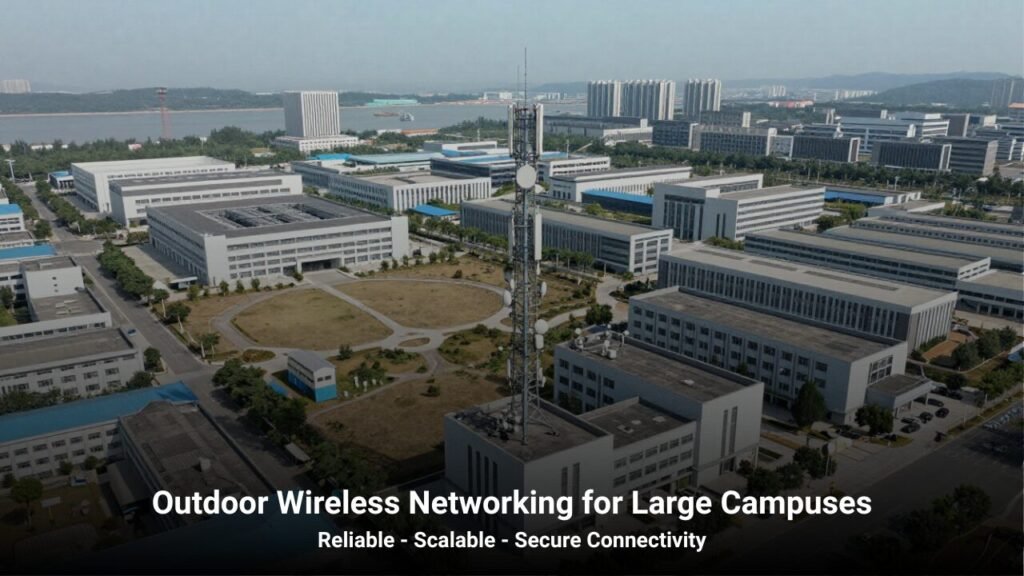
In today’s hyper-connected academic environment, reliable and high-performance campus WiFi is no longer a luxury – it is a mission-critical utility. From digital classrooms and hybrid learning to smart hostels, research labs, and campus safety systems, higher education institutions depend heavily on seamless wireless connectivity. As student expectations rise and digital transformation accelerates, universities must design future-ready campus WiFi networks that deliver speed, reliability, scalability, and security. This blog explores the best practices for designing next-generation campus WiFi, with a strong focus on mesh WiFi, wireless mesh networks, and choosing the best mesh WiFi system for higher education. Why Future-Ready Campus WiFi Is Critical for Higher Education Modern campuses operate like small smart cities. Thousands of devices connect simultaneously – laptops, smartphones, AR/VR tools, IoT sensors, digital signage, and surveillance systems. Without a robust network architecture, institutions face: Network congestion and slow speeds Dead zones across hostels and open spaces Security vulnerabilities Downtime during peak usage Operational inefficiencies A future-ready campus WiFi network ensures: Always-on learning environments Seamless mobility across departments High availability for research and innovation Support for emerging technologies like AI, IoT, and immersive learning Understanding the Role of Wireless Mesh Networks in Campuses A wireless mesh network is a decentralized network architecture where each access point (node) connects with others to form a self-healing, intelligent network. Instead of relying on a single access point, mesh WiFi creates multiple connection paths. Key Benefits of Wireless Mesh Networks for Universities No Single Point of Failure – If one node fails, traffic is rerouted automatically Scales Effortlessly – Add new buildings or users without redesigning the network Better Coverage – Eliminates dead zones across large campuses High Reliability – Ideal for hostels, auditoriums, stadiums, and outdoor areas Flexible Deployment – Perfect for historic buildings and temporary expansions For universities aiming to build future-proof digital infrastructure, mesh WiFi and wireless mesh networks are no longer optional – they are essential. Best Practices for Designing Future-Ready Campus WiFi Networks 1. Start With a Detailed RF Site Survey and Capacity Planning A future-ready WiFi network starts with intelligent planning. Institutions must analyze: Student density per building Device count per user Peak traffic hours Indoor and outdoor coverage needs Interference from other networks This helps determine the right placement of access points, avoids interference, and ensures consistent performance across the campus. 2. Adopt Wireless Mesh WiFi for Scalability and Redundancy Traditional networks struggle as campuses expand. A mesh WiFi architecture grows easily as new departments, hostels, or research blocks are added. With wireless mesh networks, universities gain: Automatic traffic balancing Self-healing network paths Future-proof network design Lower dependency on fiber infrastructure This makes mesh WiFi ideal for both indoor and outdoor campus environments. 3. Choose the Best Mesh WiFi System With Enterprise-Grade Features Not all mesh WiFi systems are built for enterprise demands. Higher education institutions must select solutions that offer: Centralized cloud or NOC-based management Seamless roaming across access points Advanced QoS for video, voice, and exams AI-driven network optimization Deep analytics and troubleshooting Multi-gigabit throughput The best mesh WiFi system supports thousands of concurrent users without compromising network quality. 4. Ensure High-Density Performance for Lecture Halls and Hostels Auditoriums, libraries, and hostels represent high-density WiFi zones. These areas require: High-capacity radios Load balancing MU-MIMO and OFDMA support Dual-band or tri-band mesh WiFi A properly designed wireless mesh network ensures uninterrupted connectivity even during peak academic hours. 5. Prioritize Security and Compliance Campus networks carry sensitive academic, financial, and personal data. A future-ready design includes: WPA3 encryption Network segmentation for students, staff, and guests Secure authentication protocols Role-based access control Intrusion detection and threat prevention Mesh WiFi networks with centralized security management ensure consistent protection across all nodes. 6. Support for IoT, Smart Campus, and Digital Learning Modern campuses are rapidly adopting: Smart classroom systems Digital attendance and assessments CCTV surveillance Smart lighting and access control Research IoT applications A high-performance wireless mesh network provides the backbone for these mission-critical systems without interruptions. 7. Centralized Network Management and Remote Monitoring Future-ready networks must be easy to manage. Institutions should opt for: Centralized dashboards Remote firmware upgrades Real-time performance monitoring Predictive network health alerts Automated troubleshooting This reduces dependency on on-site IT teams and minimizes downtime. 8. Plan for Long-Term Growth and Technology Evolution Campus WiFi design should not just solve today’s requirements. It must also prepare for: Growing student enrollments Increased device density Advanced research workloads Emerging technologies like XR, AI, and 6G Future-ready mesh WiFi is adaptable, upgrade-friendly, and built for long-term innovation. Why Wireless Mesh WiFi Is the Ideal Choice for Higher Education Campuses Wireless mesh WiFi combines flexibility, performance, and resilience in ways traditional networks cannot match. It ensures: Seamless coverage across sprawling campuses Rapid deployment without heavy cabling High uptime for critical academic operations Smooth mobility for students and staff Lower total cost of ownership over time For universities aiming to build future-proof digital infrastructure, mesh WiFi and wireless mesh networks are no longer optional – they are essential Conclusion: Designing a future-ready campus WiFi network is a strategic investment in the institution’s academic success, operational efficiency, and student experience. By adopting wireless mesh networks, choosing the best mesh WiFi system, and following proven best practices for planning, security, performance, and scalability, higher education institutions can create a resilient digital foundation for the next decade. As learning becomes increasingly digital, campuses that prioritize smart, scalable, and secure mesh WiFi will lead the future of education. FAQ’s 01 What is a wireless mesh network, and why is it ideal for campuses? A wireless mesh network consists of multiple interconnected access points that automatically route data across the network. It is ideal for campuses due to its scalability, self-healing capabilities, and consistent coverage across large areas. 02 What makes the best mesh WiFi system for higher education? The best mesh WiFi system offers centralized management, high user capacity, seamless roaming, strong security, and performance optimization for high-density environments. 03 How does mesh WiFi improve the student learning experience? Mesh WiFi ensures uninterrupted access to learning platforms, video lectures, virtual labs, and cloud applications - even during peak hours. 04 Is mesh WiFi suitable for outdoor campus areas? Yes, wireless mesh networks are highly suitable for outdoor areas such as sports grounds, parking lots, auditoriums, and common spaces. 05 How secure are campus mesh WiFi networks? Enterprise-grade mesh WiFi solutions offer robust encryption, network segmentation, intrusion detection, and compliance with global cybersecurity standards.

EAP-6500 – Rugged, High-Capacity Outdoor AP Built for Point-to-Point & Point-to-Multipoint Links
09 December 2025 By Aeromesh Team In General
Introduction Reliable outdoor wireless connectivity is no longer optional – it is the backbone of smart cities, industrial automation, surveillance systems, campuses, and rural broadband. Traditional access points struggle to deliver high performance, stability, and security in harsh outdoor environments with dense client loads. This is where Aeromesh EAP-6500, a rugged 802.11ax compliant outdoor enterprise access point, stands out. Designed for high-capacity point-to-point (PTP) and point-to-multipoint (PTMP) wireless links, the EAP-6500 combines superior RF performance, intelligent management, and advanced security to deliver seamless outdoor connectivity. Whether used as an extension of a multi-hop wireless mesh network or as a standalone outdoor AP, the Aeromesh EAP-6500 is built to serve demanding applications with unmatched reliability and scalability. What Makes Aeromesh EAP-6500 a High-Capacity Outdoor Enterprise AP? The Aeromesh EAP-6500 is a dual-band 802.11ax (Wi-Fi 6) outdoor access point engineered for environments where performance, client density, and uptime are mission-critical. With support for: Concurrent dual-band operation (2.4 GHz + 5 GHz) 250+ concurrent client connections 1775 Mbps total RF throughput (1201 + 574 Mbps) It easily handles high-density outdoor deployments such as campuses, industrial estates, transportation hubs, and smart surveillance networks. Powered by advanced MIMO technology, the EAP-6500 delivers: Longer wireless reach Stable high-speed connections Instant mesh hand-off Exceptional performance in noisy RF environments Its compact, sleek, and rugged outdoor design ensures reliable operation in extreme weather and harsh field conditions. Built for Point-to-Point and Point-to-Multipoint Wireless Links The Aeromesh EAP-6500 is optimized for both PTP and PTMP wireless deployments, making it highly versatile for various network topologies. Point-to-Point (PTP) Applications Wireless backhaul links Building-to-building connectivity Surveillance camera backhaul Industrial control networks Point-to-Multipoint (PTMP) Applications Outdoor Wi-Fi distribution Mesh network extensions Smart city access networks Campus-wide outdoor coverage With configurable operating modes for the 5 GHz radio (Station or Access Point) and support for Bridge and Router modes, the EAP-6500 adapts easily to changing network architectures. Enterprise-Grade Network Intelligence and Automation The Aeromesh EAP-6500 is designed for zero-touch deployment and intelligent automation, reducing operational overhead for large-scale outdoor networks. Key RF and performance automation features include: Dynamic channel assignment Automatic power control Smart data rate selection Band steering Air Time Fairness Fast roaming for seamless mobility These features ensure: Optimal spectrum usage Reduced interference Balanced client performance Smooth handoffs for moving users and devices This makes the EAP-6500 ideal for mobility-heavy applications like security patrols, industrial monitoring, and outdoor enterprise Wi-Fi. Centralized Management and Remote Monitoring Managing large outdoor networks becomes effortless with the centralized management capabilities of the Aeromesh EAP-6500. It supports: CLI HTTP SNMP Remote firmware upgrades Centralized NOC monitoring Trending and diagnostics tools Advanced monitoring and troubleshooting features include: Client and neighbor monitoring Event logging and detailed statistics Layer-2 and Layer-3 NAT monitoring Signal strength history Rogue device detection Built-in diagnostic utilities This level of visibility helps network operators quickly identify issues, optimize performance, and maintain maximum uptime across wide-area deployments. High-Level Security and Quality of Service for Outdoor Enterprises Security is a critical requirement for outdoor enterprise networks. The Aeromesh EAP-6500 integrates enterprise-grade security authentication and encryption to protect both data and users. Supported security features include: WPA-PSK, WPA2-PSK WPA2 Enterprise and WPA3 AES and TKIP encryption WEP support PPPoE MAC address access control lists Client isolation Firewall and Wireless Intrusion Detection System (WIDS) Management VLAN For performance-sensitive applications like VoIP, video surveillance, and industrial communications, the EAP-6500 offers Smart QoS and traffic shaping to prioritize mission-critical data and ensure consistent performance. Designed for High Client Density Outdoor Deployments The Aeromesh EAP-6500 supports over 250 concurrent clients, making it ideal for: Outdoor enterprise campuses Public Wi-Fi hotspots Industrial yards Transportation terminals Mining and logistics hubs Smart city infrastructure With support for: 16 SSIDs per AP Multiple VLANs Data rate limiting per user Network administrators can build highly segmented, secure, and scalable outdoor wireless environments. Seamless Extension of Wireless Mesh Networks The Aeromesh EAP-6500 is an ideal subscriber client and mesh extension device. When traditional laptops and client devices lack the RF power to maintain long-range outdoor connections, the EAP-6500 bridges that gap with: High transmit power Superior receive sensitivity Automatic mesh detection Secure client association Instant mesh hand-off All Aeromesh products including the EAP-6500 are self-configuring, support interference mitigation, and provide network resiliency, making them suitable for the most demanding outdoor environments. Key Applications of Aeromesh EAP-6500 Extension of multi-hop wireless mesh networks Outdoor enterprise Wi-Fi access point Point-to-point wireless backhaul Point-to-multipoint wireless distribution Industrial and mining communications Smart city Wi-Fi infrastructure Surveillance and public safety networks Conclusion – Why Aeromesh EAP-6500 is the Ideal Outdoor Enterprise AP The Aeromesh EAP-6500 is a powerful, rugged, and intelligently managed outdoor enterprise access point built for high-capacity point-to-point and point-to-multipoint wireless links. With 802.11ax performance, 250+ client support, centralized management, advanced security, and seamless mesh integration, it delivers unmatched outdoor wireless reliability. For enterprises, industries, campuses, and government networks that demand high performance, mobility, security, and scalability, the Aeromesh EAP-6500 stands out as a future-ready outdoor wireless solution. FAQ’s 01 What is the Aeromesh EAP-6500 used for? The Aeromesh EAP-6500 is used as a high-capacity outdoor access point and as an extension device for wireless mesh networks supporting PTP and PTMP links. 02 How many clients can the EAP-6500 support? It supports 250+ concurrent clients, making it suitable for high-density outdoor deployments. 03 Does the EAP-6500 support Wi-Fi 6? Yes, the EAP-6500 is fully 802.11ax (Wi-Fi 6) compliant. 04 Can it be used for point-to-point wireless backhaul? Yes, it is ideal for point-to-point and point-to-multipoint wireless backhaul and access applications. 05 How is the EAP-6500 managed remotely? It supports CLI, HTTP, SNMP, remote firmware upgrades, centralized NOC monitoring, and diagnostic tools. 06 What security features does the EAP-6500 offer? It supports WPA2, WPA3, AES, MAC filtering, firewall, WIDS, client isolation, and VLAN segmentation. 07 Is EAP-6500 suitable for harsh outdoor environments? Yes, it has a rugged outdoor design built for industrial, campus, and remote deployments.

PTP- 58L: Long-Range Outdoor Wireless Bridge for Large-Scale Network Backhaul
07 December 2025 By Aeromesh Team In General
Introduction: Powering Reliable Long-Range Outdoor Connectivity In today’s digital-first environment, seamless connectivity across large outdoor areas is no longer optional – it is essential. Whether it is industrial campuses, smart cities, surveillance projects, or rural broadband networks, organizations demand stable, long-range, high-speed wireless backhaul. The Aeromesh PTP-58L long-range outdoor wireless bridge is built precisely for such mission-critical applications. Designed with advanced 802.11ac technology, intelligent mesh capabilities, and enterprise-grade security, the Aeromesh PTP-58L outdoor point-to-point wireless solution delivers reliable high-throughput connectivity for large-scale backhaul networks and remote infrastructure. With up to 5 km long-range support, centralized management, and rugged outdoor performance, this solution stands out as a dependable network extension device. What is the Aeromesh PTP-58L? The Aeromesh PTP-58L is a high-performance outdoor point-to-point and point-to-multipoint wireless bridge operating on the 5 GHz band and compliant with IEEE 802.11ac/a/n standards. It is engineered to deliver fast, secure, and stable wireless connectivity across long distances in demanding environments. This compact yet rugged device is capable of supporting 100+ clients, making it ideal for both network backhaul and subscriber access deployments. It also works effectively as a standalone 802.11ac outdoor access point. Key Performance Capabilities of PTP-58L Ultra-Long-Range Wireless Backhaul up to 5 km One of the strongest advantages of the PTP-58L outdoor wireless bridge is its ability to create stable point-to-point Wi-Fi links up to 5 km. This makes it perfect for connecting distant buildings, campuses, surveillance towers, and industrial zones where fiber deployment is expensive or impractical. High-Speed 802.11ac Wireless Performance With 867 Mbps WLAN RF capacity, the PTP-58L ensures exceptional throughput for voice, video, and data applications. This enables smooth HD video streaming, uninterrupted VoIP communication, and fast data transfers even in dense network environments. Dual Gigabit WAN and LAN Ports The 1+1 10/100/1000 Mbps WAN + LAN ports allow high-speed wired backhaul integration and seamless extension of the wireless network to Ethernet-based devices. Intelligent Mesh Technology for Network Resilience The Aeromesh PTP-58L, powered by Aeromesh ConnectSphere intelligent mesh technology, is built for self-configuring and self-healing networks. It offers: Automatic dynamic channel assignment Automatic power control Smart data rate selection Interference mitigation Network resiliency These features ensure consistent connectivity even in RF-congested environments. In case of link failure, the mesh intelligently reroutes traffic, maintaining uptime and performance. Enterprise-Grade Security and Quality of Service Security is a cornerstone of the Aeromesh PTP-58L long-range outdoor point-to-point wireless solution. It supports: WPA-PSK, WPA2-PSK, WPA2 Enterprise AES and TKIP encryption MAC address access control Client isolation Firewall protection Management VLAN In addition, Smart QoS (Quality of Service) ensures that critical applications like VoIP, video surveillance, and real-time data traffic always get priority bandwidth. Advanced Network Management and Monitoring The PTP-58L outdoor wireless bridge is built for centralized control and easy troubleshooting. It supports management via: CLI HTTP SNMP Administrators gain access to powerful monitoring tools such as: Client and wireless neighbor monitor Event logging and statistics Layer 2 and Layer 3 NAT monitor Signal strength indication Built-in diagnostic utilities Rogue device detection This level of visibility simplifies large-scale deployments and minimizes downtime. Flexible Operating Modes for Multiple Use Cases The Aeromesh PTP-58L supports multiple operating modes to fit diverse networking needs: Station (STA) Mode Access Point (AP) Mode Bridge Mode Router Mode Layer-2 NAT/WDS Layer-3 NAT with DHCP Server This flexibility allows the device to operate as a client unit, backhaul bridge, outdoor hotspot, or a high-performance edge router. Simple Installation with Integrated Passive PoE The integrated passive Power over Ethernet (PoE) simplifies installation by reducing cable requirements and lowering deployment costs. With flexible mounting options and a rugged, weather-resistant design, the PTP-58L is ideal for: Rooftop installations Street poles Towers Industrial structures Its compact and sleek form factor ensures easy deployment even in tight outdoor spaces. Ideal Applications of Aeromesh PTP-58L The PTP-58L long-range outdoor wireless bridge is engineered for a wide range of real-world applications, including: Outdoor point-to-point Wi-Fi links up to 5 km Large-scale network backhaul Outdoor wireless hotspots Industrial automation networks Video surveillance backhaul Smart city connectivity Remote campus network extension Rural and last-mile broadband access Thanks to its multi-fold power boost compared to regular Wi-Fi devices, it reliably connects outdoor mesh networks with laptops, cameras, sensors, and Ethernet-based devices over long distances. Why Choose Aeromesh PTP-58L for Large-Scale Backhaul? The Aeromesh PTP-58L long-range outdoor point-to-point wireless solution offers a unique combination of: Long-distance performance up to 5 km High-speed 802.11ac connectivity Intelligent mesh networking Enterprise-grade security Advanced QoS for real-time applications Centralized management and remote upgradeability Rugged outdoor durability Easy PoE-based installation This makes it a future-ready solution for organizations seeking scalable, reliable, and secure outdoor wireless infrastructure. Conclusion The Aeromesh PTP-58L is more than just a wireless bridge – it is a high-performance, intelligent, and secure solution designed for modern large-scale outdoor networks. With its 5 km long-range capability, 802.11ac performance, smart QoS, advanced security, and centralized management, it delivers everything required for dependable outdoor point-to-point and point-to-multipoint backhaul. For enterprises, government projects, industrial operators, and service providers seeking a cost-effective alternative to fiber for long-range connectivity, the PTP-58L outdoor wireless bridge stands as a powerful and reliable choice.

PTP- 58E : Enhanced Outdoor Point-to-Point Wireless Bridge for Extended Reach
06 December 2025 By Aeromesh Team In General
Introduction In today’s connected world, reliable long-distance wireless communication is essential for industries, enterprises, ISPs, and smart infrastructure projects. Whether it is CCTV surveillance, outdoor Wi-Fi hotspots, or long-range backhaul links, performance and stability cannot be compromised. The Aeromesh PTP-58E is a high-performance outdoor point-to-point wireless bridge designed specifically for extended reach, high throughput, and rugged outdoor deployment. Powered by intelligent mesh technology and built on the IEEE 802.11ac standard, the Aeromesh PTP-58E delivers exceptional speed, security, and long-distance connectivity of up to 20 km. It is an ideal choice for organizations that demand carrier-grade wireless performance in challenging environments. What Makes Aeromesh PTP-58E a Powerful Outdoor Wireless Solution? The PTP-58E outdoor wireless bridge is engineered as a high-performance edge device for long-range wireless network extensions. Its compact and rugged design makes it perfect for both point-to-point and point-to-multipoint applications. With support for 100+ clients, advanced Smart QoS, and seamless mesh hand-off, the PTP-58E ensures smooth transmission of voice, video, and data traffic without interruptions. Key highlights include: Long-distance wireless connectivity up to 20 km High RF capacity for heavy data applications Seamless deployment in outdoor and industrial environments Centralized network monitoring and control Extended Reach with Industrial-Grade Performance The Aeromesh PTP-58E is designed for extended outdoor reach using high-power directional antennas. This allows network operators to establish stable links even across difficult terrains such as highways, mines, campuses, ports, and rural areas. With 867 Mbps WLAN RF capacity and a Gigabit Ethernet port (10/100/1000 Mbps), the device ensures fast data transmission while maintaining low latency for real-time applications such as: Video surveillance VoIP communication Industrial automation Smart city infrastructure Its support for external directional and omni antennas also enables it to work as a point-to-multipoint access point or outdoor hotspot. Advanced Network Management and Operating Flexibility Managing large outdoor wireless networks becomes simple with the Aeromesh PTP-58E. It supports centralized management through CLI, HTTP, and SNMP, making it easy for network administrators to configure, monitor, and troubleshoot from a single location. Flexible Operating Modes The 5 GHz radio supports: STA Mode AP Mode Bridge Mode Router Mode This gives complete flexibility in designing wireless backhaul links, edge deployments, and multi-hop mesh networks based on specific project requirements. Smart Quality of Service (QoS) for Traffic Prioritization One of the most critical features of the Aeromesh PTP-58E is its Smart QoS capability. This ensures: 0 Prioritization of voice and video traffic Reduced latency for mission-critical applications Guaranteed bandwidth for key services Improved user experience even under heavy load This makes the PTP-58E a preferred choice for enterprise networks, surveillance backhaul, and service provider deployments. Strong Security and Encryption for Outdoor Networks Outdoor wireless networks face constant exposure to security threats. The Aeromesh PTP-58E includes enterprise-grade security and encryption to protect your data at all times. Supported Security Features WPA-PSK, WPA2-PSK WPA2 Enterprise AES and TKIP Encryption Wired Equivalent Privacy (WEP) MAC Address Access Control Lists Client Isolation These security layers ensure that unauthorized access is prevented, making the PTP-58E ideal for government, defense, industrial, and critical infrastructure networks. Real-Time Monitoring and Advanced Diagnostics Network reliability depends on continuous monitoring and quick troubleshooting. The PTP-58E includes powerful monitoring and diagnostic tools that allow administrators to maintain peak network performance. Built-in Monitoring Features Client and wireless neighbor monitoring Event logging and performance statistics Layer 2 NAT monitoring Signal strength indicator Diagnostic utilities These features help in faster fault detection, proactive maintenance, and optimized network performance. Applications of Aeromesh PTP-58E The Aeromesh PTP-58E is a versatile outdoor wireless bridge suitable for a wide range of applications: Up to 20 km long point-to-point Wi-Fi links Outdoor wireless hotspots CCTV and city surveillance backhaul ISP last-mile connectivity Campus and industrial network extensions Remote site connectivity Its ability to support point-to-point, point-to-multipoint, and mesh deployments makes it a future-ready solution for expanding networks. Why Choose Aeromesh PTP-58E for Extended Reach Wireless Networks? High-performance 802.11ac outdoor wireless bridge Reliable 20 km long-distance connectivity Smart QoS for stable voice and video Enterprise-grade security and encryption Seamless mesh hand-off capability Centralized management via CLI/HTTP/SNMP Rugged, compact, and outdoor-ready design The Aeromesh PTP-58E stands out as a powerful edge wireless device that delivers high speed, long reach, and dependable performance in demanding outdoor environments. Conclusion The Aeromesh PTP-58E Extended Reach Outdoor Point-to-Point Wireless Bridge is a complete solution for organizations seeking reliable, high-speed, and secure outdoor wireless connectivity. With its support for 802.11ac, Smart QoS, centralized management, long-range antennas, and enterprise security, it is perfectly suited for modern outdoor networking needs. From smart cities and enterprises to ISPs and industrial networks, the Aeromesh PTP-58E delivers the performance, stability, and scalability required for today’s connected world. FAQ’s 01 What is the maximum range of the Aeromesh PTP-58E? The Aeromesh PTP-58E supports long-range wireless links up to 20 km using high-power directional antennas. 02 Which wireless standard does PTP-58E support? It is compliant with IEEE 802.11ac/a/n operating on the 5 GHz band. 03 Can PTP-58E be used for point-to-multipoint deployments? Yes, the PTP-58E supports both point-to-point and point-to-multipoint connectivity. 04 Does the PTP-58E support centralized network management? Yes, it can be managed via CLI, HTTP, and SNMP for complete remote control and monitoring. 05 Yes, it can be managed via CLI, HTTP, and SNMP for complete remote control and monitoring. Yes, it works effectively as an outdoor wireless access point or hotspot using omni antennas. 06 What security features are included in the PTP-58E? It supports WPA/WPA2-PSK, WPA2 Enterprise, AES, TKIP, MAC ACL, WEP, and client isolation. 07 Can this device handle voice and video traffic efficiently? Yes, the built-in Smart QoS ensures smooth handling of voice, video, and high-priority data traffic.

Why the PTP-24 Remains a Cost-Effective Outdoor Wireless Bridge Option
03 December 2025 By Aeromesh Team In General
Introduction Outdoor connectivity systems demand reliability, long-range stability, and affordability. In environments where fiber becomes too expensive or difficult to deploy, the Aeromesh Systems PTP-24 stands out as a cost-effective outdoor wireless bridge option. Built on the IEEE 802.11b/g/n 2.4 GHz standard, the PTP-24 combines ruggedness, long-range capability, centralized management, and flexible deployment modes. This makes it a preferred solution for enterprises, surveillance networks, industrial sites, rural networks, and multi-building connectivity. What Makes the Aeromesh PTP-24 a Cost-Effective Outdoor Wireless Bridge The Aeromesh PTP-24 offers an excellent balance of performance and affordability. Its 300 Mbps RF capacity, long-range 2.4 GHz performance, and support for 100+ clients make it valuable for wide-area deployments without the high costs associated with premium radios. It also supports passive PoE, reducing installation complexity and cost. With no need for extra power cabling, installation becomes simple, fast, and cost-efficient. Centralized management further increases cost savings. It supports: CLI, HTTP, and SNMP management Centralized NOC control Remote firmware updates Event logging and statistics Real-time client and wireless neighbor monitoring Signal strength history This reduces operational overhead and minimizes the need for physical site visits. Rugged Outdoor Design for Demanding Environments The Aeromesh PTP-24 is built to withstand harsh outdoor environments. Its compact and weather-resistant design ensures reliability even in challenging weather conditions. Operating on the 2.4 GHz band, it provides up to 5 km link distance, making it ideal for: Rural connectivity Farm automation Industrial yards Inter-building communication Surveillance networks The 2.4 GHz band also provides better penetration through obstacles and vegetation, ensuring more stable performance. Features That Enhance Network Efficiency and Reliability The PTP-24 includes advanced RF and network features that help maintain strong and stable connectivity. Its dynamic channel assignment and data rate selection improve RF spectrum efficiency and reduce interference. It supports multiple modes to suit different deployment needs: Station mode Access Point mode Bridge mode Router mode Layer-2 NAT and WDS Layer-3 NAT and DHCP server The PTP-24 also delivers strong Quality of Service (QoS) capabilities, making it suitable for: Voice Video Data IoT and telemetry Surveillance feeds Security is also a key strength. It supports: WPA-PSK / WPA2-PSK WPA2 Enterprise AES and TKIP encryption WEP MAC-based access control Client isolation Management VLAN Firewall settings These features ensure secure, encrypted, and isolated communication across outdoor deployments. Applications of the Aeromesh PTP-24 The Aeromesh PTP-24 supports a wide range of real-world use cases, making it one of the most versatile outdoor wireless bridge solutions. Ideal applications include: Up to 5 km long point-to-point Wi-Fi links Outdoor wireless hotspots Rural and remote connectivity CCTV and surveillance backhaul Industrial IoT networks SCADA and automation systems Public Wi-Fi deployment Outdoor edge networking With support for 100+ clients, it is also ideal for serving dense environments like markets, campuses, hotels, and public venues. Why the PTP-24 Remains Relevant Even in 2025 While newer 5 GHz and 6 GHz devices offer high throughput, they require perfect line-of-sight and are more affected by obstacles. The Aeromesh PTP-24’s 2.4 GHz band remains superior for long-distance and obstructed deployments. Consumer devices and low-power IoT sensors often lack the transmit power to communicate with outdoor mesh networks. The PTP-24 solves this by delivering multi-fold transmit power, enabling: Stronger uplink Reliable mesh handoff Long-range connectivity for low-power devices Aeromesh’s self-configuring architecture, interference reduction algorithms, troubleshooting tools, and remote upgradeability make the PTP-24 a future-proof investment. Conclusion The Aeromesh PTP-24 continues to be a practical, reliable, and cost-effective outdoor wireless bridge solution. Its long-range 2.4 GHz connectivity, flexible operating modes, rugged construction, enterprise-grade security, and centralized management capabilities make it suitable for a wide range of outdoor applications. Whether for surveillance networks, rural internet deployment, industrial connectivity, or multi-building networks, the PTP-24 delivers dependable performance at a strong price-to-performance ratio. FAQs 01 What is the maximum range of the PTP-24? It supports up to 5 km long-range point-to-point Wi-Fi links under ideal conditions. 02 Can the PTP-24 operate as an access point? Yes, it supports Station and Access Point modes. 03 Is it suitable for CCTV and surveillance networks? Yes, its long-range capability and strong RF performance make it ideal for CCTV backhaul. 04 How many clients can it support? The device can support connectivity for 100+ clients. 05 Does the PTP-24 offer enterprise-grade security? Yes, it supports WPA2 Enterprise, AES/TKIP encryption, MAC ACLs, client isolation, and firewall options. 06 Does it support centralized management? Yes, with CLI, HTTP, SNMP, remote firmware updates, and centralized NOC monitoring. 07 What power method does the PTP-24 use? It uses passive PoE for easy installation and cost savings.

PTP-58: Delivering High-Bandwidth Outdoor Wireless Connectivity in Challenging Environments
30 November 2025 By Aeromesh Team In General
Introduction Outdoor wireless connectivity has become a critical foundation for industries, enterprises, and public networks that require reliable long-distance links. Whether it’s powering smart surveillance, connecting remote sites, or enabling high-speed data backhaul, organizations need equipment that can perform consistently even in challenging conditions. This is where the Aeromesh PTP-58 stands out-offering long-range connectivity, high throughput, and superior reliability powered by robust mesh intelligence. Designed as a high-performance Point-to-Point wireless solution, the PTP-58 leverages advanced 802.11ac technology to deliver stable and high-capacity links outdoors. Its rugged build, intelligent software features, and seamless manageability make it ideal for environments where uptime and performance cannot be compromised. With the ability to support more than 100+ clients when configured as an outdoor access point, the PTP-58 doubles as a powerful edge networking device as well. Delivering Long-Range, High-Bandwidth Connectivity The PTP-58 is engineered specifically for scenarios where long-range, high-speed wireless links are essential. With the capability to deliver connectivity up to 10 km, it ensures uninterrupted data flow across large and dispersed areas. This makes it suitable for outdoor network backhauls, smart city infrastructure, inter-building enterprise links, and rural broadband deployments. Its optimized throughput ensures that voice, video, and real-time data applications perform consistently even across long distances. This performance reliability allows industries dealing with automation, monitoring, and sensor-driven systems to operate smoothly without being limited by connectivity issues. Seamless Performance for Voice, Video, and Data Applications Modern networks demand high bandwidth and low latency. From HD video surveillance streams to mission-critical voice communication and cloud-based applications, the requirement for seamless performance has never been greater. The Aeromesh PTP-58 is designed to support exactly these demanding workloads. Whether deployed as a dedicated point-to-point bridge or configured as a standalone outdoor access point, it ensures smooth performance for: Real-time voice communication High-definition video streaming Industrial automation SCADA and telemetry Remote work and enterprise data transfer Supporting 100+ clients when used as an access point, the PTP-58 offers the flexibility to serve large user bases without compromising network stability. High Throughput and Low Latency Across Multiple Wireless Hops One of the major challenges in outdoor networks is maintaining stability when devices are spread across long distances or multiple hops. Consumer-grade devices often lack the power to maintain such connectivity, especially with mesh networks. The PTP-58 overcomes this challenge with intelligent mesh-powered enhancements. Its ability to handle multiple wireless hops while maintaining high throughput and low latency ensures: Consistent performance in large or complex network layouts Reliable communication between distributed units Stable long-range connectivity even in noisy RF environments This makes it well-suited for industrial campuses, oil and gas fields, mining zones, or large-scale outdoor deployments where connectivity gaps can disrupt operations. Smart Security and QoS for Mission-Critical Traffic Security and traffic control are essential for any outdoor wireless deployment, especially when dealing with surveillance systems, enterprise data, or IoT networks. The PTP-58 includes advanced authentication, encryption, and access control mechanisms designed to protect sensitive information. Its built-in Quality of Service (QoS) framework ensures that mission-critical applications receive priority. Voice and video streams continue to operate smoothly even when the network experiences heavy load. This dynamic traffic shaping helps maintain consistent performance across all connected clients and applications. Centralized Manageability for Large-Scale Deployments Managing outdoor networks across multiple sites can become complex without proper tools. The PTP-58 simplifies this with centralized provisioning and remote manageability. Administrators can configure, monitor, and troubleshoot the device through CLI, HTTP, or SNMP, making it easy to manage even large distributed networks. From dynamic channel selection and automatic power adjustments to signal monitoring and event logging, the PTP-58 provides full visibility and control. It supports remote firmware upgrades and includes multiple diagnostic utilities, ensuring minimal downtime and quick issue resolution. This centralized approach is especially beneficial for: Telecom operators ISPs Large enterprises Government agencies Managed service providers It ensures lower operational costs and more efficient network management. Applications Where PTP-58 Excels The Aeromesh PTP-58 is highly versatile and can be deployed in a wide range of real-world scenarios. Its long-range capabilities, strong throughput, and rugged outdoor performance make it ideal for: Long-distance point-to-point links in industrial areas Remote site connectivity for enterprises and factories Outdoor wireless backhaul in smart cities Campus-to-campus or building-to-building networking Rural and underserved region broadband extension HD video surveillance connectivity across large perimeters Outdoor Wi-Fi hotspot deployments Organizations that need stable connectivity across challenging environments benefit significantly from the PTP-58’s reliability and mesh-driven intelligence. Conclusion The Aeromesh PTP-58 is more than a point-to-point wireless device-it is a complete outdoor connectivity solution designed to deliver high-bandwidth, long-range, and low-latency communication. With its intelligent mesh technology, strong security framework, seamless client support, and centralized manageability, it empowers organizations to build robust and scalable outdoor wireless infrastructures. Whether bridging large distances, interconnecting campuses, or extending network coverage to remote areas, the PTP-58 stands as a dependable and future-ready choice for enterprises, industrial facilities, and public networks seeking high-performance outdoor wireless links. FAQs 01 What makes the Aeromesh PTP-58 suitable for long-distance outdoor connectivity? Its optimized long-range coverage and high-throughput architecture allow it to deliver stable wireless performance over distances up to 10 km. 02 Can the PTP-58 be used as an outdoor access point? Yes. In addition to point-to-point links, it can function as a standalone access point supporting 100+ clients. 03 Is the PTP-58 suitable for video surveillance backhaul? Absolutely. Its strong throughput and low latency make it ideal for transporting HD surveillance video across large outdoor areas. 04 Does it support centralized management? Yes. The device supports remote configuration and monitoring via CLI, HTTP, and SNMP. 05 Is the PTP-58 recommended for industrial environments? Yes, its rugged design, stable performance, and mesh-powered capabilities make it perfect for industrial, enterprise, and outdoor IoT applications.

Reliable Industrial WiFi: How Redundant Wireless Mesh WiFi Networks Ensure Zero Downtime in Manufacturing Plants
27 November 2025 By Aeromesh Team In General
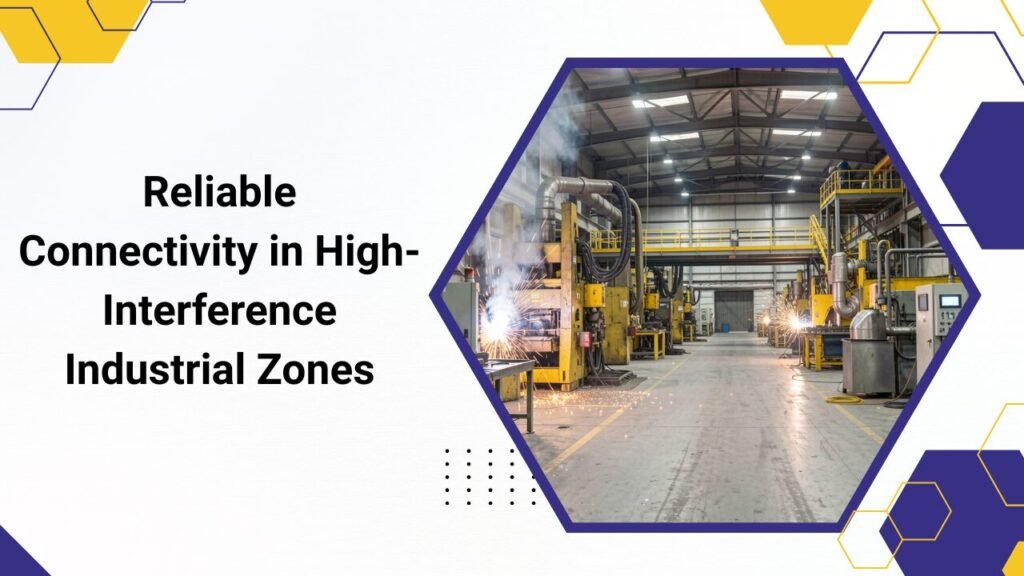
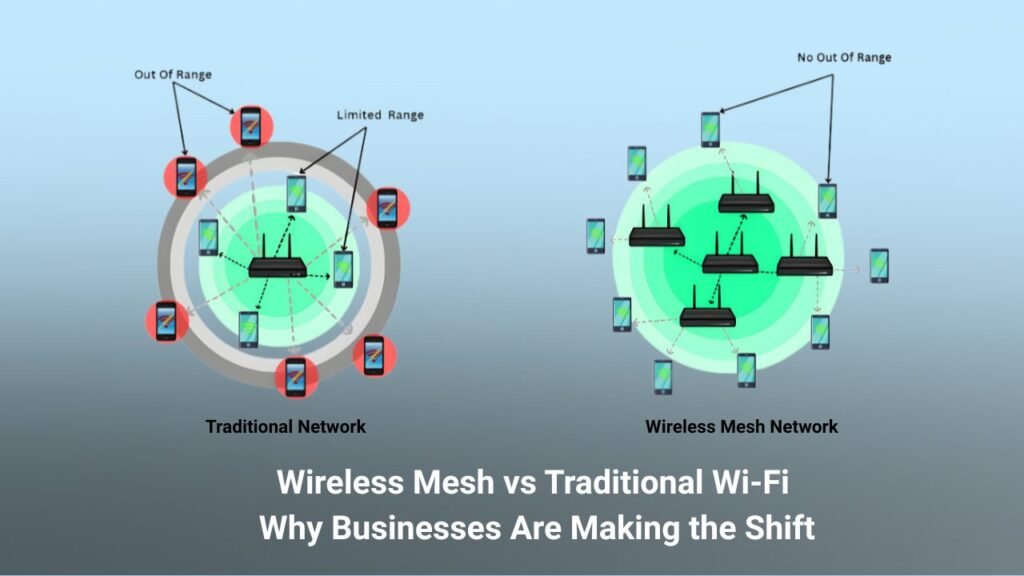
Introduction In the era of smart manufacturing, even a few seconds of network downtime can halt production, disrupt automation workflows, and create safety risks. As factories evolve into digital ecosystems with thousands of connected devices, wireless networking solutions for industry must deliver exceptional reliability. This is exactly where redundant wireless mesh WiFi networks excel-providing always-on connectivity built for harsh, high-interference industrial environments. This blog explores why redundant wireless mesh WiFi networks are essential for WiFi for smart factories, how they ensure zero downtime, and how they strengthen Industry 4.0 and Industry 5.0 transformation. Why Industrial Plants Need Ultra-Reliable WiFi Compared to offices or retail spaces, manufacturing plants are complex, dynamic, and hostile to WiFi signals. You’ll find: Heavy machinery and metal-based infrastructure High RF interference from motors and industrial devices Constant movement from AGVs, forklifts, and automated robots Large indoor-outdoor areas needing seamless coverage For this reason, smart factories require more than traditional WiFi-they need redundant wireless mesh WiFi networks that guarantee consistent performance and zero failure. What Is a Redundant Wireless Mesh WiFi Network? A wireless mesh WiFi network is a multi-node system where each node communicates with the others instead of relying on a single controller or access point. In a redundant configuration, the network automatically reroutes traffic if any node or link fails. Core Capabilities of a Redundant Wireless Mesh WiFi Network Self-Healing: Automatically finds alternate data routes during failures. Multi-Path Redundancy: Connectivity continues even if a node goes offline. Dynamic Network Optimization: Continuously selects the best RF path. Scalability: Easy to expand as factory requirements grow. High Resilience: No single point of failure. This makes it one of the best mesh Wi-Fi system options for demanding industrial operations. How Redundant Wireless Mesh WiFi Networks Ensure Zero Downtime Automatic Failover for Continuous Operations If a node or link fails due to interference, maintenance, or damage, a wireless mesh WiFi network instantly switches to an alternative path. This prevents disruptions to: Robotic operations Conveyor systems PLC-to-server communications IoT sensor data flow Reliable Coverage in Large & Complex Plant Layouts Factories often span multiple buildings, tall racks, metal barriers, and variable-density zones. A redundant wireless mesh WiFi network ensures: No dead zones Stable signals across machines & moving assets Reliable connectivity indoor and outdoor Seamless Mobility for Robots and AGVs Mobile industrial robots depend on uninterrupted WiFi. A wireless mesh WiFi network provides: Fast roaming without disconnection Low-latency handoffs between nodes Consistent performance during movement Perfect for AMRs, AGVs, forklifts, and handheld terminals. Fault-Tolerant Connectivity for Industrial IoT Smart factories rely on real-time IoT data for monitoring, automation, and decision-making. Wireless mesh WiFi networks ensure: High packet delivery Multi-path redundancy Low interference Predictable performance Wireless Mesh WiFi vs Traditional WiFi in Manufacturing Traditional WiFi Is Not Built for Industrial Load A single-controller WiFi architecture can cause severe issues: If the central AP fails, the network collapses Limited interference management Poor roaming performance Difficult to scale in large facilities Wireless Mesh WiFi Networks Are Built for Reliability They offer: Distributed load sharing Redundant data paths Self-healing architecture High scalability Ideal for environments where downtime is extremely costly Role of Wireless Mesh WiFi Networks in Industry 4.0 & 5.0 Modern industries depend on: IoT & cyber-physical systems Human-machine collaboration Autonomous robotics AI-driven analytics Sustainability optimization A robust wireless mesh WiFi network serves as the connectivity backbone for these initiatives, enabling full digital transformation. Best Practices for Deploying Industrial Wireless Mesh WiFi Conduct a Professional Wireless Site Survey Identify interference zones, shadowed areas, reflections, and optimal node placement. Choose Industrial-Grade Mesh WiFi Nodes Look for shockproof, dustproof, weather-resistant hardware that supports industrial RF performance. Enable Multi-Path Redundant Backhaul Use dual-band or tri-band nodes with multiple backhaul options for higher reliability. Optimize Channel Planning and Band Steering Reduces interference and ensures consistently high throughput. Monitor Network Health Continuously Industrial mesh systems should support analytics, fault detection, and predictive alerts. Benefits of Redundant Wireless Mesh WiFi Networks for Factories Zero downtime with self-healing architecture Resilient and fault-tolerant connectivity Stable coverage across huge facilities Smooth mobility for robots and workforce Better productivity with real-time IoT data Easy scalability for future growth Ideal for Industry 4.0 and 5.0 systems Conclusion In modern manufacturing, reliable connectivity is not-lerance, seamless coverage, and high performance required for smart factory automation. For industrial plants seeking WiFi for smart factories and the best mesh Wi-Fi system, mesh WiFi represents the most dependable and scalable solution available. Whether powering robotics, IoT, predictive analytics, or human-machine collaboration, wireless mesh WiFi ensures operations stay online-always. FAQs 01 What is a wireless mesh WiFi network in an industrial context? It is a multi-node WiFi system where each node communicates with others, offering redundant and self-healing pathways ideal for industrial reliability. 02 Why do manufacturing plants need redundant wireless mesh WiFi? To eliminate single points of failure, avoid downtime, and support mission-critical automation and IoT applications. 03 Can wireless mesh WiFi handle high interference in factories? Yes. Industrial-grade mesh WiFi networks are designed to operate reliably even in environments with heavy RF interference and metal obstacles. 04 Is a wireless mesh WiFi network suitable for mobile robots like AGVs? Absolutely. The seamless roaming and low-latency switching between nodes is essential for safe and continuous robot operations. 05 Are wireless mesh WiFi networks scalable for future factory expansions? Yes. You can add more nodes anytime without major infrastructure changes.

Connecting the Distance: How the PTP-24M Delivers Reliable Point-to-Point Wireless Links
25 November 2025 By Aeromesh Team In General
Introduction: Why Long-Range Wireless Connectivity Still Matters In a world where fiber is still expensive, slow to deploy, or simply impractical across large distances, long-range point-to-point wireless links have become the go-to choice for enterprises, campuses, industries, and remote sites looking for fast, stable connectivity. Whether it’s bridging two buildings, extending a surveillance network, providing last-mile backhaul, or enabling communication in areas where wired connections can’t reach – wireless bridging technology is indispensable. This is where the Aeromesh Systems PTP-24M, a high-performance outdoor point-to-point wireless bridge, steps in as a game-changing solution. With 300 Mbps RF capacity, robust outdoor protection, advanced management tools, and 4 km connectivity support, the PTP-24M is engineered to deliver reliable, seamless, and professional-grade wireless networking. What Makes the Aeromesh PTP-24M a Powerful Point-to-Point Wireless Solution? The PTP-24M is designed for both long-range and high-density wireless scenarios. As an 802.11b/g/n-compliant device operating on the 2.4 GHz band, it’s built to provide dependable connectivity even in challenging RF environments. 300 Mbps Outdoor CPE for High-Throughput Links At the heart of PTP-24M is its 300 Mbps WLAN capacity, ideal for carrying high-volume traffic including: HD surveillance streams Enterprise data Voice and video Cloud applications This makes it suitable for connecting campuses, warehouses, factories, hotels, and remote outposts that need stable high-throughput backhaul. Long-Range Coverage – Up to 4 km Wireless Links The PTP-24M can comfortably provide point-to-point links up to 4 km, ensuring: Seamless connectivity between buildings Reliable network extension to remote sites Stable backhaul for industrial IoT setups Wireless access in outdoor hotspots Its strong RF performance makes it a dependable choice for both urban rooftop links and rural connectivity projects. Intelligent Design for Professional Outdoor Performance Aeromesh PTP-24M isn’t just powerful – it’s built to withstand almost anything. Rugged, Weatherproof Housing The IP65-rated ABS plastic shell ensures the device can survive: Extreme heat or cold (-10°C to +55°C) Rain, dust, and wind Harsh industrial or outdoor environments This ruggedness ensures consistent performance throughout the year. Advanced Safety & Protection Features The device includes: 4KV lightning protection 24V passive PoE for flexible installation Dust-proof and waterproof casing This ensures maximum uptime and reduced maintenance, especially in remote installations. Flexible Operating Modes for Multiple Use Cases The PTP-24M is more than just a wireless bridge – it’s a multifunctional outdoor Wi-Fi platform. Operate as Access Point, Station, Bridge or Router Depending on your deployment, the PTP-24M supports: Wireless AP mode Wireless Bridge mode (ideal for PTP & PTMP links) Station mode Router mode This flexibility makes it suitable for both simple point-to-point connections and complex enterprise LAN extensions. Supports 16 BSSIDs & Smart QoS With 16 virtual SSIDs, organizations can segment traffic for: Guest WiFi IoT devices Staff networks Surveillance systems Combined with Smart QoS, bandwidth can be prioritized to maintain service quality under heavy load. Remote Management Made Easy Managing a distributed wireless network can be challenging – but the PTP-24M simplifies it with robust tools. Multiple Remote Manageability Options The device can be remotely monitored and configured via: CLI HTTP GUI interface SNMP This allows seamless integration with existing NMS platforms and helps network administrators troubleshoot without being onsite. Built-in Monitoring & Troubleshooting Tools Includes: Signal strength indicators Wireless neighbor monitoring Event logging Statistics reporting Remote firmware upgrades These capabilities make it easy to maintain network health for long-term reliability. Security That Protects Data Across Long Distances For point-to-point links that carry sensitive information, strong security is not optional. Enterprise-Grade Encryption & Authentication PTP-24M includes: WPA/WPA2-PSK WPA2-Enterprise AES / TKIP encryption WEP support MAC Access Control Lists Management VLAN This ensures your wireless bridge is protected against unauthorized access and eavesdropping. Key Applications of Aeromesh PTP-24M Thanks to its long range, weatherproof design, and high throughput, Aeromesh PTP-24M is ideal for: Campus or Building-to-Building Links Extend LAN between two or more buildings without laying fiber. Rooftop Wireless Backhaul Perfect for urban networks, ISPs, and community hotspots. Industrial Connectivity Factories, plants, warehouses and outdoor industrial setups can connect devices, IoT nodes or surveillance systems. Remote Site Communications Ideal for farms, mining zones, oilfields, and construction sites. Outdoor Hotspots Thanks to AP mode, PTP-24M also functions as a reliable outdoor hotspot. Conclusion: PTP-24M – Connecting Distances with Reliability and Performance The Aeromesh PTP-24M offers a robust combination of long-range performance, rugged outdoor durability, high throughput, and intelligent software features. Whether you’re extending your network to a distant building, powering a surveillance system, or creating a reliable outdoor hotspot, the PTP-24M stands out as a high-performance outdoor point-to-point wireless bridge built for modern enterprise needs. For organizations looking for dependable, cost-effective, and easy-to-manage wireless connectivity, the PTP-24M is a solution that connects the distance – with stability, security, and speed.