General

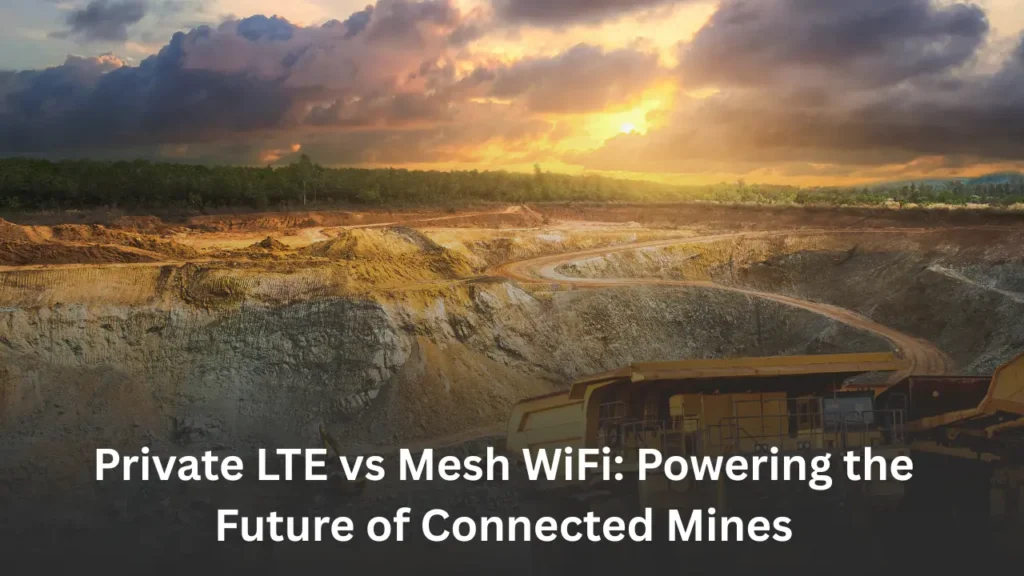
Private LTE vs WiFi for Mining Operations: Which Technology Powers the Future of Connected Mines?
19 November 2025 By Aeromesh Team In General
Introduction Mining operations are rapidly adopting digital technologies-IoT sensors, autonomous trucks, drilling automation, environmental monitoring, worker safety systems, and real-time analytics. At the center of this transformation is one critical element: connectivity. A mine’s ability to collect, process, and act on data depends entirely on how strong and reliable its wireless network is. This brings us to a key question many mining companies face: Should you choose Private LTE or WiFi (especially wireless mesh WiFi) for powering connected mining operations? In this blog, we dive deep into the strengths, limitations, and real-world performance of both technologies-ultimately revealing why modern mesh WiFi solutions for mines are becoming the preferred choice for scalable, cost-effective, and resilient connectivity. Private LTE vs WiFi for Mining: Overview Mining sites-both underground and open-pit-require connectivity that can: Support long-range coverage Handle mobility of vehicles Provide reliable communication through dust, rock, and metal obstacles Ensure low downtime Scale with new sensors and automation systems Operate with minimal maintenance What is Private LTE in Mining? Private LTE is a dedicated cellular network built specifically for an enterprise, not a telecom operator. It provides: Licensed spectrum (or shared spectrum) Wide-area coverage Strong mobility support Strengths of Private LTE Long-range signal Handles mobile machinery well Secure due to licensed spectrum Supports higher device counts Limitations of Private LTE High deployment and operational cost Requires complex infrastructure (eNBs, EPC servers, SIM management) Not ideal for underground operations Requires skilled engineers Scaling requires additional equipment Latency can be higher in some conditions What is WiFi for Mining Operations? Traditional WiFi may not always be suitable for harsh mining environments due to interference and lack of long-range capability. However, modern wireless mesh networks and mesh WiFi solutions for mines have changed the game. Mesh WiFi and Wireless Mesh Network Explained A wireless mesh network uses multiple interconnected nodes that automatically: Route data Extend coverage Self-heal Offer redundancy Private LTE vs Mesh WiFi: Detailed Comparison for Mining 1. Coverage in Harsh Mining Environments Private LTE: Wide coverage outdoors but struggles underground. Mesh WiFi: Nodes can be placed flexibly inside tunnels and intersections. 2. Scalability and Flexibility Private LTE: Scaling requires new licensed equipment and expert engineering. Mesh WiFi: Plug-and-play expansion. 3. Cost-Effectiveness Private LTE: Expensive to deploy and maintain. Mesh WiFi: Low installation cost and no licensing fees. 4. Reliability and Redundancy Private LTE: Single-point failures can disrupt connectivity. Mesh WiFi: Self-healing network with high redundancy. 5. Latency and Performance for Automation Private LTE: Good mobility with moderate latency. Mesh WiFi: Low-latency ideal for automation. 6. Underground Mining Suitability Private LTE: Needs extensive repeaters. Mesh WiFi: Easy deployment along tunnels. Why Mesh WiFi Solutions Are Powering the Future of Connected Mines ✔ Seamless Connectivity Mesh architecture eliminates dead zones. ✔ Plug-and-Play Deployment No complex core network or SIM provisioning required. ✔ High Bandwidth Ideal for video feeds, telemetry, tracking, and sensors. ✔ Extreme Cost Savings Lower CAPEX and OPEX. ✔ Rugged and Self-Healing Network Perfect for harsh environments. Conclusion While Private LTE offers wide-area coverage and mobility, mesh WiFi solutions for mines deliver greater value, flexibility, and reliability-especially underground. With their self-healing wireless mesh network, easy scalability, low cost, and superior performance in tunnels, mesh WiFi networks clearly emerge as the best WiFi solutions for underground mining and open-pit automation. As mining becomes more autonomous and data-driven, mesh WiFi will continue to lead the future of connected mines. FAQ’s 01 What is the best wireless solution for underground mining? Mesh Wi-Fi due to flexibility and reliable coverage. 02 Is Private LTE good for mining operations? Yes for open areas, but expensive and complex underground. 03 Why is mesh WiFi preferred over traditional WiFi? Because it self-heals and ensures no downtime. 04 Can mesh WiFi support autonomous mining equipment? Yes, it provides low latency and high bandwidth. 05 Is mesh WiFi more cost-effective than Private LTE? Yes, significantly lower deployment and maintenance costs.
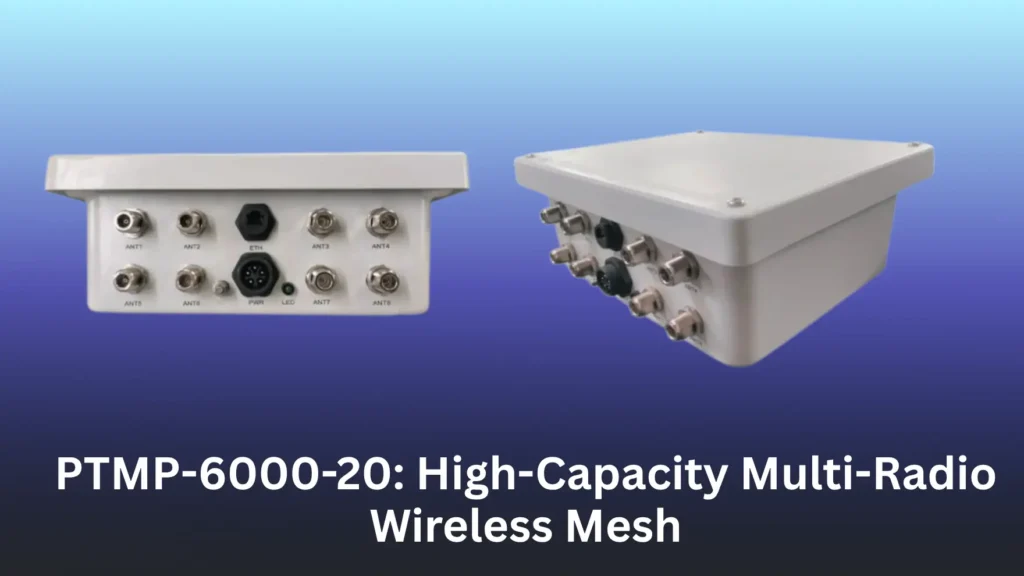

Transforming Connectivity with PTMP-6000-20: High Capacity Multi Radio Wireless Mesh
13 November 2025 By Aeromesh Team In General
Introduction: Powering the Next Era of Wireless Networking Modern enterprises, smart cities, and industrial sites need more than just connectivity. They require speed, scalability, and reliability. The AeroMesh PTMP-6000-20 delivers all three. Designed as a 4 Radio Multi MIMO mesh network solution, it empowers organizations to build high capacity, low latency networks without the heavy costs of fiber infrastructure. Exceptional Performance with Multi Radio Architecture At the heart of the PTMP-6000-20 lies its multi radio, multi stream MIMO design. Utilizing up to 4×4 antennas and multiple spatial streams, it delivers consistent gigabit class throughput that is ideal for demanding, real time applications such as high definition video, voice, and industrial automation. Unlike traditional single radio systems that lose performance over multiple hops, the PTMP-6000-20 provides near full duplex transmission, ensuring minimal latency and sustained throughput even across large deployments. Built for Extreme Capacity and Efficiency With support for multiple frequency bands (2.4 GHz, 5 GHz, and 6 GHz) operating simultaneously, the PTMP-6000-20 can power diverse applications from a single device. This flexibility allows enterprises to segment networks for public Wi-Fi, industrial IoT, real time monitoring, or critical communication systems without interference. Delivering up to 2 Gbps of data throughput, the PTMP-6000-20 is a powerful alternative to costly terrestrial networks such as fiber. It helps organizations significantly reduce CapEx and OpEx while extending their network coverage efficiently. Flexible, Scalable, and Cost Effective Networking AeroMesh Systems designed the PTMP-6000-20 to meet the growing demands of both retrofit and new infrastructure projects. Whether you are building a network from the ground up or expanding an existing one, this solution provides a future ready foundation for smart and scalable connectivity. The multi radio mesh backbone intelligently manages traffic between radios to ensure optimized routing and load balancing. Each unit can serve as both a client access point and a backhaul link, offering flexibility to scale across cities, campuses, or industrial sites with ease. True Layer 2 Mesh Backbone Advantage Unlike conventional wireless systems that rely on a store and forward single radio design, the PTMP-6000-20 uses dedicated radios for both backhaul and access within a Layer 2 switching architecture. This results in: Near full duplex operation for simultaneous transmission and reception Lower latency and higher sustained bandwidth across multiple hops Improved reliability and seamless failover during high load scenarios This architecture creates a robust wireless ecosystem that supports mission critical services where uptime and performance are essential. Designed for Versatility Across Industries The PTMP-6000-20 adapts effortlessly to a wide range of industries and environments, including: Smart Cities: Wi-Fi backhaul for surveillance, IoT sensors, and public connectivity Industrial and Manufacturing: Real time monitoring and automation systems Public Safety: Low latency connectivity for command and control networks Transportation and Logistics: Seamless communication between moving assets Rural Broadband: Extending high speed connectivity to underserved regions Key Advantages at a Glance ✅ Multi Radio Performance: Four dedicated radios for simultaneous access and backhaul ✅ High Capacity: Multi-Gbps throughput with MIMO technology ✅ Flexible Frequency Support: Operates concurrently at 2.4 GHz, 5 GHz, and 6 GHz ✅ Low Latency and High Reliability: Layer 2 switching for real time performance ✅ Cost Efficiency: Reduced CapEx and OpEx compared to fiber based networks ✅ Scalable Design: Expand easily to thousands of mesh nodes Conclusion: Smarter Networks Start with PTMP-6000-20 The PTMP-6000-20 from AeroMesh Systems redefines what is possible in wireless networking. By combining intelligent mesh architecture, robust hardware, and multi radio design, it enables organizations to deploy fast, reliable, and scalable connectivity anywhere. Whether supporting industrial automation, public Wi-Fi, or mission critical communication networks, the PTMP-6000-20 ensures your wireless infrastructure remains strong, intelligent, and ready for the future. Frequently Asked Questions 01 What is the PTMP-6000-20 Wireless Mesh System? The PTMP-6000-20 is a high-capacity wireless mesh solution from AeroMesh Systems. It’s designed with multiple radios and MIMO technology to deliver fast, stable, and scalable connectivity across large outdoor or industrial areas. 02 How does the PTMP-6000-20 improve wireless network performance? It uses four separate radios to handle data traffic efficiently, ensuring low latency and high throughput even over multiple hops — ideal for real-time applications like video and automation. 03 Can the PTMP-6000-20 be used outdoors? Yes. The PTMP-6000-20 is built with an IP67-rated enclosure, which makes it resistant to dust, rain, and harsh weather conditions, perfect for outdoor and industrial use. 04 What are the main use cases of the PTMP-6000-20? It’s ideal for smart city projects, industrial IoT networks, public safety systems, transportation, and rural broadband — anywhere reliable wireless connectivity is needed. 05 Is the PTMP-6000-20 easy to manage remotely? Yes. The device supports cloud-based management and monitoring, allowing administrators to configure, update, and monitor performance remotely through a central dashboard.

Revolutionizing Outdoor Connectivity: The Power of PTMP-6000-30 Multi Radio Wireless Mesh System
13 November 2025 By Aeromesh Team In General
Introduction: Smarter Wireless for the Next Generation Network In today’s hyperconnected world, organizations are constantly seeking reliable, high capacity wireless networks that can adapt, scale, and perform in even the harshest environments. The PTMP-6000-30 from AeroMesh Systems delivers exactly that. It is a next generation multi radio Wi-Fi mesh unit engineered to provide powerful, low latency connectivity with intelligent self healing capabilities. Built for Performance and Reliability The PTMP-6000-30 is not just another wireless device; it is a complete networking powerhouse. Designed with a rugged IP67 enclosure, it can withstand extreme weather conditions, making it ideal for industrial, government, and outdoor applications. With up to six configurable 802.11ax radios, 2×2 MIMO, and a 2.5 Gbps Ethernet interface, it delivers lightning fast data throughput and stable connectivity across multiple devices and access points. Whether deployed in Point to Point (PtP) or Point to Multi Point (PtMP) configurations, the PTMP-6000-30 ensures seamless, high performance communication even in non line of sight (NLOS) environments. Intelligent Multi Hop Mesh Architecture The PTMP-6000-30 features a multi radio Layer 2 switching mesh architecture that combines separate radios for backhaul and client access. This intelligent design dramatically boosts throughput and minimizes latency even across multiple hops, offering a superior experience compared to traditional single radio mesh networks. Each PTMP unit communicates intelligently with others, constantly analyzing network performance. If signal loss or overload occurs, the system automatically reroutes data traffic to maintain continuous uptime and performance. True “Set and Forget” Networking One of the standout features of the PTMP-6000-30 is its self forming and self healing capabilities. Once deployed, it automatically detects nearby mesh nodes and optimizes routing for peak efficiency. If a connection fails, the system quickly adapts to maintain uninterrupted communication without manual intervention. This autonomous intelligence removes single points of failure and ensures long term reliability for mission critical applications such as: • Industrial IoT networks • Smart city connectivity • Public safety and surveillance systems • Oil, gas, and mining operations • Rural broadband expansion Simplified Management and Monitoring AeroMesh’s PTMP-6000-30 makes network management easier through its cloud based controller and remote configuration tools. Administrators can monitor and manage devices via CLI, HTTP, or SNMP, while advanced diagnostics provide real time insights, firmware updates, and performance analytics through a centralized dashboard. With centralized provisioning, scalability becomes virtually unlimited, supporting deployments from ten nodes to thousands with the same efficiency. Why Choose PTMP-6000-30? ✅ Ultra Fast Throughput: Six 802.11ax radios with multi stream MIMO ✅ Extreme Durability: IP67 rated enclosure designed for outdoor use ✅ Flexible Deployment: Supports PtP and PtMP configurations ✅ Self Healing Mesh: Automatic rerouting ensures zero downtime ✅ Centralized Control: Manage via Cloud, CLI, SNMP, or HTTP ✅ Scalable and Cost Efficient: Expand effortlessly with reduced CapEx and OpEx Conclusion: Empowering the Future of Connectivity The PTMP-6000-30 from AeroMesh Systems is redefining the future of wireless networking. By combining rugged hardware with intelligent mesh architecture, it delivers a powerful, flexible, and scalable solution for modern connectivity needs. Whether setting up a new network, expanding an existing one, or upgrading to smarter wireless infrastructure, the PTMP-6000-30 provides a future ready foundation for fast, reliable, and intelligent communication. Frequently Asked Questions 01 What is the PTMP-6000-30 Wireless Mesh System? The PTMP-6000-30 is a high-performance wireless mesh device from AeroMesh Systems. It’s built for outdoor and industrial use, offering fast, stable, and self-healing Wi-Fi connectivity in any environment. 02 How does the PTMP-6000-30 improve wireless performance? It uses multiple radios to handle backhaul and client traffic separately. This setup helps reduce latency, boost speed, and keep the connection strong even in areas with heavy usage or obstacles. 03 Is the PTMP-6000-30 suitable for outdoor or harsh environments? Yes, it’s designed for that. The PTMP-6000-30 comes in a rugged IP67-rated enclosure, which means it can handle dust, rain, heat, and cold without losing performance. 04 Where can the PTMP-6000-30 be used? You can use it in many places — smart cities, industrial IoT projects, public safety networks, mining sites, or even rural areas where reliable wireless coverage is needed. 05 Can the PTMP-6000-30 be managed remotely? Yes. The device supports cloud-based management and can be accessed through a central dashboard. You can easily monitor performance, update firmware, and manage multiple nodes from one place.

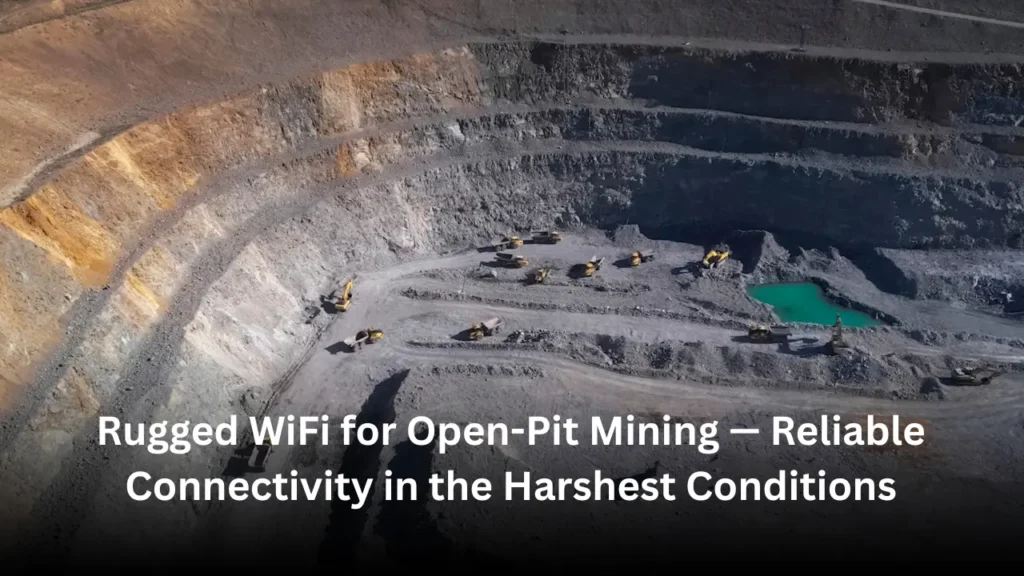
Rugged WiFi for Open-Pit Mining: How to Build Reliable Connectivity in Harsh Outdoor Environments
04 November 2025 By Aeromesh Team In General
Introduction Connectivity is the backbone of modern mining operations. From real-time equipment monitoring to autonomous haul trucks, the mining industry depends on strong, uninterrupted communication networks. However, open-pit mines pose unique challenges — vast areas, harsh weather, moving equipment, and deep pits can all disrupt wireless signals. That’s where rugged WiFi for open-pit mining and wireless networking solutions for the mining industry come into play. These advanced systems are designed to ensure seamless data flow, operational safety, and productivity — even in the world’s toughest terrains. The Connectivity Challenge in Open-Pit Mines Mining sites are not like traditional industrial environments. They are constantly evolving — with equipment relocation, excavation expansion, and shifting terrain. This dynamic nature makes it extremely difficult for conventional WiFi or cellular networks to maintain consistent coverage. Key challenges include: Line-of-sight obstructions: Tall walls, moving trucks, and deep pits can block radio signals. Harsh environmental conditions: Extreme heat, dust, and vibration can damage typical network equipment. Large coverage areas: Mines can span kilometers, requiring a network that scales dynamically. Network mobility: Connectivity must move with fleets and workers as operations shift. These challenges demand a robust and adaptive networking solution — one that’s built to survive and perform. Rugged WiFi: Designed for Harsh Outdoor Environments Rugged WiFi for open-pit mining is engineered specifically for outdoor and industrial conditions. Unlike consumer-grade systems, rugged WiFi uses industrial-grade access points, dust- and water-resistant enclosures, and temperature-tolerant components to ensure uptime in all conditions. Key Features of Rugged WiFi Networks Weatherproof Equipment: Built to withstand rain, dust, and temperature extremes. Long-Range Coverage: High-gain antennas and directional radios enable communication across large sites. Self-Healing Wireless Mesh WiFi Networks: If one node fails, data automatically reroutes — ensuring continuous connectivity. Low Latency: Real-time data transmission supports autonomous operations and safety systems. Scalability: New access points or nodes can be easily added as the mine expands. These characteristics make rugged WiFi the backbone of wireless networking solutions for the mining industry, powering digital transformation across remote operations. How Wireless Mesh WiFi Networks Power Open-Pit Mining At the heart of rugged WiFi systems lies wireless mesh WiFi technology — a decentralized approach where each node communicates with others to create a web of connectivity. Advantages of Wireless Mesh WiFi in Mining Reliable Connectivity: Every access point (node) supports others, reducing downtime. Flexible Deployment: Ideal for constantly changing mine layouts. Wide Coverage: Wireless mesh WiFi networks can blanket entire mining pits and haul roads. Easy Scalability: Simply add more nodes to extend range without major reconfiguration. Real-Time Communication: Enables seamless connectivity for fleet management, IoT sensors, and safety alerts. Solutions like these — often recognized as the best mesh WiFi systems for industrial environments — enable mining companies to maintain operational continuity and data reliability. Building a Reliable Connectivity Framework Designing a wireless network for open-pit mining isn’t just about installing hardware — it’s about strategic planning. 1. Conducting a Site Survey Start with a comprehensive RF site survey to identify potential obstructions, interference sources, and coverage gaps. 2. Selecting Ruggedized Equipment Choose routers and access points rated for industrial use — those that can tolerate vibration, moisture, and temperature extremes. 3. Implementing Redundant Wireless Mesh Links Ensure redundancy through multi-hop wireless mesh links that automatically reroute traffic when one path is blocked or a device fails. 4. Prioritizing Security Mining networks handle critical operational data. Use strong encryption, authentication, and firewalls to safeguard data integrity. 5. Monitoring and Maintenance Employ centralized monitoring platforms to track performance metrics, detect issues early, and optimize network health. The Impact of Rugged WiFi on Mining Operations Adopting rugged WiFi for open-pit mining transforms how companies operate. Enhanced Productivity Seamless connectivity ensures that autonomous and remotely operated vehicles perform efficiently without manual intervention. Improved Safety Workers remain connected through real-time alerts and tracking, enhancing emergency response times. Operational Visibility Data from sensors, cameras, and control systems flows uninterrupted to centralized monitoring hubs for better decision-making. Cost Efficiency Reduced downtime, lower maintenance needs, and optimized equipment usage translate into significant cost savings. Choosing the Best Wireless Mesh WiFi System for Mining When selecting the best wireless mesh WiFi system, consider: Proven track record in industrial deployments Support for long-range and mobile nodes Easy integration with IoT and automation systems Rugged hardware with IP67 or higher ratings Centralized management and diagnostic tools Some technology providers specialize in wireless networking solutions for the mining industry, offering end-to-end systems tailored to specific operational needs. Conclusion In the mining industry, reliable connectivity isn’t optional — it’s mission-critical. Rugged WiFi for open-pit mining provides the durability, range, and resilience needed to maintain uninterrupted communication in the harshest outdoor environments. With wireless mesh WiFi networks and smart deployment strategies, mining companies can improve efficiency, safety, and profitability — creating a foundation for the connected mines of the future. Frequently Asked Questions 01 What is rugged WiFi? Rugged WiFi refers to wireless systems built for extreme outdoor or industrial conditions. They use durable, weatherproof components to maintain performance despite dust, vibration, and temperature changes. 02 Why is wireless mesh WiFi ideal for open-pit mining? Wireless mesh WiFi provides reliable, flexible coverage across large and dynamic sites. Each node communicates with others, ensuring data flow even if one node goes offline. 03 How do wireless networking solutions improve mining safety? They enable real-time tracking of personnel and equipment, instant alert systems, and uninterrupted communication — all of which enhance situational awareness and emergency response. 04 What makes a WiFi system “rugged”? Industrial-grade materials, shockproof enclosures, IP67-rated protection, and temperature-resistant electronics make a WiFi system rugged and reliable for outdoor environments. 05 How can mining companies choose the best wireless mesh WiFi system? Look for proven systems designed specifically for large-scale industrial sites — featuring long-range coverage, scalability, and 24/7 reliability.

Smarter, Simpler, Stronger: How Wireless Mesh Networks Are Powering the Future of Connectivity
30 October 2025 By Aeromesh Team In General
Introduction: In today’s hyper-connected world, reliable connectivity isn’t a luxury — it’s a necessity. From underground mines to bustling smart cities, networks are the invisible backbone keeping data, devices, and people connected. Traditional wired systems and single-point Wi-Fi setups often fail to deliver the flexibility, range, and resilience that modern environments demand. That’s where wireless mesh networks (WMNs) come in — a smarter, simpler, and stronger solution reshaping how industries, fleets, and communities stay connected. Designed for scalability and dependability, mesh technology is transforming everything from fleet management systems to smart city wireless solutions and even underground mining operations. What Is a Wireless Mesh Network? A wireless mesh network (WMN) is a decentralized system where multiple access points (nodes) communicate directly with each other. Unlike traditional networks that rely on a single router, a mesh network ensures that if one node fails, data automatically reroutes through another — keeping the connection stable and continuous. In simple terms, it’s a network that “heals” itself and adapts to changes automatically. This flexibility makes it ideal for harsh or complex environments like large industrial sites, transportation fleets, and remote mining operations. Smarter Connectivity: Adapting to Every Challenge Smart doesn’t just mean fast — it means intelligent connectivity. Wireless mesh wifi are designed to optimize performance automatically. Each node identifies the best route for data transmission, ensuring seamless communication even when devices move or the environment changes. For example, in a fleet management system project, vehicles equipped with mesh-enabled devices can communicate in real time with control centers and each other. This allows for: Continuous tracking and coordination, even in remote areas. Instant alerts about maintenance, fuel status, or emergencies. Reduced downtime due to better operational insights. By using self-learning algorithms, the network grows smarter with every data exchange — a key reason why industries are rapidly adopting this technology. Simpler Networks: Redefining Installation and Maintenance Traditional wifi networks often require extensive cabling, complex setup, and dedicated management systems. In contrast, wireless mesh networks are plug-and-play by design. Each node can be easily added or removed without disrupting the network. This makes mesh technology perfect for smart city wireless solutions where thousands of sensors, cameras, and IoT devices need to stay connected across wide areas. Benefits include: Quick deployment with minimal infrastructure. Automatic configuration of new devices. Scalable networks that can grow with city demands. For municipalities and industries, this simplicity translates into lower costs, faster implementation, and easier long-term management. Stronger Connections: Built for Tough Environments Not all networks can withstand extreme conditions — but mesh WiFi solutions for mines can. Underground mining environments are notorious for poor signal coverage due to physical barriers and harsh surroundings. Mesh WiFi nodes, built with rugged hardware, provide reliable and continuous connectivity even deep underground. Here’s how: Each node relays data to the next, maintaining a strong signal throughout tunnels. Real-time communication supports worker safety and coordination. IoT-enabled sensors help monitor air quality, equipment status, and energy use. These best WiFi solutions for underground mining improve not only efficiency but also safety — giving miners real-time information that can save lives. Wireless Mesh Networks in Action: Industry Transformations Mining and Industrial Operations From underground mines to open-pit sites, mesh networks provide seamless connectivity for autonomous equipment, surveillance cameras, and monitoring sensors. Operations become more efficient, safer, and data-driven. Fleet Management and Logistics A modern fleet management system project powered by mesh connectivity enables vehicles to stay in touch even in low-signal areas. It ensures real-time tracking, route optimization, and maintenance alerts — reducing costs and improving fleet uptime. Smart Cities and IoT Integration Smart city wireless solutions rely on dense, interconnected networks. Mesh technology links everything — traffic lights, public WiFi, surveillance, environmental sensors — to create intelligent urban ecosystems that respond dynamically to citizens’ needs. Emergency and Military Communication In disaster recovery or defense scenarios, where infrastructure may be damaged or unavailable, mesh networks offer rapid, reliable communication without dependence on fixed towers or cables. Key Advantages of Wireless Mesh Networks High Reliability: Self-healing architecture ensures uninterrupted service. Scalability: Add nodes easily as coverage needs grow. Cost Efficiency: Minimal cabling and low maintenance reduce total costs. Mobility: Ideal for moving assets like fleets or equipment. Security: Encrypted communication across multiple nodes enhances protection. These features make WMNs a long-term investment for future-ready industries. The Future of Connectivity: Mesh at the Core As digital transformation accelerates, the demand for fast, resilient, and adaptive networks will only increase. Mesh networks sit at the heart of this evolution — enabling Industry 4.0, IoT ecosystems, and next-gen communications. Whether it’s connecting vehicles in a fleet, powering smart city grids, or supporting life-critical operations in mines, wireless mesh networks are not just an upgrade — they’re a revolution in how we think about connectivity. Conclusion: Smarter, simpler, and stronger — that’s the promise of wireless mesh technology. It delivers intelligent, flexible, and high-performance connectivity for every environment, from deep underground to sprawling cities. As industries evolve and digital demands grow, embracing mesh WiFi solutions for mines, smart city wireless systems, and fleet management networks will be key to staying connected, efficient, and future-ready. The world is moving toward smarter connectivity — and wireless mesh networks are lighting the way forward. FAQ’s 01 What makes wireless wifi mesh networks different from traditional Wi-Fi systems? Traditional Wi-Fi relies on a single access point, creating weak spots as you move away. Wireless mesh wifi networks use multiple nodes that communicate with each other, ensuring full coverage and no signal dropouts. 02 Are wireless mesh networks suitable for underground mining? Yes, absolutely. Mesh WiFi solutions for mines provide strong, uninterrupted coverage even in deep tunnels where wired connections or standard Wi-Fi fail. They improve safety, communication, and monitoring in mining operations. 03 How do mesh networks benefit smart cities? Smart city wireless solutions use mesh technology to connect traffic lights, sensors, cameras, and public Wi-Fi systems — creating an intelligent, responsive, and sustainable city network. 04 Can wireless mesh wifi be used in fleet management? Yes. In a fleet management system project, mesh connectivity ensures vehicles communicate in real time with headquarters and with each other — even across remote routes — improving safety, tracking, and efficiency. 05 What industries can benefit most from wireless mesh technology? Mining, transportation, logistics, public safety, defense, manufacturing, and smart cities — all can leverage mesh networks for improved reliability, flexibility, and performance.

Underground Connectivity Revolution: Best WiFi Solutions for Mining Operations in 2025
25 October 2025 By Aeromesh Team In General
In the fast-evolving world of mining, connectivity is no longer optional—it’s essential. As mining operations move deeper underground and across vast open-pit areas, maintaining a stable and secure WiFi network has become one of the top priorities for the industry. In 2025, the revolution in wireless mesh networking is transforming how mining companies connect people, machines, and data—delivering safer, faster, and smarter operations. The Need for Reliable Connectivity in Mining Mining environments are among the toughest places for communication systems. Traditional WiFi solutions often fail underground due to harsh conditions, heavy machinery interference, and physical obstructions such as rocks and tunnels. Yet, real-time data sharing is crucial for operations—whether it’s monitoring equipment, tracking personnel, or ensuring worker safety. This is where wireless mesh networks (WMNs) are changing the game. Unlike traditional networks that rely on a single access point, mesh networks create a self-healing, multi-node system where each device can communicate with others, ensuring uninterrupted connectivity even if one node goes down. Why Mesh WiFi Is the Future of Mining Connectivity 1. Uninterrupted Connectivity in Harsh EnvironmentsA mesh WiFi network ensures strong signal coverage across underground tunnels and open-pit sites. Its ability to route data dynamically prevents downtime, making it a high-performance wireless mesh network ideal for mission-critical mining operations. 2. Enhanced Worker Safety and Real-Time TrackingWith mesh connectivity, miners and vehicles can be tracked in real time. This allows control centers to respond instantly to emergencies, improving safety protocols and reducing accident risks. 3. Simplified Deployment and ScalabilityInstalling cables in underground mines can be expensive and time-consuming. Wireless mesh networks are flexible and scalable, allowing new nodes to be added easily as operations expand, without costly rewiring. 4. Reliable Wireless Connectivity for Autonomous SystemsModern mining equipment—like autonomous trucks, drills, and sensors—relies on low-latency WiFi connections. Mesh systems deliver reliable wireless connectivity, ensuring data synchronization between control rooms and field equipment with minimal lag. Best WiFi Solutions for Underground Mines in 2025 The latest mesh WiFi routers and ruggedized access points are purpose-built for mining conditions. They feature dust- and water-resistant designs, extended coverage, and intelligent network management tools. Leading-edge systems integrate AI-based network optimization to adjust to dynamic mining layouts automatically. When selecting the best WiFi solution for your mine, focus on: High throughput and low latency performance Rugged, industrial-grade hardware Self-configuring mesh architecture Centralized monitoring and control capabilities How Mesh WiFi Improves Operational Efficiency By connecting IoT sensors, cameras, and communication devices, mesh WiFi provides a unified digital infrastructure. This integration supports: Predictive maintenance through continuous monitoring Real-time video and voice communication Enhanced decision-making with live data analytics The outcome is clear: greater productivity, improved safety, and reduced downtime. Conclusion: The Future Is Wireless, Smart, and Scalable In 2025 and beyond, wireless mesh networks are redefining mining connectivity. From underground tunnels to expansive open pits, these networks provide reliable, high-performance WiFi that powers safer and more efficient mining operations. Investing in mesh WiFi solutions today ensures your mine is ready for tomorrow’s smart, connected future. FAQs 01 Why is WiFi important in underground mining operations? Reliable WiFi enables real-time communication, safety alerts, and equipment tracking in underground mines. It supports connected devices, autonomous machinery, and worker monitoring systems that depend on continuous wireless connectivity for safe and efficient operations. 02 What is the best type of WiFi network for underground mines? A wireless mesh network is the most effective WiFi solution for underground mining. Unlike traditional access point systems, mesh WiFi creates a self-healing network where multiple nodes communicate with each other—providing strong, uninterrupted coverage in tunnels and remote areas. 03 Can mesh WiFi handle heavy machinery and harsh mining environments? Yes. Rugged mesh WiFi systems are designed for tough conditions. They feature dust-proof, water-resistant, and vibration-tolerant hardware that withstands extreme underground environments while maintaining reliable data transmission. 04 How far can a mesh WiFi network extend in an underground mine? Mesh WiFi coverage depends on the number of nodes and layout of the tunnels. Typically, each node can cover 100–300 meters, and by linking multiple nodes, the network can extend across the entire mining site—both underground and on the surface. 05 Is installing WiFi in underground mines expensive? While initial setup costs vary, wireless mesh networks are more cost-effective than traditional wired networks. They reduce the need for extensive cabling and are easier to expand as mining operations grow, saving both time and maintenance costs in the long term. 06 What are the top features to look for in mining WiFi solutions for 2025? Key features include: High-speed and low-latency performance Self-configuring mesh architecture Ruggedized industrial-grade access points Centralized monitoring dashboard

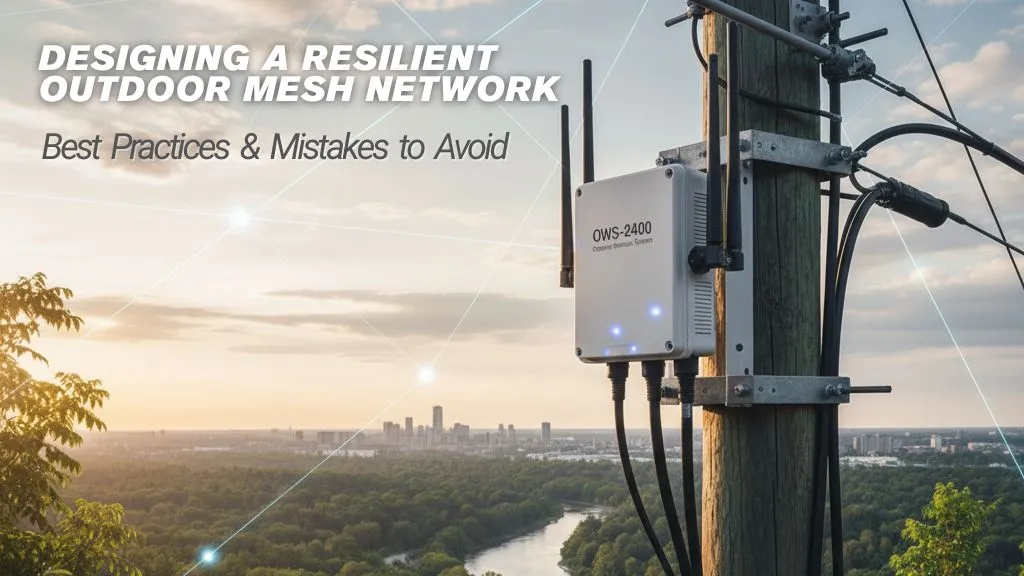
Designing a Resilient Outdoor Mesh Network: Best Practices & Mistakes to Avoid
15 October 2025 By Aeromesh Team In General
Introduction In today’s connected world, uninterrupted communication is critical — whether for city surveillance, smart infrastructure, or enterprise operations. Outdoor mesh networks are the backbone of these systems, enabling real-time data flow even in complex and harsh environments. However, building a resilient outdoor mesh network requires more than just placing a few nodes; it demands careful planning, design, and execution. Let’s explore the best practices for creating a robust outdoor mesh network — and the common mistakes you should avoid to ensure maximum uptime and performance. 1. Start with a Clear Network Design and Coverage Plan A successful deployment begins with a detailed design blueprint. Map your coverage area, identify potential obstructions (buildings, trees, terrain), and plan optimal node placement. The goal is to maintain line-of-sight where possible while minimizing interference. Using high-performance mesh equipment like the OWS-2400 Outdoor Wireless System ensures strong connectivity and adaptive routing between nodes. A well-planned mesh layout reduces latency, packet loss, and dead zones — essential for mission-critical applications such as video surveillance or public WiFi. 2. Prioritize Redundancy and Multi-Path Connectivity Redundancy is at the heart of resilience. A mesh network should be designed so that if one node fails, traffic automatically reroutes through another. Multi-radio, multi-channel devices provide greater flexibility, allowing simultaneous connections across different frequencies. Ensure your network topology supports self-healing — meaning it can reconfigure automatically when a link drops. This not only improves uptime but also simplifies maintenance and scalability. 3. Choose Rugged Hardware for Outdoor Conditions Outdoor environments can be unpredictable — heat, rain, dust, and wind can degrade equipment over time. Select hardware built for such extremes: weatherproof enclosures, corrosion-resistant mounts, and surge protection are must-haves. Industrial-grade mesh nodes like the OWS-2400 Outdoor Wireless System are specifically engineered for these scenarios. They combine durability with high throughput, ensuring continuous connectivity even in demanding climates. 4. Optimize for Low Latency and High Throughput In applications such as CCTV monitoring, industrial automation, or smart traffic control, latency can make or break performance. Use equipment that supports multiple radios and intelligent channel management to minimize delay. Keep hops between nodes minimal — typically three or fewer — to maintain stable performance. Also, deploy QoS (Quality of Service) settings to prioritize critical data like video feeds or control signals over general traffic. 5. Ensure Proper Power and Grounding Even the most advanced wireless system can fail due to poor power management. Use reliable power sources with surge protectors and ensure proper grounding to protect against lightning strikes or voltage fluctuations. Battery backups or solar power can also help in remote areas. 6. Monitor, Maintain, and Update Regularly Once your network is live, proactive monitoring is essential. Use network management software to track link quality, signal strength, and node health. Schedule regular maintenance to clean enclosures, check cables, and update firmware to the latest version. Proactive management helps identify issues before they cause downtime and keeps your network secure against evolving cyber threats. Common Mistakes to Avoid Ignoring environmental factors – Deploying without assessing local terrain or weather conditions. Overlooking redundancy – Relying on single links without backup paths. Using mismatched hardware – Mixing incompatible devices that degrade performance. Skipping network testing – Failing to validate throughput, coverage, and latency before full deployment. Neglecting maintenance – Allowing small issues (like corroded connectors) to grow into major failures. Final Thoughts A well-designed outdoor mesh network doesn’t just deliver connectivity — it ensures reliability, scalability, and long-term value. Following these best practices can help you avoid the pitfalls that often plague large-scale deployments. If you’re planning to upgrade or expand your wireless infrastructure, explore the OWS-2400 Outdoor Wireless System, designed to deliver high-performance, resilient connectivity for any environment. Frequently Asked Questions (FAQs) 1. What makes a mesh network “resilient”?A resilient mesh network can automatically detect and recover from link or node failures through self-healing technology. This ensures continuous data flow without manual intervention. Choosing equipment like the OWS-2400 that supports multi-path routing and redundancy enhances overall reliability. 2. How many nodes do I need for an outdoor mesh network?The number of nodes depends on your coverage area, desired bandwidth, and line-of-sight conditions. Start with a site survey to identify signal gaps and interference zones. Generally, maintaining fewer hops (under three) between nodes delivers better performance and lower latency. 3. How often should outdoor mesh equipment be maintained?It’s best to perform preventive maintenance every 6–12 months. This includes cleaning the hardware, checking for corrosion, verifying power and grounding, and updating firmware. Regular upkeep ensures optimal performance and extends the lifespan of outdoor wireless devices.

Wireless Mesh Network Market Growth: Driving the Future of Industrial Connectivity
13 October 2025 By Aeromesh Team In General
The world is becoming increasingly connected — not just people, but machines, vehicles, and entire infrastructures. As industries embrace automation, IoT, and real-time communication, one technology has emerged as a silent backbone of this revolution: the wireless mesh network (WMN). Over the past few years, the global wireless mesh network market has experienced tremendous growth, driven by rising demands for seamless connectivity, reliability, and scalability across diverse sectors. From smart cities to mining operations, wireless mesh technology is rapidly redefining how we think about communication networks. Understanding the Wireless Mesh Network Market A wireless mesh network is a decentralized communication system made up of multiple connected nodes that can send, receive, and relay data to each other. Unlike traditional networks that depend on a single access point, a mesh network is self-healing — if one node fails, data automatically finds another path. This unique architecture makes mesh networks ideal for large-scale, dynamic environments — such as industrial sites, public safety systems, and smart infrastructure — where traditional networks often struggle to maintain stable coverage. According to recent market studies, the wireless mesh network industry is projected to grow at a CAGR (Compound Annual Growth Rate) of over 10% between 2024 and 2030. This surge is fueled by rapid IoT adoption, digital transformation in industries, and the increasing need for real-time, high-speed communication in mission-critical applications. Key Drivers Behind the Market Growth 1. Expanding Industrial IoT Ecosystems As industries integrate more IoT devices for automation and monitoring, the demand for resilient communication grows. Mesh networks provide a reliable backbone for these devices — ensuring uninterrupted data flow between machines, sensors, and control systems. 2. Rising Need for Smart Infrastructure Smart cities, intelligent transportation systems, and digital utilities depend heavily on stable, low-latency networks. Wireless mesh systems are being adopted to power connected streetlights, surveillance systems, and traffic management — all requiring constant, real-time connectivity. 3. Public Safety and Emergency Response In public safety applications, communication failures are not an option. Wireless mesh networks enable secure, mobile communication for police, fire, and rescue teams, ensuring that every vehicle and officer stays connected, even during critical operations. 4. Cost-Effective and Scalable Deployment One of the biggest advantages driving adoption is scalability. Unlike fiber or cellular infrastructure, mesh networks don’t require expensive wiring or major construction. Adding new nodes is quick and cost-effective, making expansion simple and efficient. Industrial Applications Driving Market Expansion Mining and Energy Harsh terrains and moving fleets in mining and energy operations benefit from mesh connectivity, which offers real-time equipment tracking, communication, and automation support — even in remote areas. Transportation and Logistics Mesh networks are key to enabling connected vehicles, real-time monitoring of fleets, and intelligent traffic systems in urban and industrial zones. Manufacturing and Automation Factories use wireless mesh networks to connect machines, sensors, and control systems, ensuring efficient operations and predictive maintenance. Defense and Government Secure, mobile, and high-capacity mesh systems support military bases, field communications, and surveillance — areas where traditional networks fall short. Future Outlook: What’s Next for the Wireless Mesh Market? As connectivity becomes the foundation of digital transformation, wireless mesh networks are evolving to support even greater speed, mobility, and intelligence. Integration with 5G: Hybrid mesh-5G systems are being developed to deliver ultra-low latency for critical industrial and public safety applications. AI-Powered Network Optimization: Machine learning will enable real-time routing decisions, optimizing bandwidth and performance automatically. Edge Computing and IoT Expansion: As more devices generate massive data volumes, mesh networks will bring computation closer to the source — improving response time and efficiency. With such innovation on the horizon, the wireless mesh network market is set for exponential growth in the next decade — transforming how industries, cities, and societies stay connected. In summary: The wireless mesh network market is not just growing — it’s reshaping the future of communication. With its self-healing, scalable, and flexible design, mesh networking has become the backbone of smart industries, connected cities, and mission-critical systems around the globe. FAQs 01 What industries are driving the growth of the wireless mesh network market? Industries such as manufacturing, mining, public safety, transportation, and smart cities are the key drivers. These sectors rely heavily on real-time data and resilient communication — areas where mesh networks excel. 02 Can wireless mesh solutions handle high data loads in industrial operations? Yes. Modern mesh systems are built for heavy data exchange, supporting live video feeds, IoT sensor data, and machine control systems — all with low latency and high throughput. 03 What factors will shape the future of the wireless mesh market? Key factors include IoT expansion, AI integration, 5G adoption, and increasing investments in smart infrastructure. These technologies will enhance performance, scalability, and automation across all connected environments.

Industrial Wireless Mesh Solutions: The Backbone of Modern Connectivity
10 October 2025 By Aeromesh Team In General
In the age of Industry 4.0, connectivity is no longer optional — it’s the foundation of every smart operation. From factories and warehouses to mining sites and ports, industries depend on real-time communication to manage equipment, monitor safety, and automate processes. But traditional wired and cellular networks often fall short in large, dynamic, or harsh industrial environments. That’s where industrial wireless mesh solutions come in — offering a new era of reliable, self-healing, and flexible connectivity designed specifically for complex industrial operations. What Are Industrial Wireless Mesh Solutions? An industrial wireless mesh network is a system of interconnected wireless nodes that communicate with each other directly — without relying on a central access point. Each node acts as both a transmitter and receiver, allowing data to “hop” between nodes to find the fastest, most efficient path to its destination. This decentralized structure makes mesh networks exceptionally resilient. If one node goes offline or a path is blocked, the system automatically reroutes the data through alternate routes — ensuring constant uptime and seamless communication. In industrial environments — where equipment, vehicles, and sensors are constantly moving or facing interference — this flexibility is a game-changer. Why Industries Are Switching to Wireless Mesh Networks 1. Resilient and Self-Healing Communication Unlike traditional networks that can fail due to a single point of breakdown, mesh systems keep data flowing no matter what. This self-healing feature ensures uninterrupted connectivity — critical for real-time monitoring, safety systems, and automation. 2. Simplified Deployment and Scalability Industrial sites often span large, unpredictable areas. Deploying wired networks in such spaces is costly and time-consuming. Wireless mesh solutions, however, can easily scale by simply adding more nodes — no complex wiring needed. 3. High Mobility Support From moving forklifts and cranes to autonomous mining trucks, industrial operations involve constant movement. Mesh networks handle this mobility seamlessly, keeping every device connected to the network at all times. 4. Real-Time Data for Smarter Decisions Modern industries rely heavily on analytics and automation. With industrial wireless mesh solutions, real-time data is continuously collected and transmitted, enabling faster and smarter decision-making for maintenance, logistics, and safety management. Applications of Industrial Wireless Mesh Networks Manufacturing Plants Mesh networks support wireless sensors, IoT devices, and production line automation, ensuring smooth coordination across all systems. Mining and Energy Operations In underground or remote locations where cellular coverage is weak, mesh connectivity ensures stable communication for vehicles, personnel, and monitoring systems. Smart Ports and Logistics Wireless mesh systems connect cranes, cargo vehicles, and surveillance equipment — providing a unified communication network for large-scale operations. Utilities and Infrastructure Management From power grids to water management systems, mesh connectivity ensures data continuity, even across vast geographical areas. The Future of Industrial Connectivity As industries adopt automation, IoT, and AI, the need for robust and flexible communication infrastructure is becoming more critical than ever. Industrial wireless mesh networks provide the ideal foundation for this transformation — combining speed, resilience, and scalability to meet modern demands. Solutions like high-performance mesh systems (for example, industrial-grade wireless mesh platforms) are designed to operate in rugged, high-mobility environments, delivering reliable communication where other networks fail. By integrating mesh connectivity, industries are not only improving efficiency but also building the infrastructure for the future — one where automation and intelligence drive every operation. FAQs 01 What makes industrial wireless mesh networks different from standard Wi-Fi? Standard Wi-Fi relies on a single router or access point, which can cause signal drops in large areas. Industrial mesh networks, on the other hand, use multiple interconnected nodes that ensure seamless coverage, reliability, and self-healing communication. 02 Can wireless mesh solutions handle high data loads in industrial operations? Yes. Modern mesh systems are built for heavy data exchange, supporting live video feeds, IoT sensor data, and machine control systems — all with low latency and high throughput. 03 Are industrial mesh systems suitable for outdoor or rugged environments? Absolutely. Industrial-grade mesh equipment is designed to perform in extreme conditions — including dust, vibration, heat, and moisture — making it perfect for mining, energy, and logistics applications.

Keeping Fleets Connected: How Wireless Mesh Networks Power Real-Time Mobile Communication
09 October 2025 By Aeromesh Team In General
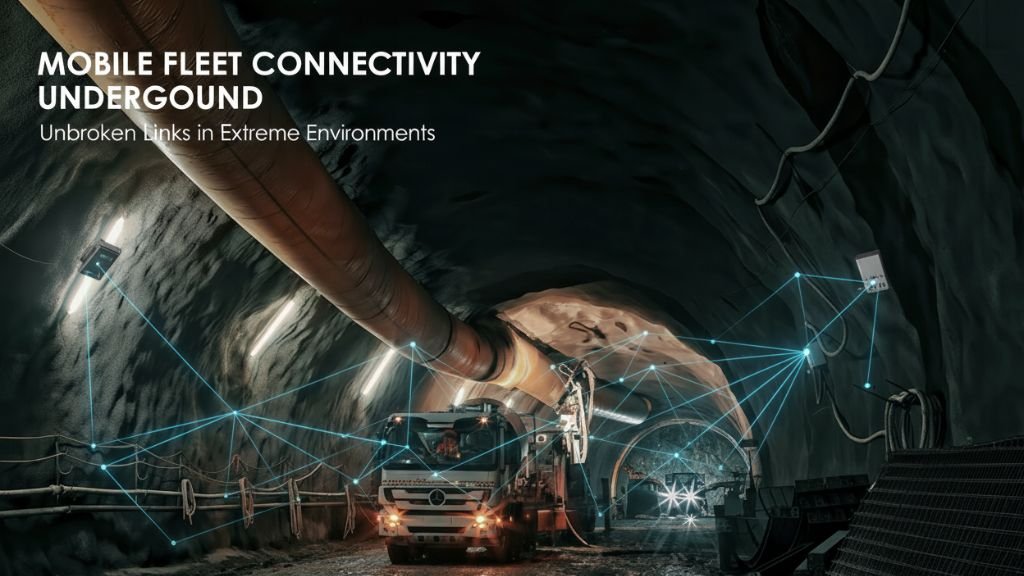
In today’s connected world, mobility is everything. Whether it’s a mining truck deep underground, an emergency response vehicle rushing through city streets, or a logistics fleet spread across hundreds of kilometers — real-time communication is essential. The challenge? Traditional wireless systems often fail when vehicles move across wide or rugged areas, leading to connectivity drops, data delays, and safety risks. That’s where wireless mesh networks are changing the game. Built for mobility, flexibility, and resilience, they provide the high-speed, always-on communication that modern fleet operations demand. The Connectivity Challenge for Mobile Fleets Most fleet-based industries rely on continuous data — GPS tracking, live video feeds, and sensor updates. However, cellular networks or point-to-point radio links are not designed for the constant movement of vehicles across variable terrain. When a truck or vehicle moves beyond the coverage zone of a cell tower or a single radio node, communication can break down instantly. In mining sites, ports, and large industrial zones, this means lost productivity, delayed decision-making, and increased operational risks. What’s needed is a network that moves with the fleet, maintaining consistent performance no matter where each vehicle travels. Wireless Mesh Networks: Designed for Mobility Unlike traditional systems that rely on a central hub, a wireless mesh network forms a web of interconnected nodes. Each node communicates with others, dynamically routing data through the most efficient path. This architecture provides three major advantages for mobile fleets: Self-Healing Connectivity – If one node goes offline, the system automatically reroutes data through alternate nodes, preventing downtime. High-Speed Roaming – Vehicles equipped with wireless mesh network systems can move freely across large areas while maintaining strong, low-latency connections. Scalable Deployment – Adding new vehicles or expanding coverage areas requires minimal setup. Each new node simply becomes part of the existing network. This flexibility makes wireless mesh networks a preferred choice for industrial fleets, mining operations, smart cities, and public safety agencies. Real-Time Data Means Smarter Decisions For industries that depend on mobility, real-time visibility is power. Mesh networks enable continuous streams of data — from vehicle diagnostics to live video monitoring — all without delay. Fleet managers can: Track vehicle location and performance in real time. Receive instant alerts during equipment failures or emergencies. Monitor fuel usage, route efficiency, and operational safety. By keeping vehicles and control centers connected at all times, wireless mesh networks enhance productivity and enable smarter, faster decision-making. Built to Withstand Harsh Environments Industrial and field fleets don’t operate in ideal conditions. They face dust, vibrations, moisture, and extreme temperatures. That’s why robust connectivity equipment is critical. Modern solutions like the MWS-2400 high-performance mesh system are designed to perform reliably in rugged terrains and moving environments. With multi-radio configurations and low-latency data handling, they ensure smooth communication even in challenging conditions. Whether it’s mining operations, large industrial plants, or mobile command vehicles, mesh technology ensures dependable connectivity — where failure is not an option. The Future of Fleet Communication Wireless mesh networks are not just a replacement for old systems — they represent the future of industrial communication. As fleets become more automated and data-driven, the need for seamless, mobile, and high-speed networks will only grow. From self-driving mining trucks to real-time logistics tracking, mesh connectivity is paving the way for the next generation of intelligent, connected operations. With improved range, capacity, and adaptability, these networks are redefining what’s possible in industrial mobility — keeping teams connected, informed, and in control. FAQs 01 What makes wireless mesh networks ideal for mobile fleet communication? Wireless mesh networks provide decentralized connectivity, allowing vehicles to maintain strong communication links even while moving. They automatically reroute data between nodes, ensuring zero downtime and high reliability in dynamic environments 02 Can wireless mesh systems work in harsh industrial conditions? Yes. Industrial-grade mesh products are built to withstand heat, dust, vibration, and other extreme conditions. They’re perfect for applications in mining, manufacturing, and logistics where stable connectivity is crucial. 03 How do mesh networks improve safety and efficiency for fleets? By enabling real-time monitoring, two-way communication, and instant alerts, mesh networks help fleet managers respond quickly to any issue. This boosts operational safety, reduces downtime, and improves decision-making efficiency.