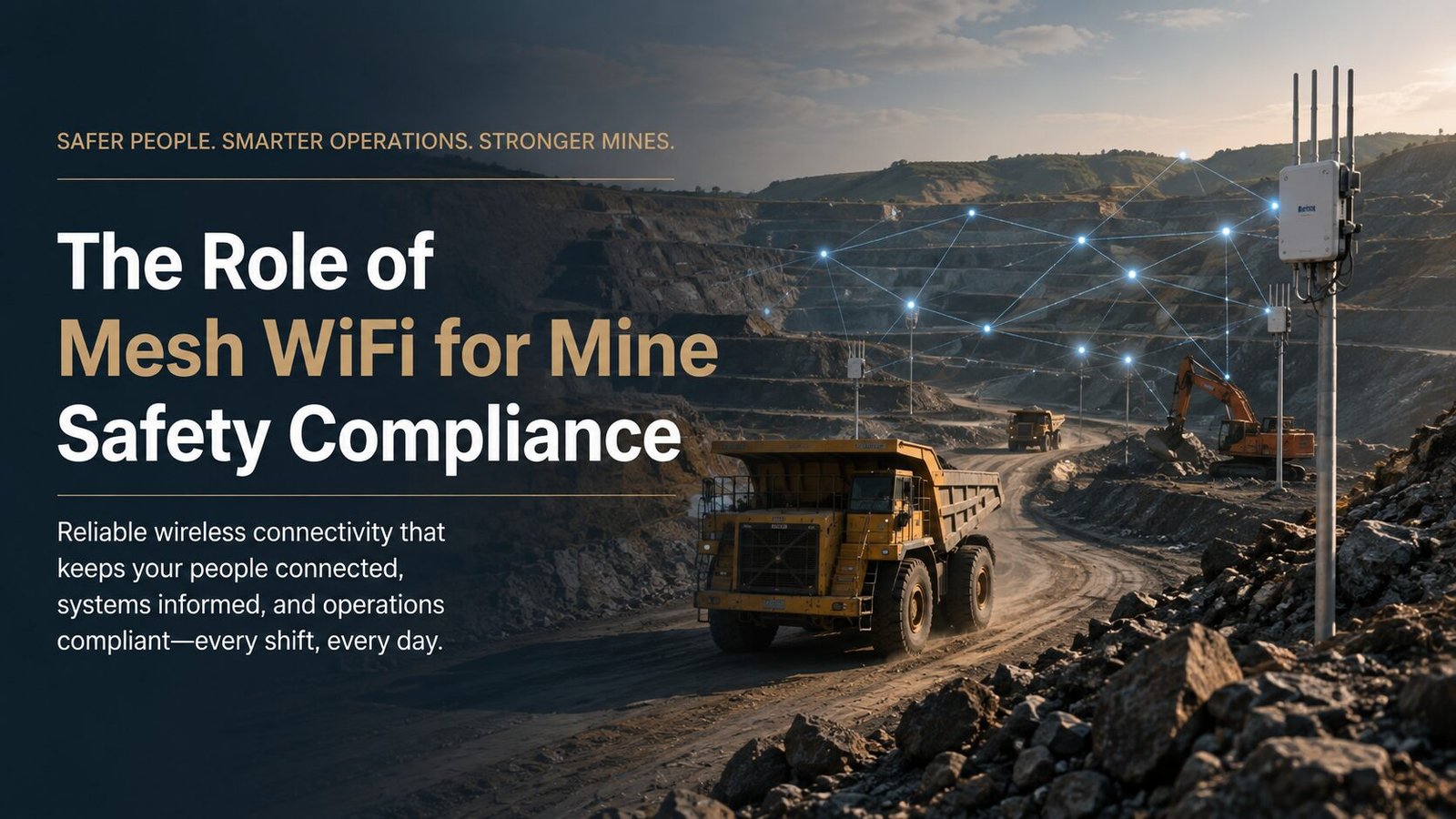
Mining remains one of the world’s most demanding industrial environments. Underground tunnels, open-pit operations, heavy machinery, and constantly changing work areas make communication difficult. Yet, reliable connectivity has become essential for meeting modern safety regulations and ensuring continuous operations. This is where mesh wifi for mine deployments are making a significant difference.
Traditional wireless infrastructure often struggles to maintain stable coverage across large mining sites. Network interruptions can delay safety alerts, equipment monitoring, and workforce communication. A wireless mesh architecture addresses these challenges by creating multiple communication paths instead of relying on a single access point.
In this article, you’ll learn how wireless mesh technology supports mining safety compliance, improves operational visibility, and enables dependable communication in harsh industrial environments.
Why Mesh WiFi for Mine Is Becoming Essential
Modern mining operations depend on connected systems rather than isolated equipment. Vehicle tracking, worker safety devices, environmental sensors, surveillance cameras, and production systems all require continuous communication.
Unlike traditional wireless networks that depend on one central connection, a wireless mesh network allows every node to communicate with neighboring nodes. If one connection becomes unavailable, data automatically travels through another available route.
This self-healing capability is particularly valuable in mines where blasting, moving vehicles, terrain changes, or equipment relocation may temporarily interrupt wireless links.
For mining operators, this means greater network availability without requiring constant manual intervention.
Connectivity Challenges That Affect Mining Safety
Mining environments present unique networking obstacles that directly impact safety compliance.
Large operational areas often stretch across several kilometers. Underground mines introduce rock formations, tunnels, and changing layouts that interfere with radio signals. Open-pit mines experience constant movement of heavy machinery, creating dynamic coverage requirements.
These conditions can result in:
- Communication gaps between field workers and control rooms
- Delayed transmission of emergency notifications
- Interrupted monitoring of environmental sensors
- Reduced visibility of fleet movements
- Downtime during network maintenance
Poor wifi for mining environments not only reduce operational efficiency but may also affect compliance with safety procedures that depend on continuous monitoring and communication.
A resilient wireless infrastructure helps minimize these risks.
How a Wireless Mesh Network Supports Mining Safety Compliance
Safety regulations increasingly require mining companies to maintain reliable communication with personnel and continuously monitor operational conditions.
A wireless mesh architecture supports these objectives in several ways.
Continuous Worker Communication
Mining personnel often operate in remote or hazardous areas where immediate communication is critical.
With multiple wireless paths available, workers remain connected even if individual network nodes become unavailable. This supports faster reporting of incidents and quicker coordination during emergencies.
Reliable Environmental Monitoring
Modern mines deploy sensors to monitor gas concentrations, dust levels, temperature, vibration, and equipment conditions.
Reliable wireless connectivity ensures these readings reach monitoring systems without unnecessary delays, allowing operators to respond quickly when thresholds are exceeded.
Fleet and Equipment Visibility
Mining fleets continuously move across changing work zones.
Reliable connectivity enables fleet management platforms to receive location updates, equipment diagnostics, and operational data in real time. This improves situational awareness while supporting safer vehicle movements.
Emergency Response Readiness
During emergencies, communication infrastructure becomes one of the most important operational assets.
Because every node can forward traffic, a wireless mesh network continues operating even when individual links are disrupted. This redundancy supports emergency coordination without requiring immediate network reconfiguration.
Operational Benefits Beyond Compliance
Although safety compliance is a major driver, mining companies often realize broader operational improvements after deploying mesh wifi for mine solutions.
Reliable connectivity reduces communication failures between field teams and centralized control systems. Maintenance teams receive equipment alerts sooner, reducing response times.
Production systems benefit from uninterrupted data collection, helping supervisors make informed operational decisions throughout the shift.
Additional advantages include:
- Improved uptime through self-healing network paths
- Easier expansion as mining operations grow
- Reduced dependence on extensive cabling
- Lower maintenance requirements compared to fixed infrastructure
- Better support for Industrial IoT applications
These improvements contribute to safer operations while also enhancing productivity.
Real-World Mining Applications
Mining companies increasingly rely on connected technologies that require dependable wireless infrastructure.
Fleet Management
Haul trucks, excavators, loaders, and service vehicles generate valuable operational data.
Reliable wireless connectivity enables continuous communication between vehicles and control centers, improving dispatching, maintenance planning, and operational efficiency.
Worker Safety Systems
Personal safety devices, wearable communication equipment, and location tracking solutions require dependable network access throughout the site.
A resilient network helps ensure safety information reaches supervisors without interruption.
Video Surveillance
Security cameras monitor restricted areas, conveyor systems, processing facilities, and equipment yards.
Continuous wireless communication supports live video transmission and faster incident investigation.
Remote Monitoring
Pump stations, substations, crushers, and processing plants often operate far from centralized control rooms.
Reliable wireless connectivity enables engineers to monitor equipment performance without requiring personnel to remain on-site.
Best Practices for Deploying Mesh WiFi for Mine
Successful deployment involves more than installing wireless hardware. Network design should reflect the operational characteristics of the mine.
Begin with a comprehensive wireless site survey to understand terrain, coverage requirements, and potential interference sources.
Choose industrial-grade networking equipment designed for dust, vibration, moisture, and temperature variations commonly found in mining operations.
Design the network with redundancy rather than minimum coverage. Multiple communication paths improve resilience during equipment relocation or temporary obstructions.
As mining operations evolve, periodically review network performance and expand coverage where operational activities change.
Finally, integrate wireless infrastructure with monitoring systems that provide network health visibility, allowing IT and OT teams to identify issues before they affect operations.
A well-planned deployment delivers both long-term reliability and easier maintenance.
Conclusion
Reliable communication has become a fundamental requirement for modern mining safety and operational efficiency. As mines adopt more connected technologies, traditional wireless infrastructure often struggles to meet growing demands.
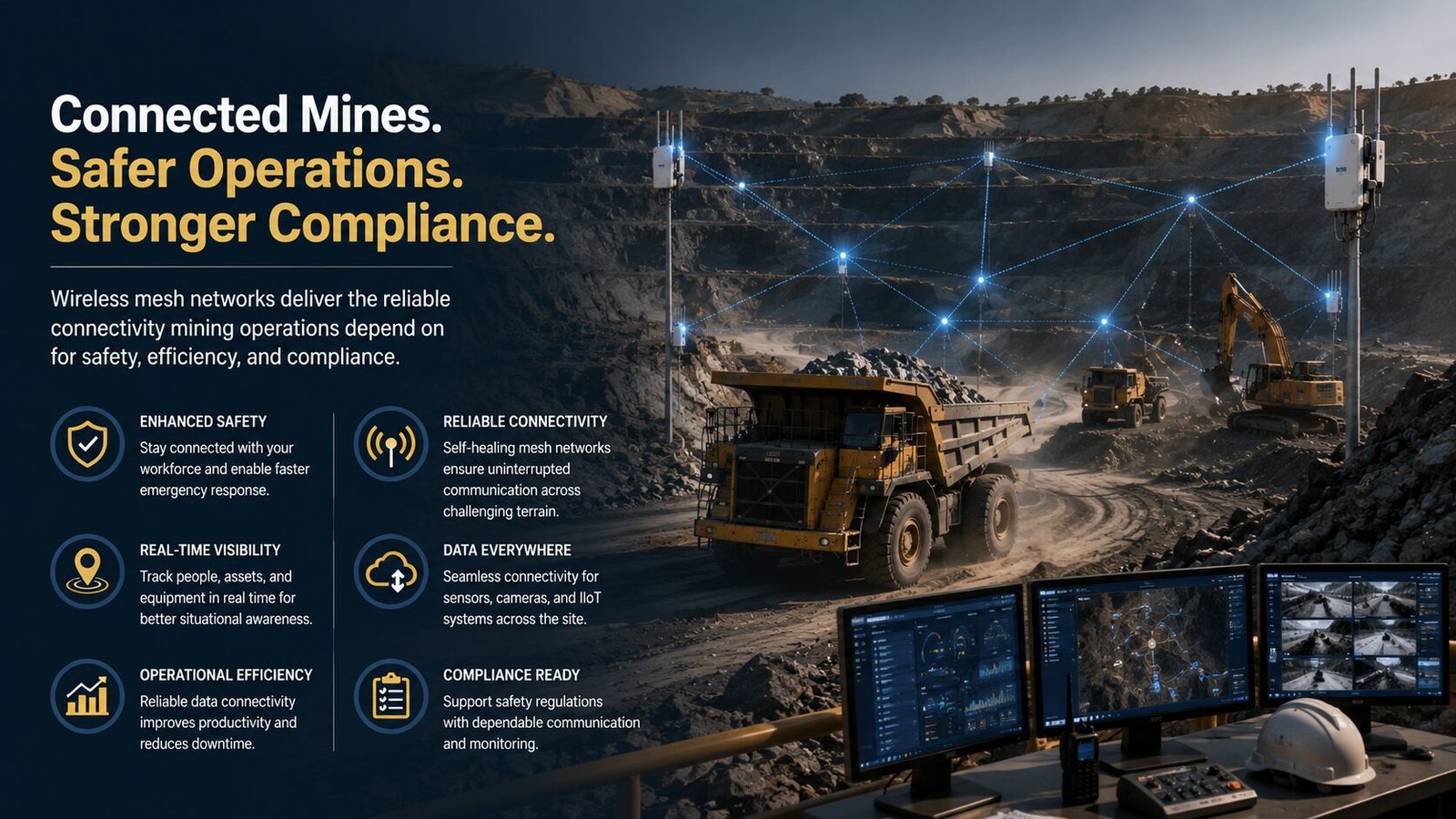
Deploying mesh wifi for mine environments provides the resilience needed for continuous communication, real-time monitoring, fleet visibility, and emergency response. By leveraging a wireless mesh network, mining companies can strengthen safety compliance while building a scalable foundation for future digital transformation.
For organizations planning long-term mining connectivity, resilient wireless infrastructure is no longer optional—it is an operational necessity.
Frequently Asked Questions
Mesh WiFi for mine is a wireless networking approach where multiple interconnected devices create continuous coverage across mining sites. The network automatically reroutes traffic if one connection fails, improving reliability for safety systems, monitoring devices, and operational communications.
Reliable wireless connectivity supports worker communication, environmental monitoring, fleet management, surveillance, and emergency response. Continuous network availability helps mining companies improve operational visibility while supporting safety compliance requirements.
A wireless mesh network creates multiple communication paths between network devices. If one node becomes unavailable, data automatically finds another route, helping maintain communication during equipment movement, blasting activities, or infrastructure changes.
Yes. Mesh WiFi supports Industrial IoT devices such as environmental sensors, wearable safety equipment, asset trackers, surveillance cameras, and fleet management systems by providing reliable and scalable wireless connectivity across large mining sites.
Yes. Properly designed mesh WiFi networks can provide dependable wireless coverage in underground tunnels, processing plants, and open-pit operations. Industrial-grade equipment and careful network planning help maintain reliable performance in challenging mining environments.