
Introduction
Industrial operations today depend heavily on continuous, reliable connectivity. Manufacturing plants, ports, utilities, and logistics hubs run complex systems that cannot afford network downtime. From automated machinery to real-time monitoring and safety systems, connectivity failures can lead to production losses, safety risks, and operational delays.
This is where a wireless mesh network becomes essential. Unlike traditional network architectures, wireless mesh networks are designed for resilience, flexibility, and uninterrupted communication. For organizations evaluating industrial WiFi solutions for manufacturing plants, mesh networking has emerged as the most dependable option for mission-critical environments.
What Is a Wireless Mesh Network?
A wireless mesh network consists of multiple interconnected nodes that communicate with each other rather than relying on a single access point. Each node acts as both a transmitter and a receiver, creating multiple paths for data to travel across the network.
Key Characteristics of Wireless Mesh Networks
- Self-healing and self-routing capabilities
- Multiple redundant communication paths
- Decentralized architecture
- Scalable coverage without network redesign
These characteristics make mesh networks uniquely suited for industrial environments where reliability is non-negotiable.
Why Mission-Critical Industrial Connectivity Demands More
Downtime Is Not an Option
In industrial settings, even a few seconds of network disruption can halt production lines, interrupt automation, or disconnect safety systems. Traditional star or point-to-point networks often fail when a single access point goes down.
Harsh and Dynamic Environments
Manufacturing plants and industrial sites face challenges such as:
- Metal obstructions and interference
- Moving machinery and vehicles
- Extreme temperatures and dust
- Constant layout changes
Standard WiFi solutions struggle under these conditions, while mesh networks are built to adapt.
How Wireless Mesh Networks Support Mission-Critical Operations
Self-Healing for Continuous Connectivity
One of the biggest advantages of a wireless mesh network is its self-healing ability. If one node fails or a connection is disrupted, traffic is automatically rerouted through another available path.
This ensures uninterrupted communication for critical systems like:
- Industrial automation
- Safety monitoring
- Asset tracking
- Control systems
Reliable Coverage Across Large Industrial Sites
Industrial facilities often span large areas with indoor and outdoor zones. Wireless mesh networks provide seamless coverage without dead zones.
For organizations seeking industrial WiFi solutions for manufacturing plants, mesh networks eliminate coverage gaps and maintain consistent performance across production floors, warehouses, and yards.
Scalability Without Network Complexity
As operations expand, networks must scale without downtime or redesign. Mesh networks allow new nodes to be added easily, automatically integrating into the existing network.
This scalability makes mesh architectures comparable to the best mesh Wi-Fi system standards, but optimized specifically for industrial reliability and performance.
Wireless Mesh vs Traditional Industrial WiFi
Limitations of Traditional WiFi Networks
- Single points of failure
- Limited range per access point
- Complex reconfiguration during expansion
- Poor performance in high-interference zones
Advantages of Wireless Mesh Networks
- No single point of failure
- Adaptive routing for reliability
- Simplified deployment and expansion
- Consistent performance in harsh environments
This is why mesh networking is rapidly becoming the preferred model for mission-critical industrial connectivity.
Use Cases of Wireless Mesh Networks in Industry
Manufacturing Plants
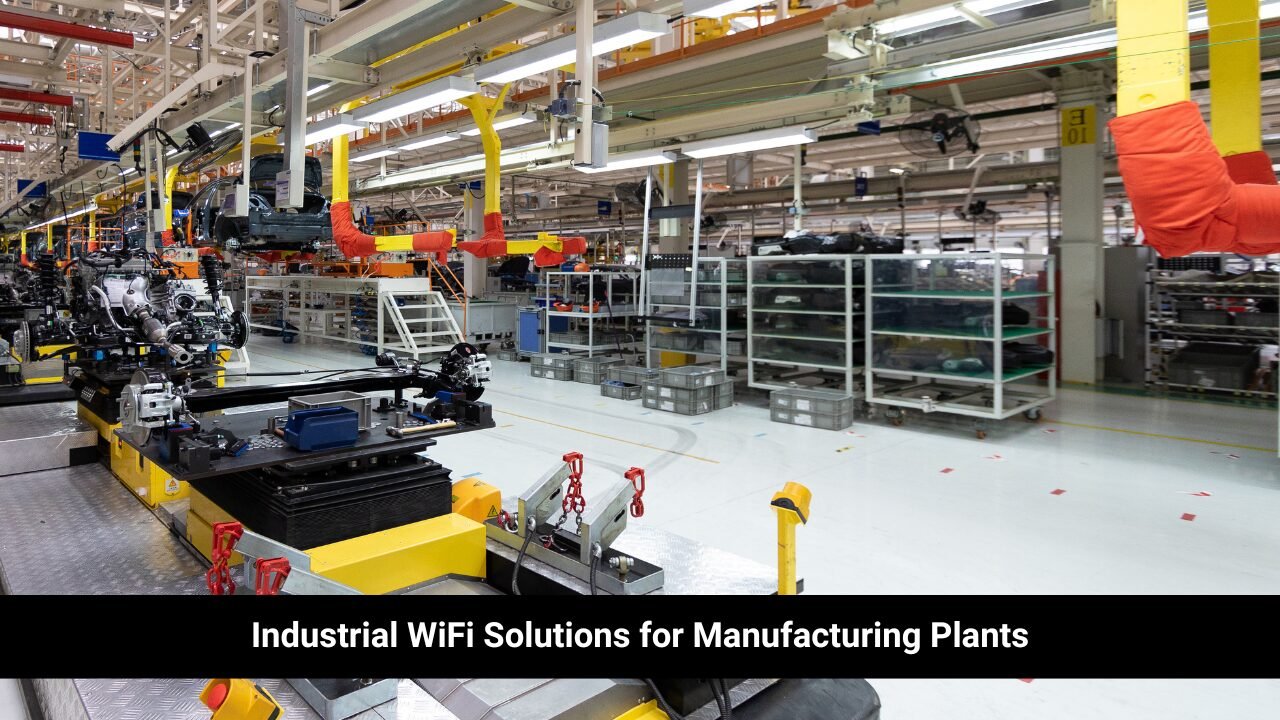
Wireless mesh networks support automation, robotics, and real-time monitoring without interruptions. They provide stable connectivity even in metal-dense environments, making them ideal industrial WiFi solutions for manufacturing plants.
Ports and Logistics Hubs
Mesh networks ensure continuous communication for cranes, vehicles, tracking systems, and control centers across wide areas.
Utilities and Energy Facilities
Power plants, substations, and renewable energy sites rely on mesh networks for resilient, long-distance connectivity and remote monitoring.
Security and Control in Wireless Mesh Networks
Built for Industrial-Grade Security
Modern wireless mesh networks incorporate strong security features such as:
- Encrypted communication
- Secure authentication
- Network segmentation
- Centralized monitoring
These features protect mission-critical data while maintaining operational visibility and control.
Choosing the Best Mesh Wi-Fi System for Industrial Use
Not all mesh systems are designed for industrial environments. Consumer-grade solutions may work for homes and offices but fail under industrial demands.
When evaluating the best mesh Wi-Fi system for industrial use, organizations should look for:
- Industrial-grade hardware
- Proven performance in harsh environments
- Centralized management and monitoring
- Long-term reliability and vendor support
Future-Proofing Industrial Connectivity
As industries move toward Industry 4.0, IIoT, and autonomous systems, connectivity demands will only increase. Wireless mesh networks provide the flexibility and resilience required to support future technologies without frequent infrastructure changes.
Conclusion
Mission-critical industrial operations require networks that are reliable, resilient, and adaptable. A wireless mesh network meets these demands by eliminating single points of failure, ensuring seamless coverage, and supporting continuous operations in challenging environments.
For organizations searching for dependable industrial WiFi solutions for manufacturing plants, mesh networking stands out as the most practical and future-ready approach. With proven performance and scalability, it represents the best mesh Wi-Fi system architecture for uninterrupted industrial connectivity.
FAQs
Wireless mesh networks provide self-healing connectivity, redundancy, and reliable performance, ensuring operations continue even during node or link failures.
Yes. They are among the most effective industrial WiFi solutions for manufacturing plants, offering stable connectivity in metal-heavy and high-interference environments.
Traditional WiFi relies on centralized access points, while mesh networks use decentralized nodes with multiple communication paths for higher reliability.
Yes. New nodes can be added without disrupting operations, making mesh networks highly scalable.
Industrial-grade mesh networks include encryption, authentication, and centralized management to protect mission-critical data.