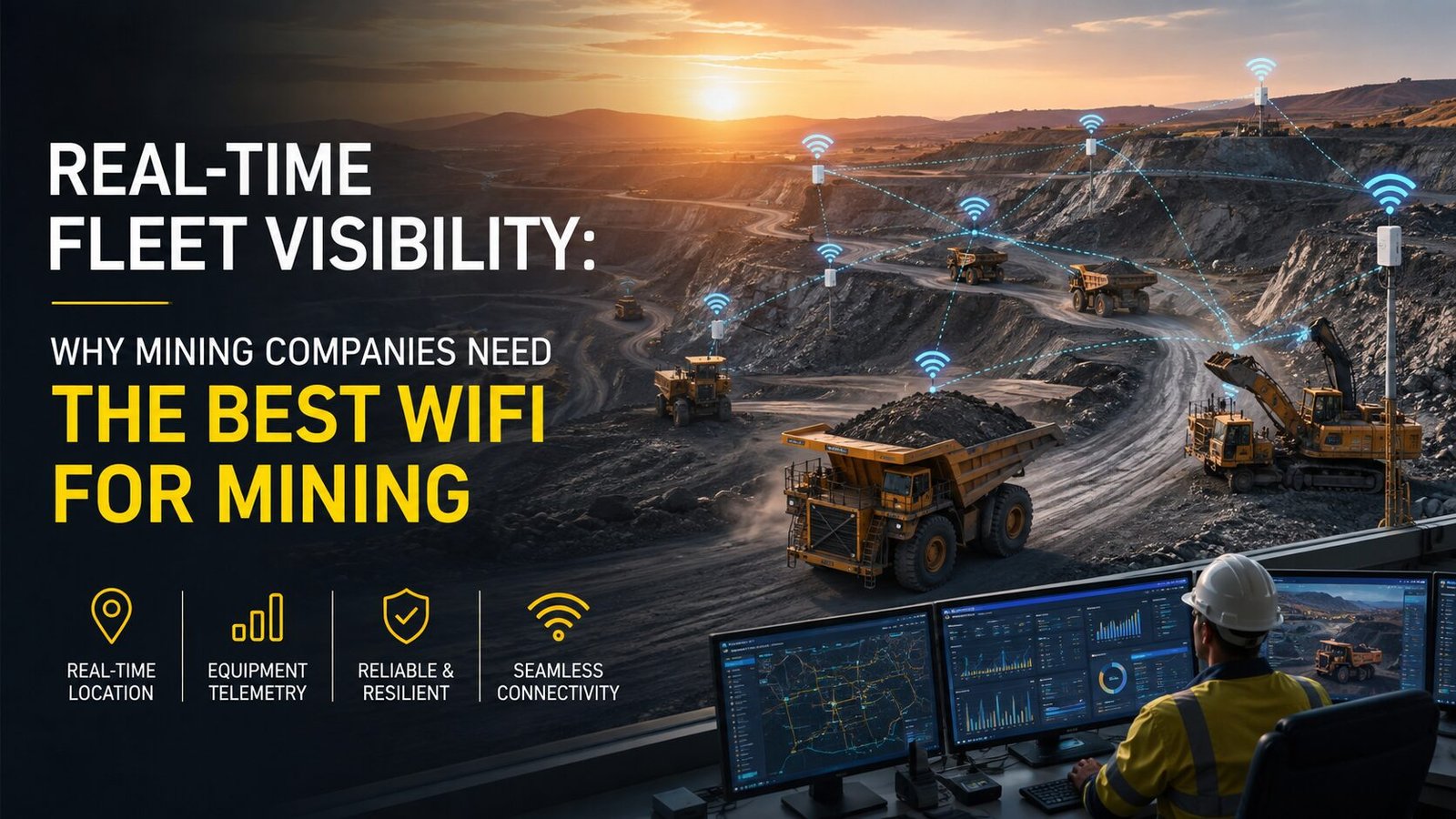
Mining operations depend on moving equipment, distributed work zones, and continuous coordination between people and machines. Haul trucks, excavators, loaders, dozers, and service vehicles are constantly moving through changing terrain, while fleet management systems need timely data to support operational decisions. In this environment, finding the best wifi for mining is not simply about providing internet access. It is about creating a reliable wireless infrastructure that keeps fleet data moving across large and challenging sites.
For mining companies, wifi for fleet management can support real-time vehicle location, equipment status, operator communication, dispatch coordination, and operational monitoring. Wireless mesh networks can strengthen this connectivity by extending coverage across large areas and providing alternative communication paths when individual links are disrupted.
Why Real-Time Fleet Visibility Matters in Mining
Fleet management systems generate valuable operational data from vehicles and equipment. Location, speed, engine parameters, fuel information, equipment status, and other telemetry can help mine operators understand what is happening across the site.
The value of this information depends heavily on connectivity. If data reaches the control room late or connectivity drops as equipment moves between working zones, operators may not have an accurate view of current fleet conditions.
Reliable wifi for mining can help maintain communication between mobile equipment, fixed infrastructure, control rooms, and monitoring systems. This creates a more connected perating environment where decisions can be based on current information rather than delayed updates.
What Makes the Best WiFi for Mining Different?
Mining environments are significantly more demanding than conventional office or enterprise deployments. Networks may need to cover large open-pit areas, roads, stockyards, workshops, and processing zones while supporting equipment that is continuously moving.
The best wifi for mining therefore needs to address several requirements:
- Wide-area wireless coverage across changing operational zones
- Reliable connectivity for moving vehicles and equipment
- Low and consistent latency for time-sensitive applications
- Network resilience when individual links are obstructed or interrupted
- Support for multiple connected devices and applications
- The ability to expand coverage as mine operations change
A wireless mesh architecture can be particularly useful because nodes can communicate with one another and provide multiple paths through the network. If one path becomes unavailable, traffic can potentially be redirected through another available path, depending on network design and configuration.
How Wireless Mesh WiFi Supports Fleet Management
A conventional fixed wireless network can become difficult to maintain when coverage requirements change frequently. Mining sites evolve as extraction progresses, haul roads shift, and equipment moves between operational zones.
A wireless mesh network provides a more flexible approach. Mesh nodes can be positioned across strategic fixed locations and, where appropriate, on or around mobile assets. These nodes work together to extend network coverage and maintain connectivity across the operational area.
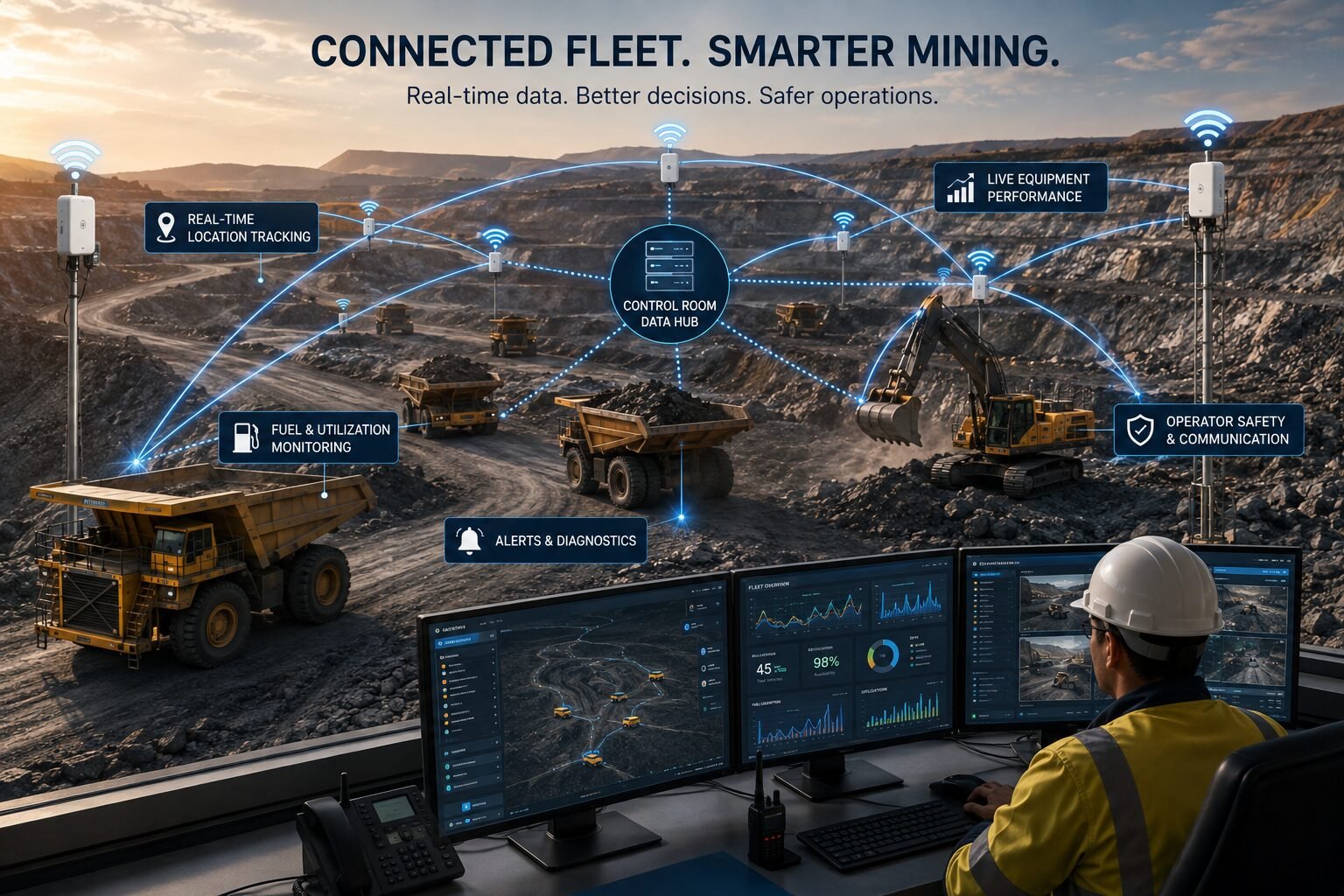
For wifi for fleet management, this can support applications such as real-time fleet tracking, equipment telemetry, dispatch communication, video feeds, remote monitoring, and operational dashboards.
The key benefit is not simply greater coverage. It is maintaining a communication layer that can support data movement as vehicles and equipment move through the mine.
Operational Benefits of Reliable Mining WiFi
Reliable wireless connectivity can have a direct effect on fleet and site operations.
Better fleet visibility: Continuous connectivity allows fleet management platforms to receive more timely information from connected equipment.
Improved dispatch coordination: Operators can use current fleet information to coordinate vehicles, assignments, and movement across the site.
Faster response to operational events: When equipment status or location information is available quickly, teams can respond to issues without waiting for delayed data.
More effective equipment monitoring: Connectivity allows telemetry and equipment information to reach monitoring platforms for analysis and operational decision-making.
Support for automation and digital systems: Modern mines increasingly depend on connected sensors, cameras, tracking systems, and industrial applications. A reliable wireless foundation allows these systems to operate as part of a connected environment.
Where WiFi for Mining Can Be Used
The requirements for connectivity can vary considerably across a mining site. A well-designed wireless infrastructure can support connectivity across multiple operational areas.
In an open-pit mine, wireless coverage can connect haul trucks and mobile equipment with infrastructure positioned around active working areas and haul routes.
In workshops and maintenance areas, connectivity can support equipment diagnostics, inventory systems, workforce communication, and digital maintenance applications.
Stockyards, crushers, processing areas, and conveyor zones can also benefit from wireless connectivity for monitoring, sensors, cameras, and operational systems.
This makes wifi for mining useful not only for fleet management but also as a broader connectivity layer for industrial digitalization.
Best Practices for Deploying Wireless Mesh in Mines
A successful deployment starts with the operational requirement rather than the wireless technology itself. Network planners should first identify where data needs to originate, where it needs to go, and how mobile assets move through the site.
Coverage planning should consider terrain, equipment movement, structures, interference, node placement, expected traffic, and future expansion. Engineers should also define application-specific requirements for throughput, latency, availability, and mobility.
Network redundancy is equally important. Critical communication paths should be designed so that a single failed node or link does not unnecessarily isolate an operational area.
Finally, the network should be designed with future changes in mind. Mine layouts, haul routes, equipment fleets, and digital applications can all evolve. A flexible wireless architecture can make it easier to adapt connectivity as operational requirements change.
Building a Connected Foundation for Modern Mining
Real-time fleet visibility depends on more than a fleet management platform. It also depends on the network carrying information between mobile assets, infrastructure, and operational systems.
For mining companies, the best wifi for mining is therefore a network designed around reliability, mobility, coverage, and operational continuity. Wireless mesh technology can provide a flexible connectivity foundation for fleet management while also supporting the growing number of digital systems used across modern mining operations.
When wireless connectivity is treated as critical operational infrastructure rather than simply internet access, mining teams can build a stronger foundation for real-time visibility, connected equipment, and future digital initiatives.
Frequently Asked Questions
The best WiFi for mining provides reliable coverage, mobility, low latency, and network resilience across large and changing mine sites. Wireless mesh can help maintain connectivity between mobile equipment and fixed infrastructure.
WiFi for fleet management connects vehicles and equipment with fleet platforms, enabling timely transmission of location, telemetry, equipment status, alerts, and other operational data.
Wireless mesh extends connectivity across large mining areas through interconnected nodes. Multiple communication paths can improve network resilience and help maintain connectivity as equipment and operational areas change.
Engineers should evaluate coverage, terrain, interference, mobility, latency, throughput, redundancy, node placement, application requirements, and future changes to mine operations.
Yes. It can support equipment telemetry, video surveillance, industrial sensors, worker communications, maintenance systems, remote monitoring, and other connected mining applications.