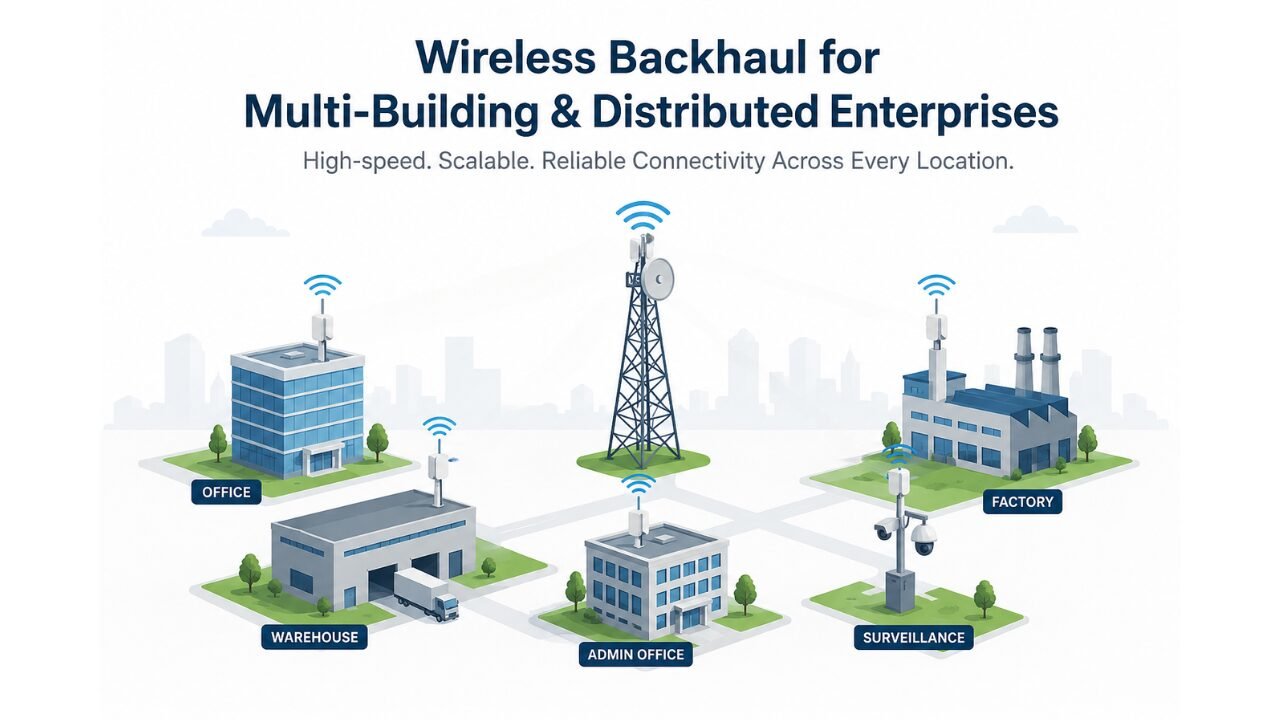
Introduction: The Connectivity Challenge Across Multiple Locations
Modern enterprises no longer operate from a single office or centralized building. Today’s organizations are spread across corporate campuses, warehouses, factories, hospitals, educational institutions, retail chains, smart city zones, and industrial facilities. As operations expand, businesses face a major challenge: how to provide fast, secure, and reliable connectivity between multiple buildings and distributed sites without excessive infrastructure costs or long deployment timelines.
Traditional fiber deployment is effective, but it often involves expensive trenching, lengthy approvals, civil construction work, and operational disruptions. In environments such as industrial zones, campuses, logistics hubs, or smart cities, laying fiber between every location can become highly complex and costly.
Wireless backhaul provides a practical alternative. It enables organizations to connect buildings and remote infrastructure using high-capacity wireless links instead of relying entirely on physical cabling. This allows enterprises to build scalable and resilient networks faster while reducing deployment challenges.
What is Wireless Backhaul?
Wireless backhaul refers to the wireless transmission of data between buildings, network nodes, or remote facilities to connect them with the core network or internet gateway. Instead of installing fiber everywhere, organizations use point-to-point (PTP), point-to-multipoint (PTMP), or mesh wireless technologies to transfer data over long distances with high throughput and low latency.
Wireless backhaul is commonly used to connect:
- Corporate office buildings
- Manufacturing plants
- Warehouses and logistics hubs
- University campuses
- Hospitals and healthcare centers
- Surveillance systems across large areas
- Smart city infrastructure
- Industrial and mining sites
These solutions help enterprises extend connectivity quickly while maintaining flexibility for future expansion.
Why Distributed Enterprises Need Wireless Backhaul
Modern enterprise environments generate massive amounts of data from cloud applications, IoT devices, surveillance systems, ERP platforms, and operational technologies. Without reliable inter-building connectivity, organizations may experience:
- Network bottlenecks
- Poor application performance
- Communication delays
- Video surveillance interruptions
- Increased downtime risks
- High infrastructure costs
- Difficulties scaling operations
Wireless backhaul helps eliminate these issues by creating a flexible communication layer between distributed locations.
For example, a manufacturing company may need to connect its production unit, warehouse, and administration office across a large industrial campus. Installing fiber across the facility may require excavation and downtime, while wireless backhaul can establish connectivity within days.
Key Benefits of Wireless Backhaul
Faster Deployment
One of the biggest advantages of wireless backhaul is rapid deployment. Fiber installation can take weeks or months due to excavation approvals, underground utility conflicts, and construction work. Wireless links can often be deployed within days, helping organizations reduce delays and accelerate digital transformation initiatives.
Cost-Effective Expansion
Wireless backhaul significantly reduces infrastructure expenses by eliminating large-scale trenching and civil engineering work. This is especially valuable in:
- Industrial facilities
- Smart city deployments
- Large campuses
- Remote operational sites
- Logistics and warehousing environments
Organizations can expand networks incrementally without redesigning the entire infrastructure.
Scalability for Growing Networks
Enterprise networks continuously evolve with new buildings, departments, IoT devices, and surveillance systems. Wireless backhaul allows businesses to:
- Add new locations quickly
- Increase bandwidth capacity
- Extend coverage areas
- Support higher device density
This flexibility is ideal for rapidly expanding enterprises.
Reliable Long-Distance Connectivity
Modern wireless backhaul technologies provide:
- High throughput
- Low latency
- Stable long-distance communication
- Redundant connectivity options
- Adaptive routing capabilities
These features support mission-critical applications such as industrial automation, cloud applications, real-time monitoring, and unified communications.
Improved Network Resilience
Many wireless backhaul solutions support mesh networking, automatic failover, and self-healing architectures. If one communication path fails, traffic can reroute automatically through another path, minimizing downtime.
This level of resilience is critical for industries such as healthcare, manufacturing, mining, and public safety.
Types of Wireless Backhaul Technologies
Point-to-Point (PTP)
Point-to-point wireless links directly connect two locations. These are commonly used for building-to-building communication and long-distance connectivity.
Advantages include:
- Dedicated bandwidth
- High throughput
- Low latency
- Strong security
- Reliable performance
For instance, a warehouse located several kilometers away from a production facility can be connected using a PTP wireless link.
Point-to-Multipoint (PTMP)
Point-to-multipoint solutions connect one central node to multiple remote sites. These are commonly deployed in:
- Enterprise campuses
- Educational institutions
- Smart city infrastructure
- Utility networks
- Surveillance systems
PTMP architecture simplifies deployment and lowers infrastructure costs.
Wireless Mesh Networking
Mesh networking allows multiple nodes to communicate dynamically using multiple connection paths. Data can automatically reroute if one link becomes unavailable.
Benefits of mesh networking include:
- Self-healing capability
- Better redundancy
- Wider coverage
- Improved resilience
Mesh networking is highly effective in large industrial environments, mining operations, and outdoor surveillance deployments.
Important Deployment Considerations
Before implementing wireless backhaul, organizations should evaluate several factors.
Bandwidth Requirements
Businesses must assess current and future bandwidth needs, especially for applications such as:
- 4K video surveillance
- Cloud collaboration
- Industrial IoT
- Real-time analytics
- Automated systems
Proper capacity planning helps avoid future performance bottlenecks.
Environmental Conditions
Outdoor wireless deployments may face challenges such as:
- Rain and extreme weather
- Dust and pollution
- Temperature fluctuations
- Electromagnetic interference
Industrial-grade wireless equipment is often necessary for harsh environments.
Line-of-Sight Planning
Many high-capacity wireless links perform best with clear line-of-sight conditions. Site surveys are essential to evaluate:
- Building placement
- Obstructions and terrain
- Pole or tower height
- Future construction risks
Security Requirements
Enterprise wireless networks must maintain strong security standards through:
- Encryption protocols
- Secure authentication
- VLAN segmentation
- Access control policies
- Intrusion monitoring systems
Security becomes especially important for organizations handling sensitive operational or customer data.
Real-World Enterprise Use Cases
Wireless backhaul supports a wide range of industries and enterprise environments.
Manufacturing Facilities
Factories use wireless backhaul to connect production floors, warehouses, administrative offices, and industrial IoT systems for real-time communication and automation.
Educational Campuses
Universities and schools rely on wireless backhaul to connect classrooms, libraries, research labs, hostels, and outdoor learning spaces while supporting seamless WiFi access.
Healthcare Networks
Hospitals depend on reliable inter-building connectivity for electronic medical records, telemedicine, connected medical devices, and emergency communication systems.
Warehousing and Logistics
Logistics hubs use wireless backhaul for inventory tracking, fleet management, cloud application access, and surveillance systems across large operational areas.
Smart Cities
Municipal infrastructure projects use wireless backhaul to support smart traffic systems, public WiFi, environmental sensors, utility monitoring, and city-wide surveillance.
Conclusion
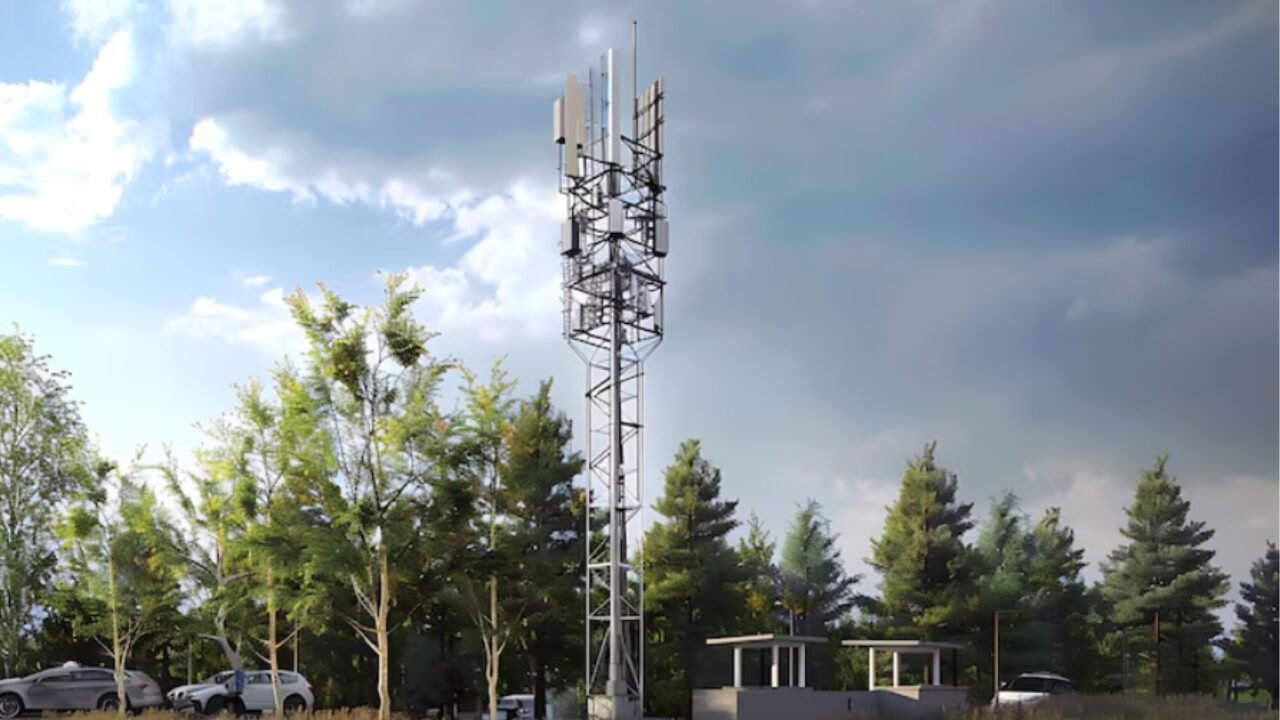
As enterprises continue expanding across multiple buildings, campuses, and distributed operational sites, reliable interconnectivity becomes essential for business continuity and digital transformation.
Wireless backhaul provides a scalable, cost-effective, and flexible alternative to traditional wired infrastructure. From manufacturing and logistics to healthcare, education, and smart cities, wireless backhaul enables organizations to deploy high-speed connectivity quickly while reducing infrastructure complexity.
With advancements in mesh networking, AI-driven optimization, and private 5G integration, wireless backhaul is becoming a critical foundation for modern enterprise networking. Organizations investing in resilient wireless infrastructure today will be better prepared to support future growth, operational efficiency, and connected innovation.
FAQs
Wireless backhaul is a technology that connects multiple buildings, remote sites, or network nodes using high-speed wireless communication instead of relying completely on physical fiber cables. It helps enterprises create scalable and cost-effective connectivity across distributed environments.
Businesses use wireless backhaul because it reduces infrastructure costs, speeds up deployment, and avoids complex trenching or construction work. It is especially useful for campuses, industrial facilities, warehouses, smart cities, and remote operational sites.
Industries such as manufacturing, healthcare, education, logistics, mining, retail, and smart city infrastructure benefit from wireless backhaul solutions. These networks support real-time communication, IoT devices, surveillance systems, and cloud-based applications.
Wireless mesh networking improves enterprise connectivity by creating multiple communication paths between network nodes. If one connection fails, the network automatically reroutes traffic through another path, ensuring better reliability, coverage, and network resilience.