Introduction
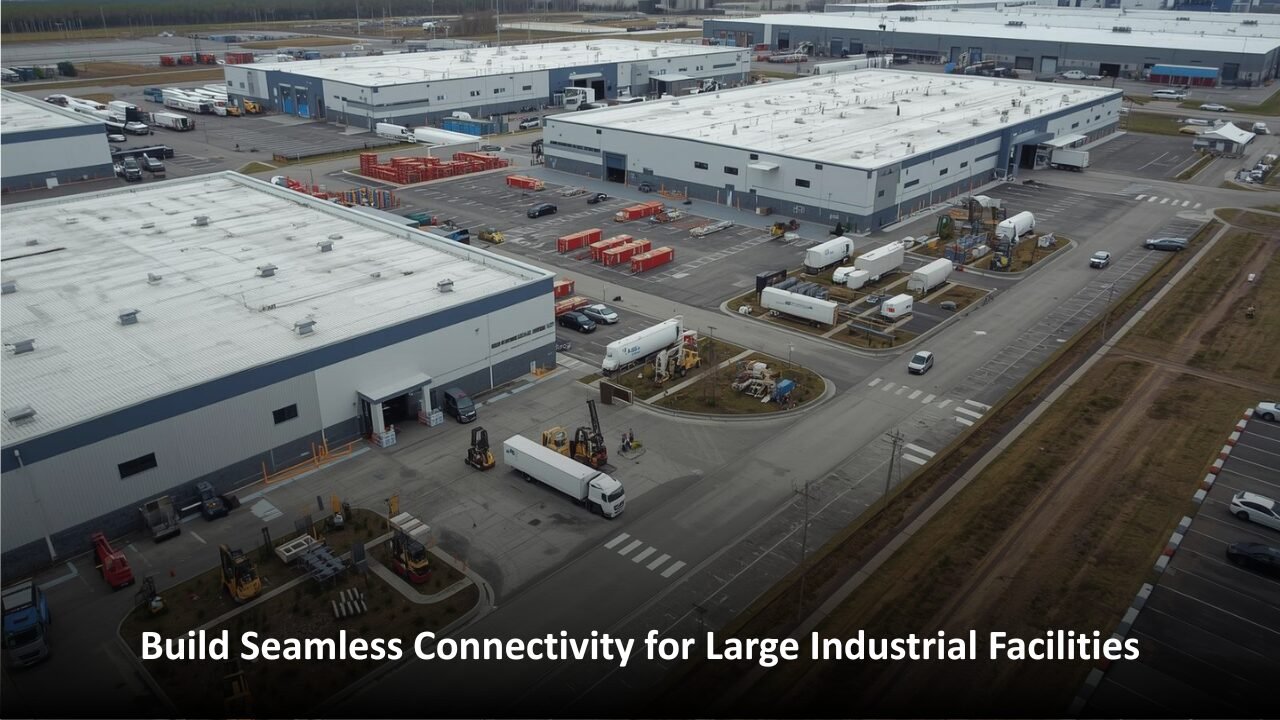
Large industrial campuses, logistics yards, and manufacturing facilities increasingly rely on wireless connectivity to support modern operations. From connected machines and IoT sensors to mobile workers and autonomous vehicles, uninterrupted communication has become essential for productivity and safety.
However, maintaining reliable connectivity across wide outdoor spaces is a major challenge. Traditional wireless networks often struggle with coverage limitations, signal interference, and mobility issues. This is where fastest mesh WiFi solutions offer a powerful advantage.
Wireless mesh networks allow organizations to build scalable, resilient connectivity across large areas without relying on a single access point. When combined with high speed roaming, these networks ensure that devices moving across facilities remain continuously connected. This article explains how mesh networking works and how industrial organizations can deploy reliable outdoor wireless infrastructure.
What Is the Fastest Mesh WiFi?
The fastest mesh WiFi refers to high-performance wireless mesh networking systems designed to deliver stable and high-speed connectivity across large environments. Unlike traditional WiFi networks that rely on a central router, mesh networks use multiple interconnected nodes that distribute wireless coverage across the entire area.
Each node communicates with nearby nodes and creates multiple data paths. If one connection becomes weak or unavailable, the system automatically reroutes traffic through another node. This dynamic architecture improves both reliability and network coverage.
Mesh networks also enable seamless high speed roaming, which allows devices to move from one node to another without losing connectivity. For industrial environments where workers, vehicles, and machines constantly move across large sites, this capability is critical.
Because of this decentralized design, mesh networks are particularly well suited for large campuses, outdoor industrial yards, ports, and logistics facilities.
Challenges in Industrial Outdoor Connectivity
Industrial environments introduce several connectivity challenges that traditional wireless networks often fail to address effectively.
One of the biggest challenges is the scale of industrial facilities. Manufacturing campuses and logistics yards can cover vast areas, making it difficult for traditional WiFi systems to provide consistent coverage. Network dead zones often appear in remote corners of the facility.
Another major issue is the presence of physical obstacles. Industrial sites contain metal machinery, storage racks, containers, vehicles, and buildings that interfere with wireless signals. These obstacles can weaken signals or cause reflections that disrupt connectivity.
Mobility also plays a major role. Workers frequently move across facilities with handheld devices, while autonomous vehicles and forklifts travel throughout warehouses and outdoor yards. These devices require seamless high speed roaming to maintain continuous communication with operational systems.
Environmental conditions further complicate deployment. Outdoor industrial networks must withstand rain, dust, extreme temperatures, and electromagnetic interference from heavy equipment. Without properly designed infrastructure, network performance can quickly degrade.
These challenges make it clear that industrial environments require more resilient wireless networking solutions than conventional office WiFi.
How Wireless Mesh Networks Solve Connectivity Problems
Wireless mesh networks address industrial connectivity challenges by distributing network intelligence across multiple nodes instead of relying on a single centralized access point.
In a mesh architecture, nodes are strategically placed throughout the facility to create overlapping coverage zones. Each node connects with nearby nodes, forming a network of wireless links that extend coverage across large areas.
One of the most important advantages of mesh networking is its self-healing capability. If a node fails or becomes obstructed by equipment or environmental changes, the network automatically redirects traffic through alternate routes. This ensures continuous connectivity without requiring manual intervention.
Another important capability is seamless high speed roaming. When mobile devices move across a campus, they automatically connect to the nearest node without experiencing interruptions. This allows industrial applications such as mobile workforce tools, automated vehicles, and real-time monitoring systems to operate smoothly.
Mesh networks also reduce infrastructure complexity. Instead of running cables across large outdoor spaces, organizations can expand coverage simply by installing additional wireless nodes. This makes mesh networking a cost-effective and scalable option for industrial facilities.
Key Benefits for Industrial and Enterprise Facilities
Deploying the fastest mesh WiFi provides several advantages for industrial operations that depend on reliable connectivity.
First, mesh networks significantly improve wireless coverage across large areas. Because nodes extend coverage collaboratively, organizations can eliminate connectivity gaps that often occur in traditional wireless deployments.
Second, mesh networking supports a wide range of industrial IoT applications. Sensors, monitoring systems, and smart equipment rely on stable connectivity to transmit operational data. A resilient wireless infrastructure ensures that these systems function reliably.
Another major advantage is improved worker mobility. Employees using tablets, handheld scanners, or communication devices can move freely across the facility without losing network access. Seamless high speed roaming allows real-time communication with enterprise systems regardless of location.
Mesh networks also provide strong scalability. As industrial operations expand, additional nodes can be installed to extend coverage without redesigning the entire network architecture.
Finally, reliable connectivity improves operational visibility. Real-time data from machines, sensors, and mobile devices allows organizations to monitor operations, detect issues early, and make faster decisions.
Real-World Use Cases and Applications
Wireless mesh networks are widely used in industries that require connectivity across large outdoor environments.
Manufacturing campuses use mesh networks to connect automated guided vehicles, mobile inspection systems, and industrial sensors across production areas. Continuous connectivity ensures that data flows smoothly between machines and control systems.
Logistics and distribution centers rely on wireless connectivity for yard management, inventory tracking, and automated material handling. Mesh networking allows forklifts, barcode scanners, and mobile devices to stay connected throughout the facility.
Ports and container terminals operate across massive outdoor areas filled with metal containers and heavy machinery. Mesh networks provide the reliable coverage required for crane monitoring, container tracking, and security surveillance.
Energy and utility facilities also benefit from mesh networking. Power plants, substations, and pipeline systems use wireless connectivity to monitor remote assets and maintain operational visibility.
Best Practices for Deploying Industrial Mesh Networks
Organizations should follow a structured approach when deploying the fastest mesh WiFi to ensure optimal performance.
- Conduct a comprehensive wireless site survey to understand signal interference, coverage requirements, and infrastructure limitations.
- Use industrial-grade networking hardware designed for outdoor environments and extreme conditions.
- Place nodes strategically to maintain strong signal paths and minimize obstacles.
- Configure the network to support seamless high speed roaming for mobile devices and automated systems.
- Continuously monitor network performance to detect issues and optimize connectivity.
Following these best practices ensures that mesh networks deliver reliable performance across complex industrial environments.

Conclusion
Reliable wireless connectivity is a critical requirement for modern industrial operations. As organizations adopt automation, IoT systems, and mobile technologies, traditional wireless infrastructure often struggles to meet the demands of large outdoor environments.
The fastest mesh WiFi provides a scalable and resilient solution by distributing connectivity across multiple intelligent nodes. With self-healing architecture and seamless high speed roaming, mesh networks ensure uninterrupted communication across campuses, industrial yards, and large facilities.
By implementing well-designed mesh networking strategies, industrial organizations can build robust wireless infrastructure that supports operational efficiency, automation, and future digital transformation.
FAQs
The fastest mesh WiFi refers to high-performance wireless mesh networking systems that use multiple interconnected nodes to deliver reliable coverage across large environments. These systems automatically reroute data if a connection fails, ensuring stable connectivity in industrial campuses and outdoor facilities.
High speed roaming allows devices such as mobile scanners, AGVs, and worker tablets to move across a facility without losing connectivity. In industrial environments, seamless roaming ensures that automation systems and real-time applications continue to operate without interruptions.
Wireless mesh networks are widely used in manufacturing plants, logistics yards, ports, mining sites, and energy facilities. These environments require reliable wireless connectivity across large outdoor areas where traditional WiFi networks may struggle.
Mesh networks improve reliability by creating multiple communication paths between nodes. If one node fails or becomes obstructed, the network automatically redirects traffic through another route, ensuring continuous connectivity.
Before deployment, organizations should conduct a site survey, evaluate coverage requirements, select industrial-grade hardware, and plan node placement carefully. Proper planning ensures optimal network performance and seamless high speed roaming.