Introduction
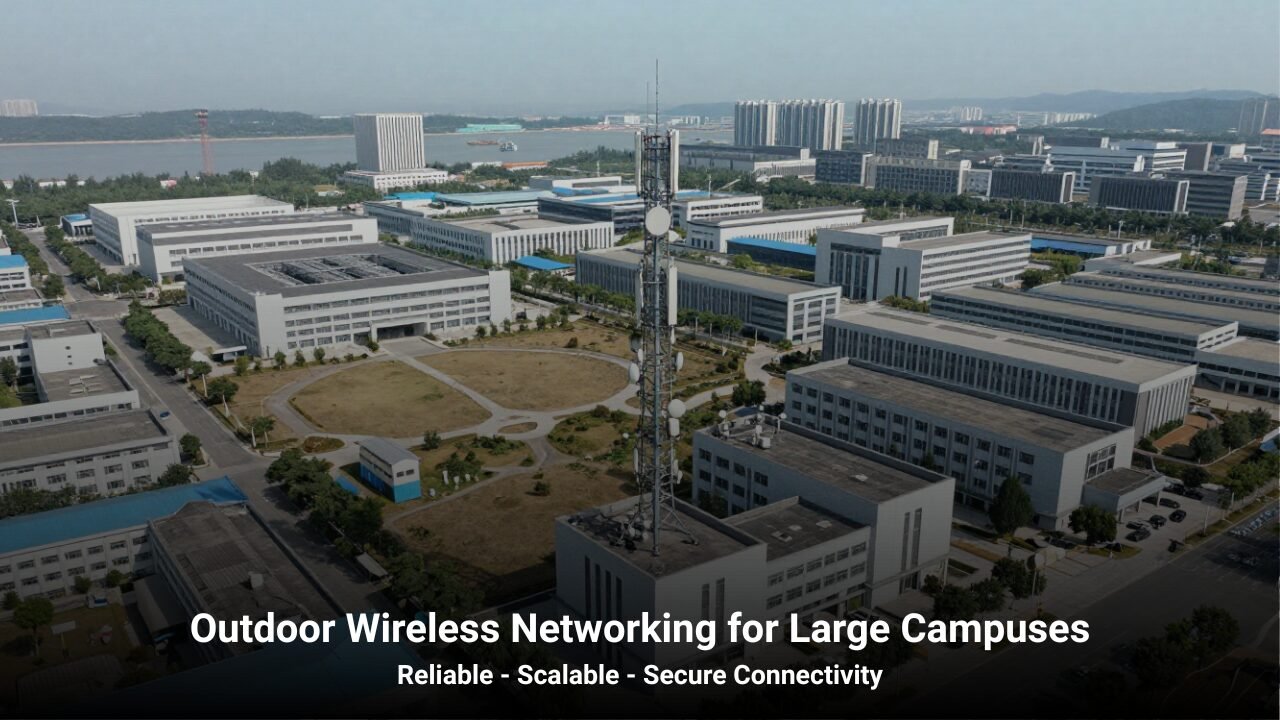
Reliable connectivity is no longer optional for large campuses. Whether it is an industrial facility, university, port, airport, smart city, or enterprise park, outdoor wireless networking plays a critical role in keeping operations connected, secure, and efficient.
Unlike indoor networks, outdoor environments bring unique challenges such as long distances, harsh weather, moving obstacles, and the need to connect multiple buildings or open areas seamlessly. This is where technologies like the wireless mesh network and the best mesh Wi-Fi system come into play.
In this blog, we explain outdoor wireless networking, explore available solutions, and help you choose the right setup for large campuses and enterprise environments.
What Is Outdoor Wireless Networking?
Outdoor wireless networking refers to wireless communication systems designed to operate in open and semi-open environments. These networks connect devices across wide areas without relying heavily on physical cabling.
Common use cases include:
- University and corporate campuses
- Industrial plants and warehouses
- Ports, airports, and logistics hubs
- Smart cities and public infrastructure
- Surveillance and IoT deployments
The goal is consistent coverage, high reliability, and scalability across large geographic areas.
Key Challenges of Large Campus Connectivity
Wide Coverage Requirements
Large campuses often span several kilometers. Traditional Wi-Fi access points struggle to maintain stable connections over such distances.
Reliability and Redundancy
Outdoor networks must remain operational even if one node fails. Downtime can impact safety, security, and business continuity.
Environmental Conditions
Outdoor wireless networking solutions must withstand rain, dust, heat, and strong winds without performance degradation.
Scalability
As campuses grow, the network must expand easily without redesigning the entire infrastructure.
Popular Outdoor Wireless Networking Solutions
Point-to-Point and Point-to-Multipoint Networks
These solutions use directional antennas to connect two or more fixed locations. They work well for linking specific buildings but lack flexibility when scaling across large campuses.
Traditional Outdoor Wi-Fi
Standard outdoor Wi-Fi access points can cover limited areas but often require extensive cabling and additional infrastructure to scale.
Wireless Mesh Network
A wireless mesh network is one of the most effective outdoor wireless networking solutions for large campuses. In this architecture, each node connects to multiple nearby nodes, creating a self-healing and redundant network.
If one node goes offline, data automatically reroutes through another path, ensuring uninterrupted connectivity.
Why Wireless Mesh Network Is Ideal for Large Campuses
Seamless Coverage Across Vast Areas
Wireless mesh networks provide blanket coverage across open spaces, roads, yards, and multiple buildings without dead zones.
Self-Healing and High Reliability
Mesh networks automatically adapt to failures, making them ideal for mission-critical environments like surveillance and industrial operations.
Easy Expansion
Adding new nodes does not require complex reconfiguration. This makes wireless mesh networks highly scalable for growing campuses.
Support for Multiple Applications
From CCTV cameras and access control to IoT sensors and workforce connectivity, mesh networks handle diverse traffic efficiently.
Choosing the Best Mesh Wi-Fi System for Outdoor Use
Not all mesh systems are designed for outdoor environments. Choosing the best mesh Wi-Fi system for large campuses requires careful evaluation.
Outdoor-Rated Hardware
Ensure devices are weatherproof and designed specifically for outdoor deployment.
Long-Range Performance
The best mesh Wi-Fi system should support long-distance links while maintaining high throughput and low latency.
Centralized Management
Look for solutions that offer centralized monitoring, configuration, and analytics for easier network management.
Security Features
Enterprise-grade encryption, authentication, and access control are essential, especially for critical infrastructure.
Integration Capabilities
The system should integrate seamlessly with existing enterprise networks, cameras, and IoT platforms.
Wireless Mesh Network vs Traditional Wi-Fi
When comparing traditional Wi-Fi with a wireless mesh network for large outdoor campuses, the differences become clear very quickly.
Traditional Wi-Fi networks are designed around a central access point model. Coverage is usually limited to a specific radius, which makes it difficult to serve large outdoor areas without deploying a large number of access points and extensive cabling. If a central access point fails, connected devices may lose connectivity entirely, creating a single point of failure.
A wireless mesh network, on the other hand, is built for wide-area coverage. Each mesh node communicates with multiple nearby nodes, allowing data to travel through the most efficient available path. This self-healing design ensures that if one node goes down, the network automatically reroutes traffic through other nodes, maintaining uninterrupted connectivity.
Scalability is another key difference. Expanding a traditional Wi-Fi network often requires network redesign, additional cabling, and careful planning. Wireless mesh networks allow new nodes to be added easily without disrupting existing infrastructure, making them ideal for growing campuses.
Outdoor suitability also favors mesh networking. While traditional Wi-Fi can work outdoors with specialized equipment, it is generally less resilient to environmental challenges. Wireless mesh networks are specifically engineered for outdoor use, offering higher reliability in harsh weather and open environments.
For large campuses, enterprises, and industrial environments, a wireless mesh network consistently delivers better coverage, higher reliability, and greater flexibility than traditional Wi-Fi solutions.
Industries Benefiting from Outdoor Wireless Networking
- Enterprises and Corporate Campuses – seamless employee and asset connectivity
- Industrial Facilities – machine monitoring and automation
- Ports and Airports – surveillance, logistics, and safety systems
- Education Campuses – student, staff, and smart campus applications
- Smart Cities – public Wi-Fi, traffic systems, and sensors
Conclusion
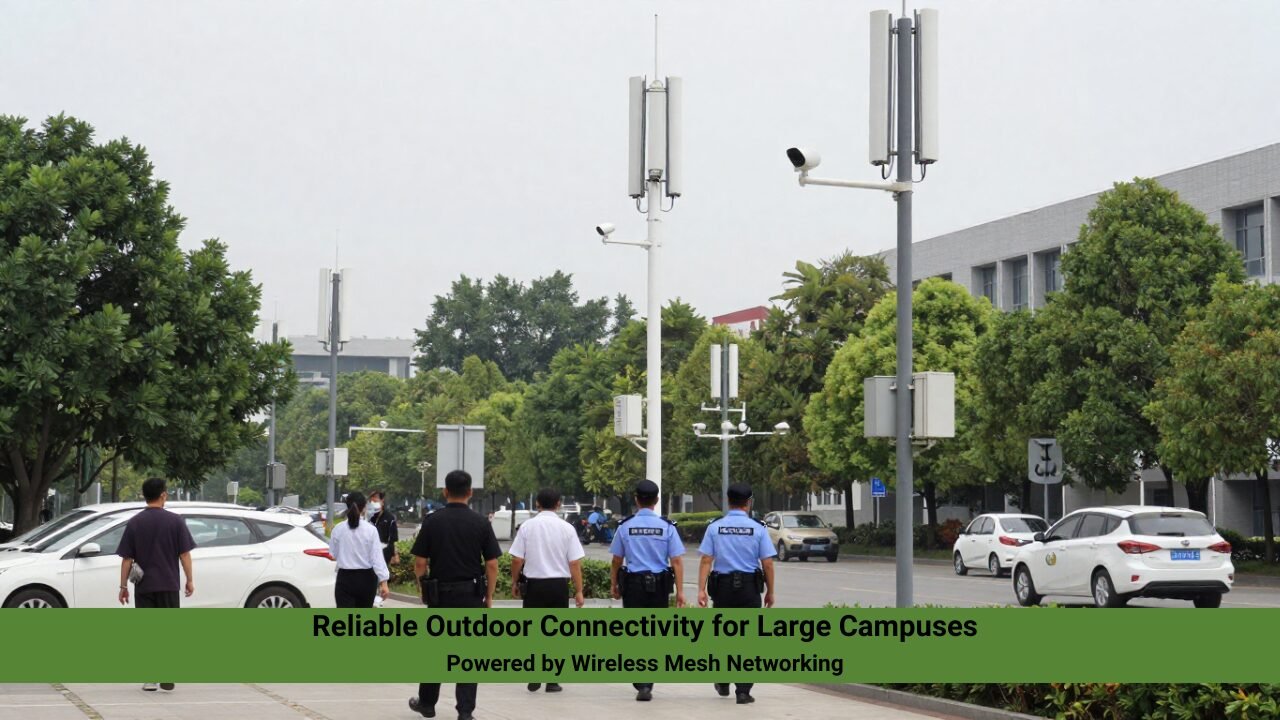
Outdoor wireless networking is the backbone of modern large campuses. Choosing the right solution can significantly impact performance, security, and long-term scalability.
For enterprises and large outdoor environments, a wireless mesh network stands out as the most reliable and flexible option. When paired with the best mesh Wi-Fi system designed for outdoor use, organizations can achieve seamless connectivity, high availability, and future-ready infrastructure.
If your campus demands reliable outdoor coverage with minimal downtime and maximum scalability, wireless mesh networking is the solution worth investing in.
FAQs
A wireless mesh network is widely considered the best solution due to its scalability, reliability, and self-healing capabilities.
Traditional Wi-Fi relies on a central access point, while a wireless mesh network allows nodes to connect with each other, eliminating single points of failure.
Yes, when using outdoor-rated hardware. The best mesh Wi-Fi system is specifically designed to withstand environmental conditions and cover large areas.
Modern wireless mesh networks include enterprise-grade security features such as encryption, authentication, and access control.
Wireless mesh networks are highly scalable. New nodes can be added easily without redesigning the entire network.