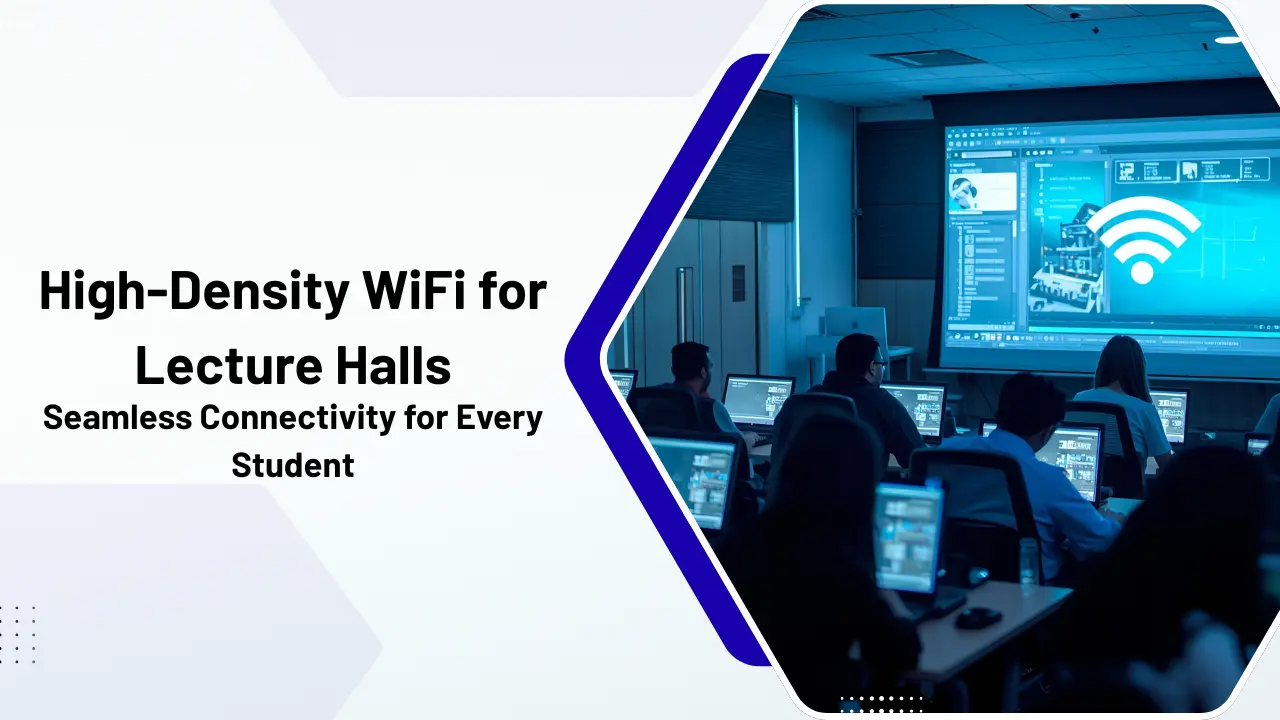
Introduction: Why High-Density WiFi Matters for Universities
Modern university campuses are more connected than ever. From digital classrooms and hybrid learning models to online assessments and real-time collaboration tools, reliable WiFi is now a core academic utility – not a luxury. Lecture halls, in particular, present one of the toughest connectivity challenges due to the sheer number of devices trying to connect simultaneously.
A single lecture hall may host hundreds of students, each carrying multiple devices such as laptops, smartphones, and tablets. Traditional WiFi architectures struggle under this load, resulting in slow speeds, dropped connections, and frustrated users. This is where high-density WiFi for universities becomes essential.
By leveraging a wireless mesh network and the best mesh WiFi system, universities can ensure seamless, scalable, and resilient connectivity across lecture halls and entire campuses.
What Is High-Density WiFi in Lecture Halls?
High-density WiFi refers to a wireless network designed to support a large number of concurrent users and devices within a limited physical space – without compromising performance.
In lecture halls, high-density WiFi must handle:
- Hundreds of simultaneous connections
- High-bandwidth applications like video streaming and virtual labs
- Continuous mobility as students enter and exit
- Interference from neighboring access points and devices
Standard WiFi deployments often rely on centralized controllers or isolated access points, which can become bottlenecks. In contrast, enterprise WiFi solutions for universities increasingly use mesh-based architectures to distribute traffic intelligently and maintain consistent performance.
The Role of Wireless Mesh Networks in Campus WiFi
A wireless mesh network consists of multiple interconnected nodes that communicate with each other dynamically. Instead of relying on a single access point or wired backbone, each node acts as both a transmitter and a relay.
Key Advantages of Wireless Mesh Networks for Universities
- Self-healing connectivity – If one node fails, traffic is automatically rerouted
- Scalability – Easily add new nodes as campus needs grow
- Reduced cabling – Ideal for old buildings and large campuses
- Uniform coverage – Eliminates dead zones in lecture halls
For universities, this architecture is particularly effective in high-density environments where reliability and flexibility are critical.
Why Lecture Halls Are High-Risk Zones for WiFi Failure
Lecture halls combine several factors that strain traditional networks:
- High user density in a confined space
- Peak usage during fixed time slots
- Simultaneous access to cloud platforms, LMS systems, and streaming services
- Physical interference from concrete walls, metal seating, and electronic equipment
Without the best mesh WiFi system, universities often face:
- Network congestion
- High latency
- Inconsistent user experiences
- Increased IT support tickets
A well-designed mesh-based deployment distributes load evenly and maintains performance even during peak usage.
Best Mesh WiFi System for High-Density University Environments
Choosing the best mesh WiFi system for lecture halls involves more than just hardware. It requires an architecture purpose-built for enterprise-scale environments.
Features to Look For
- High client capacity per node
- Intelligent traffic routing
- Low-latency communication between nodes
- Support for roaming and mobility
- Centralized monitoring with decentralized operation
Unlike consumer-grade mesh systems, enterprise-grade solutions are designed to handle thousands of devices across multiple buildings while maintaining security and performance.
Enterprise WiFi Solutions for Universities: Beyond Connectivity
Modern enterprise WiFi solutions for universities go beyond basic internet access. They enable digital transformation across campus operations.
Key Use Cases Enabled by High-Density WiFi
- Smart classrooms and hybrid learning
- Online examinations and assessments
- Campus-wide learning management systems
- AR and VR-based education tools
- Real-time collaboration and research platforms
A robust wireless mesh network ensures these applications run smoothly, even in crowded lecture halls.
Design Best Practices for High-Density Lecture Hall WiFi
Successful deployment requires careful planning and design.
Proven Best Practices
- Perform site surveys to understand interference and layout
- Use multiple mesh nodes instead of a few high-power access points
- Optimize channel allocation and power levels
- Ensure seamless handoff between nodes
- Design for peak load, not average usage
When implemented correctly, mesh-based high-density WiFi delivers consistent performance across all seating areas.
Security and Network Management Considerations
Universities handle sensitive academic and personal data, making security critical.
A mesh-based enterprise WiFi system supports:
- Secure authentication for students and staff
- Network segmentation for guests, IoT, and academic systems
- Real-time monitoring and analytics
- Faster troubleshooting and reduced downtime
These capabilities help IT teams manage large, complex networks with limited resources.
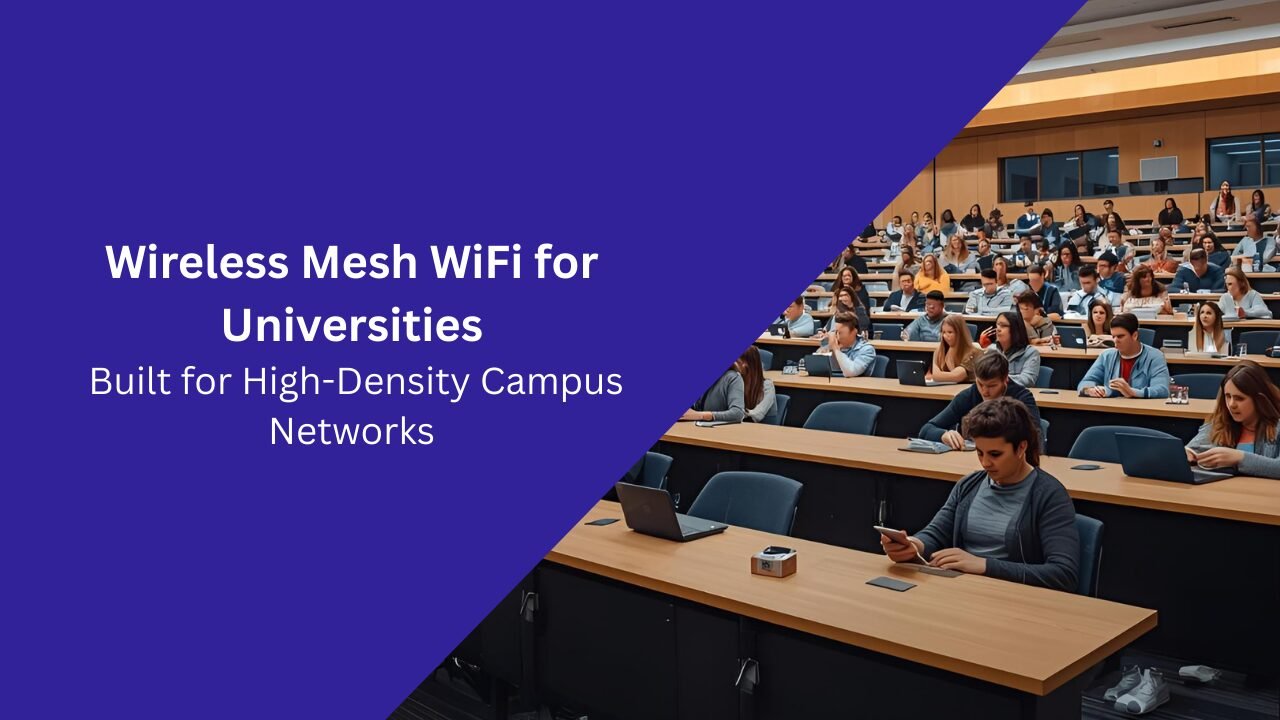
Conclusion: Future-Ready WiFi for Modern Universities
As universities continue to embrace digital-first education, reliable connectivity in lecture halls is non-negotiable. High-density WiFi powered by a wireless mesh network offers the scalability, resilience, and performance required to meet today’s demands and tomorrow’s innovations.
By deploying the best mesh WiFi system and investing in enterprise WiFi solutions for universities, campuses can ensure seamless learning experiences, reduced IT overhead, and a future-ready digital infrastructure.
FAQ’s
High-density WiFi is designed to support hundreds or thousands of devices simultaneously in areas like lecture halls without performance degradation.
A wireless mesh network distributes traffic across multiple nodes, reduces congestion, and provides self-healing connectivity, making it ideal for high-density environments.
Enterprise-grade mesh systems can support hundreds of devices per node, depending on configuration and bandwidth requirements.
Yes. Enterprise mesh solutions support advanced security features such as encryption, authentication, and network segmentation.
Universities should look for enterprise-grade scalability, centralized monitoring, high client capacity, and proven performance in high-density environments.