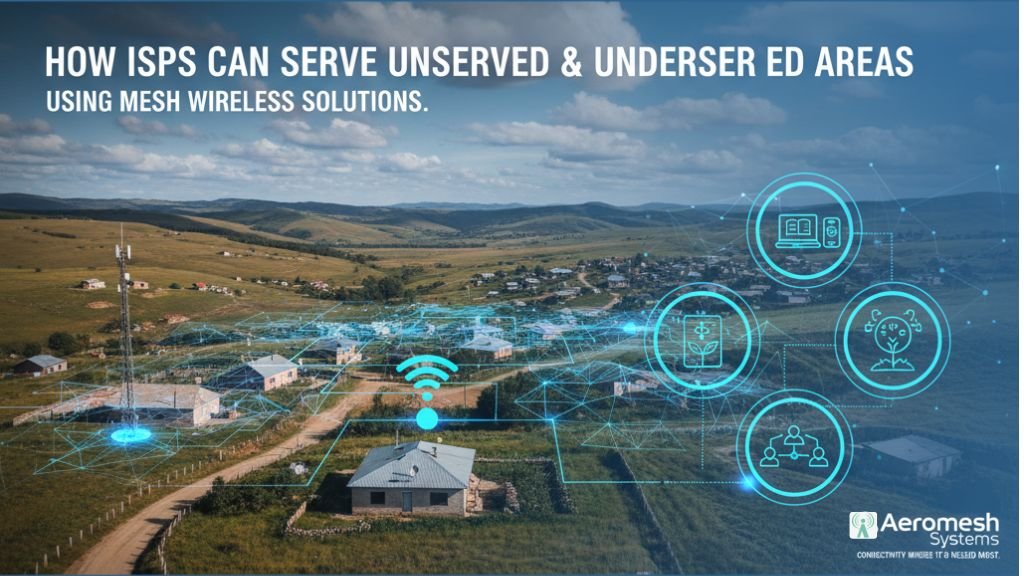
Across the globe, millions of people still lack access to reliable internet. Rural villages, remote communities, and underserved regions often remain disconnected due to the high cost of building traditional wired infrastructure. For Internet Service Providers (ISPs), this presents both a challenge and an opportunity: how to extend services profitably while fulfilling the growing demand for universal connectivity.
One of the most effective answers lies in wireless mesh networks. By eliminating the dependency on expensive fiber or cable in hard-to-reach areas, mesh technology empowers ISPs to serve unserved and underserved populations efficiently and affordably.
The Connectivity Gap in Remote Areas
Building traditional networks in rural or low-density regions often involves:
-
High costs of trenching and laying fiber
-
Geographical barriers such as mountains, forests, or water bodies
-
Low return on investment due to small subscriber bases
Because of these barriers, ISPs sometimes hesitate to invest, leaving communities without modern connectivity. Wireless mesh technology directly addresses these pain points.
Why Mesh is Ideal for ISPs Expanding Coverage
1. Flexible Deployment
Unlike traditional networks, mesh nodes can be placed on rooftops, poles, or existing towers, drastically reducing the cost and time needed to bring communities online.
2. Scalability
ISPs can start with a small deployment and expand gradually by adding more nodes as demand grows. This “pay-as-you-scale” model makes it financially sustainable.
3. Resilience in Remote Conditions
Mesh networks are self-healing, meaning if one node goes down, traffic reroutes automatically through other nodes. This ensures higher uptime and reliability, even in challenging environments.
4. Multiple Service Opportunities
By leveraging mesh, ISPs can not only provide internet access but also enable additional services such as VoIP, online education, telemedicine, and smart agriculture solutions.
Real-World Applications
-
Rural Broadband Projects: Governments often collaborate with ISPs to bridge the digital divide in underserved communities.
-
Community Wi-Fi: Villages and townships can share reliable, affordable internet without the need for expensive infrastructure.
-
Emergency Connectivity: During natural disasters or crises, mesh networks provide quick-to-deploy communication systems.
Aeromesh Systems: Empowering ISPs
At Aeromesh Systems, we design solutions that support ISPs in delivering connectivity where it’s needed most. Our multi-radio, multi-channel architecture ensures high performance and scalability while minimizing costs. By adopting wireless mesh for ISP, providers can extend coverage, improve service reliability, and tap into new markets without overextending their budgets.
Final Thoughts
Expanding into unserved and underserved areas isn’t just about business growth for ISPs—it’s about closing the digital gap and enabling social progress. With wireless mesh solutions, ISPs can overcome traditional limitations and bring meaningful connectivity to the people who need it most.